
Vandaag of morgen in huis

Kwaliteit gegarandeerd

Welkomstaanbiedingen ontgrendelen: GRATIS bezorging | Tot 80% korting | Gratis 30 dagen JoyPlus-proefperiode
Download de app
A bowl may seem like a simple kitchen essential, but you’ll soon notice if you’ve chosen the wrong one. A soup bowl that’s too small, a mixing bowl that slides around while you whisk or a set that barely stacks: these are common reasons to buy again.
When comparing bowls, look out for these three pitfalls:
With the right specifications, it’s easier to choose between ceramic bowls, soup bowls, breakfast bowls, pasta bowls, salad bowls and mixing bowls.
Ceramic bowls, including earthenware and porcelain, are suitable for serving and everyday dining. They feel sturdy and come in a range of colours and patterns. Always check whether the product specifications say it’s suitable for the microwave, oven and dishwasher. Ceramic can break if dropped and is sensitive to sudden changes in temperature.
Stainless steel bowls are practical for mixing, whisking, marinating and meal prep. According to the product information, 304 stainless steel is suitable for contact with food and resistant to rust and corrosion. However, metal must not go in the microwave. A non-slip silicone base can help prevent the bowl from sliding around and making noise on your worktop.
Plastic bowls are lightweight and handy for washing up, camping or outdoor use. A washing-up bowl isn’t automatically suitable for food preparation. Check what it’s designed for and read the temperature warnings. According to their product descriptions, the Curver models in this guide are intended for washing up and cleaning, not for storing or preparing food.
Capacity in millilitres gives you a useful guide, but the shape determines how spacious a bowl feels in practice.
Check the external dimensions as well. An 8.5-inch bowl takes up considerably more cupboard space than a bowl with a 14 cm diameter, even if both are sold as “serving bowls”.
Stackable bowls save space in kitchen cupboards. If you’re buying a bowl set, check that all the sizes actually fit inside one another. Mixing bowl sets are often described as “nesting”: the bowls fit inside each other to form one compact stack.
Also check:
According to brand product information, features such as scratch resistance, chip resistance and dishwasher suitability can vary between models. Treat these claims as the manufacturer’s product specifications and check the instructions for the item you choose.
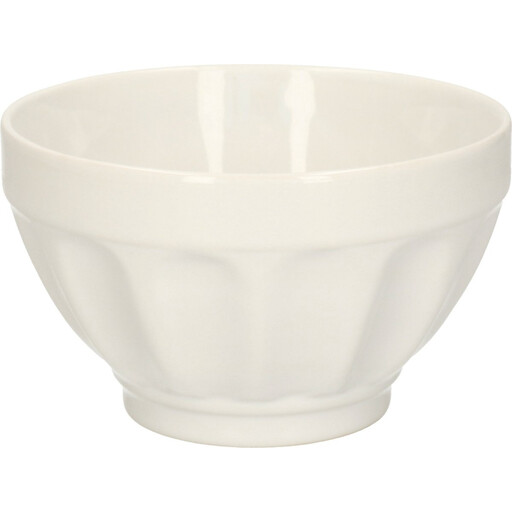
Why it suits this profile: Its 600 ml capacity and round shape make it a good fit for breakfast, soup and noodles. The bowl is stackable and, according to the product information, suitable for the dishwasher, oven and microwave.
The clearly stated capacity and diameter make it easier to look beyond colour and decoration when choosing.
600 ml capacity; stackable; dishwasher-, oven- and microwave-safe according to the product description.
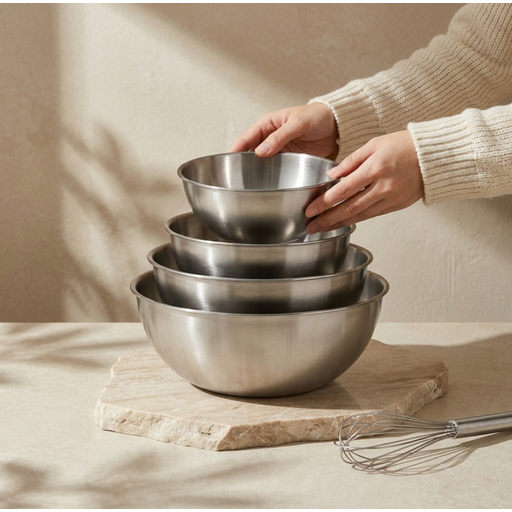
Why it suits this profile: The four sizes — 19, 22, 25 and 28 cm — are useful for mixing, preparing dough, washing vegetables and serving.
The set clearly states its material, sizes and care instructions, so you can see in advance that it isn’t suitable for microwave use.
304 stainless steel; four nesting sizes; dishwasher-safe according to the product information.
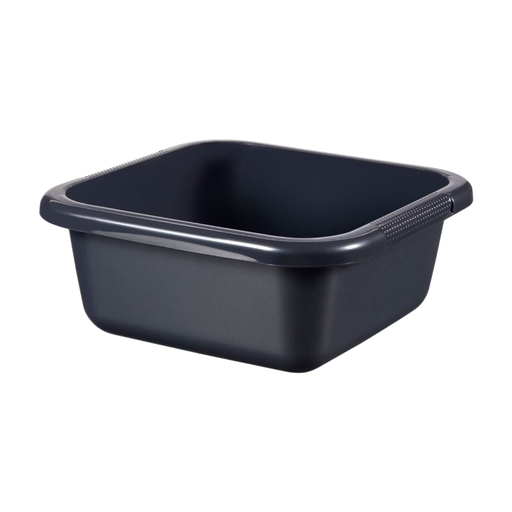
Why it suits this profile: This washing-up bowl is designed for washing dishes, soaking pans and household cleaning tasks. Its 10-litre capacity makes it suitable for bigger jobs.
The product description explicitly states that the bowl isn’t intended for storing or preparing food.
10-litre capacity; square shape; ergonomic handles; suitable for the kitchen, camping and outdoor use.
We’ve put together a complete, up-to-date list of products that meet these strict selection criteria and the applicable European safety regulations.
For soup, cereal and noodles, a bowl of around 500 to 700 ml is often practical. Check the height and diameter too, as a wide bowl can feel more spacious than a tall, narrow one with the same capacity.
No. Stainless steel bowls aren’t suitable for microwave use. They’re practical for mixing, whisking, marinating and storing food, though. Check whether each product is dishwasher-safe, and dry the bowls after washing if you want to reduce water marks.
Their lifespan depends on how they’re used, the glaze, whether they’re dropped and how they’re exposed to temperature changes. Ceramic bowls can last a long time with normal use, but avoid moving them suddenly from the freezer to a hot oven. Don’t continue to use damaged or cracked bowls as tableware.
