
Vandaag of morgen in huis

Kwaliteit gegarandeerd

Welkomstaanbiedingen ontgrendelen: GRATIS bezorging | Tot 80% korting | Gratis 30 dagen JoyPlus-proefperiode
Download de app
A bowl set might seem like a straightforward purchase – until you're cooking and realise the bowls are too small, don't stack, or aren't suitable for hot ingredients. Marketing terms like "airtight", "oven-safe" and "durable" don't always tell the full story either. For home chefs, hobby bakers, families and meal preppers, it's the dimensions, materials and care instructions that really matter.
A set may contain several bowls, but that doesn't always make it practical. Small snack bowls are fine for nuts, fruit or dips, but not for batter or a large salad. Always check the diameter, height and capacity. The difference between 500 ml and 2 litres determines whether a bowl is suitable for a portion of yoghurt or for mixing dough.
Not every bowl can go in the microwave, oven or freezer. Stainless steel bowls, for example, must not be used in the microwave. With bowls that come with a lid, different rules sometimes apply: the bowl may be dishwasher-safe, while the lid is better washed by hand. Also pay attention to any temperature limits on plastic components.
For food storage containers, "airtight" is an important feature, but the construction varies from model to model. Check whether there is a silicone ring, clip closure or vent valve. With hot soup or sauce, built-up pressure needs to be able to escape safely. A lid that doesn't seal properly can also leak in a work bag or fridge.
Ceramic bowls are ideal for serving and are often used for soup, pasta, desserts and snacks. They feel sturdy but can chip or break if dropped. Check whether the manufacturer mentions dishwasher, oven and microwave use.
Stainless steel bowls are lightweight, nestable and practical for mixing, whisking, marinating and washing vegetables. 304 stainless steel is mentioned in the product descriptions of several sets as a food-contact material. Stainless steel is not suitable for the microwave. With very acidic or salty ingredients, prolonged contact is not recommended according to some product instructions.
Glass bowls make the contents visible and are handy for lunches, leftovers and meal prep. Do pay attention to the instructions regarding temperature changes and lids.
Plastic bowls and storage containers are often lightweight and suitable for the fridge, freezer and microwave. When using the microwave, the lid usually needs to be removed. Look for information such as BPA-free, maximum temperature and dishwasher instructions.
For everyday use, a combination of small, medium and large bowls is handy:
A bowl measuring 19 to 28 cm, as found in some stainless steel mixing bowl sets, offers more variety for cooking and baking. For a serving bowl set, the shape is also important: a deep bowl keeps soup and pasta contained better, while a wide bowl can be suitable for salad or fruit.
Stackable bowls save cupboard space, especially when the diameters increase logically. Check whether the bowls truly nest inside each other or can only be placed on top of one another. A non-slip base can help with whisking and mixing, but it doesn't automatically make a bowl tip-proof.
Also look at:
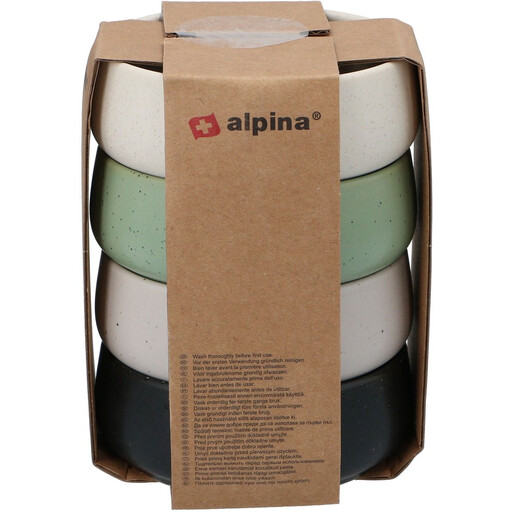
Why this fits the profile: This set of four small ceramic bowls is designed for snacks, small portions and use at a children's or breakfast table. The diameter is approximately 9.5 cm.
The compact size makes it clear what the bowls are intended for. This means they won't be a bad purchase when you're specifically looking for snack bowls.
Ceramic material, four different colours according to the product name and dishwasher safety according to the product description.
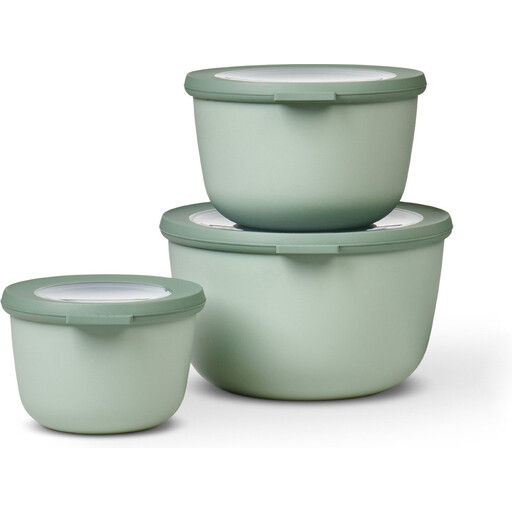
Why this fits the profile: The three sizes of 500 ml, 1000 ml and 2000 ml suit leftovers, soup, salad and meal prep in a household.
The product description explicitly mentions fridge, freezer, dishwasher and microwave without the lid. This makes the usage conditions verifiable.
BPA-free plastic, transparent viewing window and an airtight lid according to the product specifications. The bowls are designed to stack and nest inside each other.
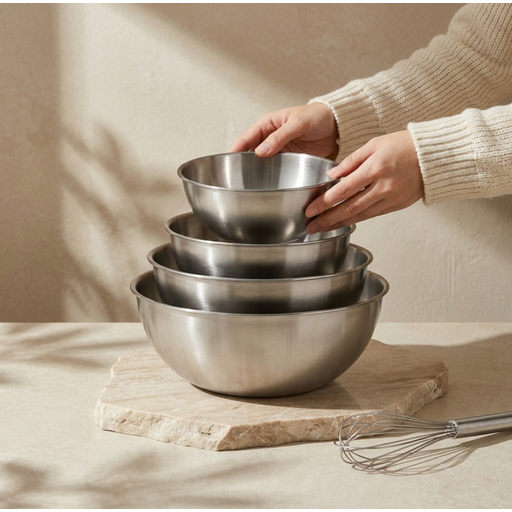
Why this fits the profile: This four-piece set is designed for mixing, whisking eggs, kneading dough, washing vegetables, marinating and serving.
The four sizes of 19, 22, 25 and 28 cm limit the problem of one universal size. The bowls are nestable for storage.
304 stainless steel, smooth rolled rim, dishwasher safety according to the description and no microwave use.
We've put together a full, up-to-date list of products that fully meet these strict selection criteria and comply with current European safety regulations.
Choose a set with multiple capacities, well-sealing lids and clear instructions for the fridge, freezer and microwave. A set like the Mepal Cirqula is, according to the product description, designed for storing, freezing and reheating without the lid. Always check whether the closure and material suit your meals.
This varies from product to product. The Alpina ceramic bowls and the ceramic ramekins mentioned are described as dishwasher-safe. Do check whether any plastic lids can also go in the dishwasher. For the Dafuceramic ramekins, hand washing is recommended for the lids.
Look for nestable or stackable bowls with increasing diameters. Stainless steel mixing bowls are often practical for this. Storage bowls with rectangular shapes can make efficient use of fridge space, but check whether the lids require separate room. If in doubt, first measure your shelf height and cupboard width.
