
Vandaag of morgen in huis

Kwaliteit gegarandeerd

Welkomstaanbiedingen ontgrendelen: GRATIS bezorging | Tot 80% korting | Gratis 30 dagen JoyPlus-proefperiode
Download de app
A bowl set may seem like a simple purchase, until you’re serving pasta, mixing dough or storing leftovers. That’s when size, material and care requirements start to matter more than colour or price alone. A bowl that’s too shallow can quickly spill over. A metal bowl can’t go in the microwave, and a ceramic bowl may crack if exposed to a sudden change in temperature.
Joybuy’s Product Recommendation Officer helps you assess the key differences in practical terms. That way, you can avoid buying a good-looking set that doesn’t suit your kitchen, dishwasher or cooking routine.
Four bowls may look like a good deal, but check the capacity and dimensions too. Four identical pasta bowls are handy for a family, but less suitable for small portions, dips or baking prep. A set with different sizes is often more versatile for meal prep and serving.
Also check whether you’re looking at a set or a single item. Some listings are for one bowl, even if the pictures show several. Always check the number of pieces in the product specifications.
According to the product information, some ceramic bowls can be used in the oven, microwave, dishwasher or freezer. That doesn’t automatically mean every part of a set is suitable for all of these. For example, with bowls that have lids, the bowl itself may be oven-safe, while a plastic lid may only be suitable for chilling or limited microwave heating.
Check the instructions for use too. With ceramic, avoid sudden temperature changes, such as putting a cold bowl straight into a hot oven.
A wide salad bowl can be handy for mixing, but it may take up a lot of cupboard space. Stackable bowls or mixing bowls that nest inside each other are more practical in smaller Dutch kitchens. Also check whether non-slip feet are firmly attached, whether the rim is smooth and whether any parts need to be washed by hand.
Ceramic bowls and porcelain bowls are great for serving and give your table a cohesive look. They’re generally heavier than plastic or steel and can break if dropped. Check the stated suitability for the oven, microwave, freezer and dishwasher rather than assuming.
Stainless steel bowls are lightweight and practical for mixing, whisking, marinating and washing vegetables. Metal shouldn’t go in the microwave. A silicone non-slip base can help prevent the bowl from sliding or making a noise on the worktop, but it won’t stop an overfilled bowl from tipping over.
Use these guidelines as a practical indication:
Bear in mind that diameter isn’t the same as capacity. A wide, shallow bowl may hold less liquid than a narrower, deeper soup bowl.
Check whether each item is:
According to the product descriptions, some ceramic designs are suitable for the oven, microwave and dishwasher. Stainless steel, on the other hand, isn’t suitable for microwave use. The product specifications and care instructions should always be your guide.
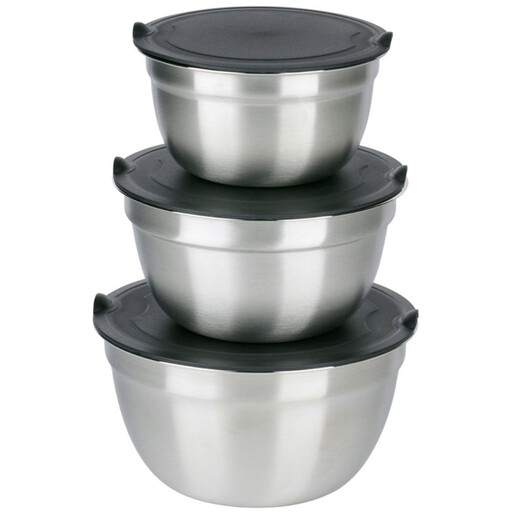
Why it suits this profile: According to the product information, the set includes three sizes and is suitable for serving salads, fruit and snacks every day. Stainless steel is lightweight and easy to clean.
The different sizes offer more flexibility than three identical bowls. Just note that, according to the product information, they aren’t suitable for the microwave or heat-resistant.
Three sizes, stainless steel and dishwasher-safe according to the product description.
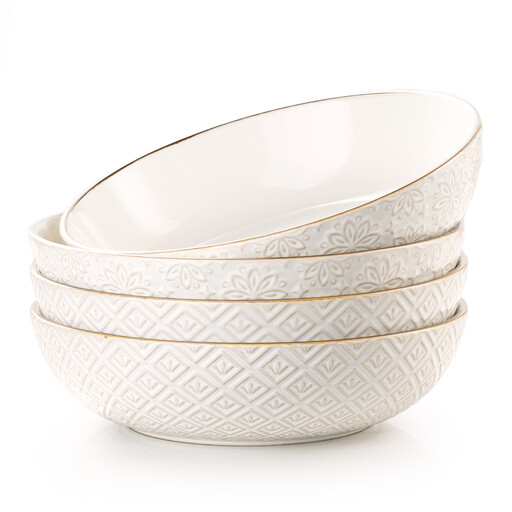
Why it suits this profile: According to the product information, these ceramic bowls are 8.5 inches in diameter and have a capacity of 36 oz. Their wide shape is ideal for pasta, salads, soup and main courses.
The size is clearly stated and, according to the product description, the bowls are stackable. This makes it easier to check in advance whether they’ll suit your portions and fit in your cupboard.
Set of 4, stackable and, according to the product information, suitable for the dishwasher, microwave and oven.
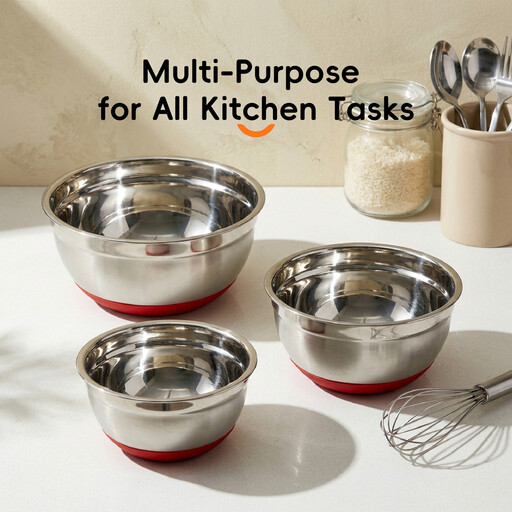
Why it suits this profile: According to the product information, this set is designed for mixing, whisking eggs, kneading dough, marinating and washing vegetables. The bowls measure 18, 20 and 22 cm and have a silicone non-slip base.
The non-slip base and nesting design address two practical problems: bowls sliding around while you mix and limited cupboard space. The bowls aren’t suitable for microwave use.
Food-contact-safe stainless steel, three nesting sizes and dishwasher-safe according to the product information.
Ramekins are practical for individual desserts and small portions. The Dafuceramic ramekins with lids are sold as a set of 6 and, according to the product description, have a capacity of 8 oz. The porcelain dishes are designed for crème brûlée, dips and quiche, among other things; follow the instructions for caring for the lids separately.
For breakfast or soup, bowls of around 50 to 600 ml are a more suitable choice. According to the product information, a porcelain set of 4 with a capacity of 50 cl is suitable for the microwave and dishwasher. A 600 ml Colorama bowl is described as stackable and suitable for soup, breakfast cereal or noodles.
We’ve put together a complete, up-to-date list of products that meet these strict selection criteria and the applicable European safety regulations.
Choose a compact set with two or three sizes, so you can serve everything from breakfast and snacks to salad. Stackability is important if you have limited cupboard space. Stainless steel or dishwasher-safe ceramic are practical materials for everyday use.
It depends on the product. Look for an explicit oven-safe and microwave-safe statement in the product information. Heat ceramic gradually and avoid sudden changes in temperature. Lid materials may have different limits from the bowl itself.
Lifespan depends on the material, how you use the bowls and how you care for them. Stainless steel is less prone to breakage, while ceramic and porcelain can be damaged by drops or thermal shock. Don’t use abrasive cleaning products if the manufacturer advises against them, and check the rims, glaze and non-slip feet regularly.
