
Vandaag of morgen in huis

Kwaliteit gegarandeerd

Welkomstaanbiedingen ontgrendelen: GRATIS bezorging | Tot 80% korting | Gratis 30 dagen JoyPlus-proefperiode
Download de app
A bowl set may seem straightforward to choose, but the difference often lies in the details. Is the set large enough for soup and pasta? Can the bowls go in the dishwasher? Will they fit in your kitchen cupboard? And are they suitable for mixing, serving or just breakfast?
Marketing copy often focuses on looks and versatility. So pay particular attention to the dimensions, material and care instructions. That way, you can avoid finding that a lovely-looking set is impractical for everyday use after just a few weeks.
A set of four bowls isn’t automatically suitable for a household of four. Check the capacity and diameter too. A small bowl is ideal for snacks or dips, but less practical for soup or pasta. For some products, “set” may mean one serving bowl with accessories rather than several individual bowls.
A bowl may be suitable for salad, breakfast and snacks, but not necessarily for the microwave or oven. Metal bowls must not be used in the microwave. Wooden and enamelled bowls are usually designed for serving and often need to be washed by hand. Always check the product information to see what the bowl is suitable for.
A wide rim, unusual shape or non-slip base can make bowls harder to stack compactly. Check your available cupboard space as well as the bowl’s shape. Serving bowl sets and rectangular tapas bowls in particular may take up more room than you expect.
304 stainless steel is described in the product information as suitable for direct contact with food and resistant to rust and corrosion. It’s lightweight, strong and suitable for mixing, marinating and washing vegetables. However, a metal bowl isn’t suitable for the microwave and may become hot when filled with hot liquids.
Ceramic and porcelain feel heavier and work well for breakfast bowls, soup bowls and pasta bowls. Check whether they’re listed as suitable for the dishwasher, oven, freezer and microwave. Ceramic can break or crack if dropped or exposed to sudden temperature changes.
Mango wood and terracotta are mainly designed for serving and adding atmosphere to your table. According to the product information for the Dexam models, these bowls aren’t suitable for the dishwasher, microwave or oven. They need to be washed by hand and dried straight away.
For everyday use, these are some general guidelines:
Always check the dimensions in centimetres. A diameter in inches may be less helpful when you’re working out whether a bowl will fit in a kitchen cupboard.
A label such as dishwasher-safe bowls is handy for everyday use, but check whether it applies to the whole set. If a set combines wood, ceramic and metal, one of the pieces may need to be washed by hand. For hand-finished items, avoid using a scourer if the product information advises against it.
For hot food, consider the weight and grip too. A smooth metal bowl may slide around while you stir; according to the product description, a silicone base can help prevent this. Don’t overfill bowls, and take care when moving them if they contain hot food.
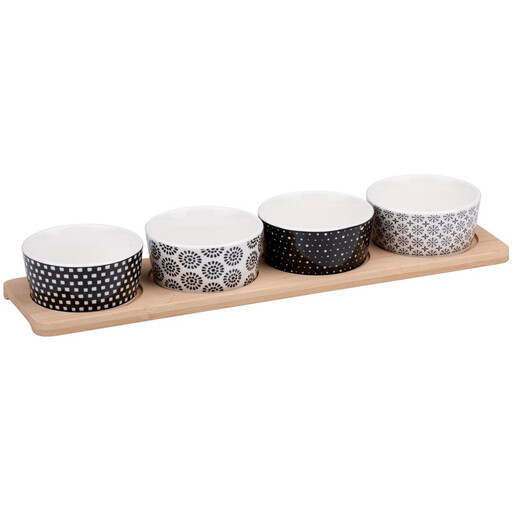
Why it suits this profile: This compact ceramic set is designed for nibbles, desserts and small dishes. Its white, rectangular shape is ideal for informal meals and entertaining.
The product information clearly states that the set is suitable for snacks, desserts and dishwasher use. The 38 x 10 cm dimensions also give you a clear idea of its serving platter shape before you buy.
Ceramic, with five serving pieces and listed as dishwasher-safe in the product information.
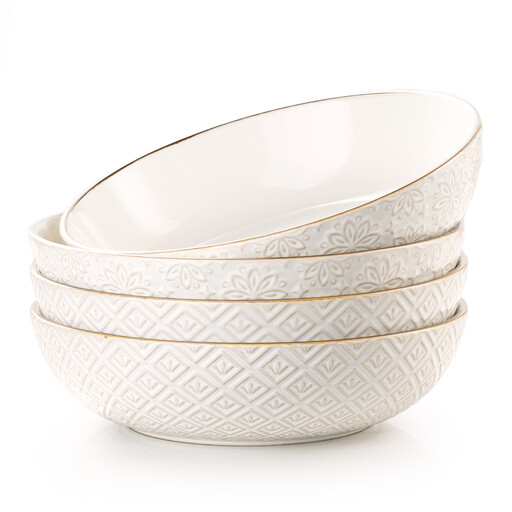
Why it suits this profile: The wide, deep shape is practical for pasta, salad, soup and main courses. This set is designed for everyday dining and serving.
The product information gives the diameter, height and set size. This makes it easier to judge the capacity and cupboard space you’ll need than a vague claim about “large bowls”.
Four 8.5-inch ceramic bowls; listed as suitable for the dishwasher, microwave and oven in the product information.
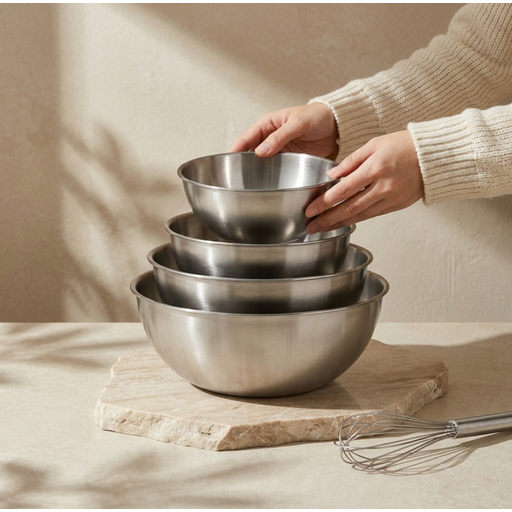
Why it suits this profile: The four sizes—19, 22, 25 and 28 cm—are useful for mixing, kneading, washing, marinating and serving.
The material specification confirms 304 stainless steel, a coating-free design and nesting sizes. The limitation is clear: don’t use it in the microwave.
Four nesting bowls, suitable for hot and cold use; listed as dishwasher-safe in the product information.
We’ve put together a complete, up-to-date list of products that meet these strict selection criteria and the applicable European safety regulations.
A practical starting point is a set of breakfast bowls, soup bowls or pasta bowls, depending on what you eat. If you also enjoy cooking, a set of mixing bowls in different sizes is useful. Snack bowls or tapas bowls are a great addition when you’re entertaining.
No. Check the care instructions for each product. Ceramic bowls and many stainless steel bowls are listed as dishwasher-safe in the product information. Wooden serving bowls and some hand-finished models need to be washed by hand.
Its lifespan depends on the material, how it’s used and how it’s cared for. Stainless steel is less prone to breaking, while ceramic can be damaged if dropped or exposed to thermal shock. Use bowls as directed, avoid sudden temperature changes and check them regularly for cracks, chips or damaged edges.
