
Vandaag of morgen in huis

Kwaliteit gegarandeerd

Welkomstaanbiedingen ontgrendelen: GRATIS bezorging | Tot 80% korting | Gratis 30 dagen JoyPlus-proefperiode
Download de app
A bowl set may seem like a simple purchase, until you realise that not every bowl is suited to the same task. A shallow pasta bowl is great for pasta and salad, but less so for soup. A large mixing bowl is handy for baking, but takes up plenty of cupboard space. And a bowl described as dishwasher-safe isn’t necessarily suitable for the oven or microwave too.
Use this practical guide to compare ceramic bowls, serving bowls, mixing bowls and stainless steel bowls by size, material, care and use. That way, you can avoid paying for features you don’t need or buying a set that doesn’t suit your kitchen.
A set of three or four may sound appealing, but check the dimensions and capacity too. Four small bowls are not the same as four generous soup bowls. Look at the diameter, height and capacity in millilitres. A 600 ml bowl works well for breakfast, soup or noodles, while a pasta bowl of around 1 litre gives you more room for a main meal and sauce.
Product descriptions sometimes list suitability for the dishwasher, microwave, fridge, freezer and oven separately. These features aren’t interchangeable. A stainless steel bowl, for example, mustn’t go in the microwave. According to the product information, the Curver Essentials mixing bowl is suitable for the microwave, fridge and dishwasher, but not for a conventional oven or freezer.
Always check the individual symbols or specifications before heating or freezing a bowl.
A set may look stackable, but wide rims, handles or unusual shapes can still take up plenty of cupboard space. Stackable bowls in graduated sizes are more practical when storage space is limited. With mixing bowls, nesting the smaller bowl inside the larger one is often more useful than simply being described as “stackable”.
For claims such as “extra durable”, “odour-free” or “safe for acidic foods”, it’s worth checking the source. This article includes these properties only when they appear in the relevant product description; they’re claims made by the brand or manufacturer, not independently verified findings.
For everyday use, you can use these approximate guidelines:
A wide, shallow shape works well for pasta and salad. A deeper bowl helps prevent splashes while mixing and is more practical for liquid dishes. With serving bowls, the rim matters too: a wide rim makes serving and carrying easier.
Check whether the set includes dishwasher-safe bowls and whether the whole bowl can go in the dishwasher, including any silicone base or lid. Hand-washing may be recommended for steel bowls to help keep a silicone component in good condition for longer. A non-slip base helps with whisking and kneading, but won’t stop an overfilled bowl from tipping over.
For oven-safe bowls, avoid sudden changes in temperature. Don’t put a cold ceramic bowl straight into a very hot oven, and use oven gloves when taking it out.
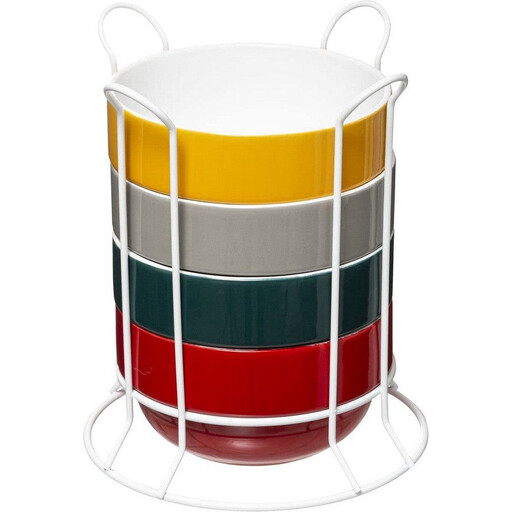
Why it suits these needs: This set contains four 50 cl porcelain bowls, ideal for breakfast, yoghurt, smaller portions and everyday use.
The capacity and number of bowls are clearly stated, so you don’t have to judge by set size alone.
Four bowls, each with a capacity of 50 cl; microwave-safe and dishwasher-safe according to the product information.
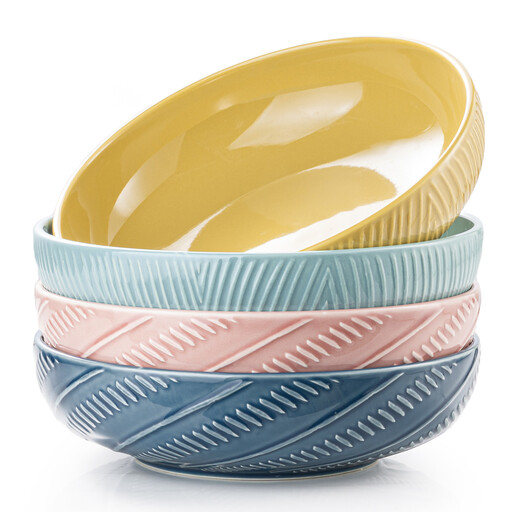
Why it suits these needs: The wide shape and 36 oz capacity make these bowls ideal for pasta, salad, soup and generous meal-sized portions.
The product information gives precise dimensions of 8.5 inches by 2.4 inches and states that the bowls are stackable.
Four ceramic bowls; described as suitable for the microwave, fridge, dishwasher and oven in the product description.
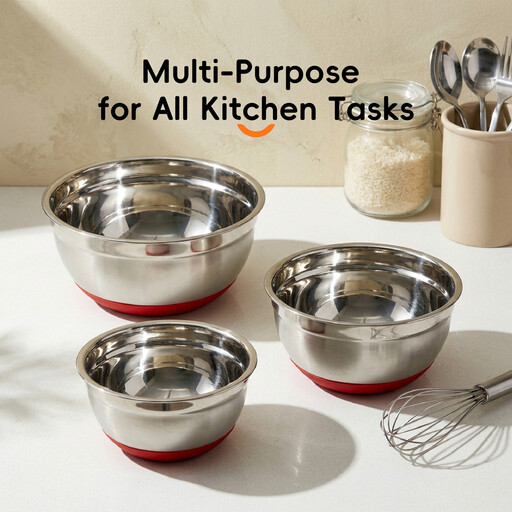
Why it suits these needs: This set is designed for mixing, whisking, kneading, marinating and preparing salads.
The three sizes—18, 20 and 22 cm—are clearly stated, and the bowls nest inside one another.
Food-contact-safe stainless steel, a non-slip silicone base and dishwasher-safe according to the product description.
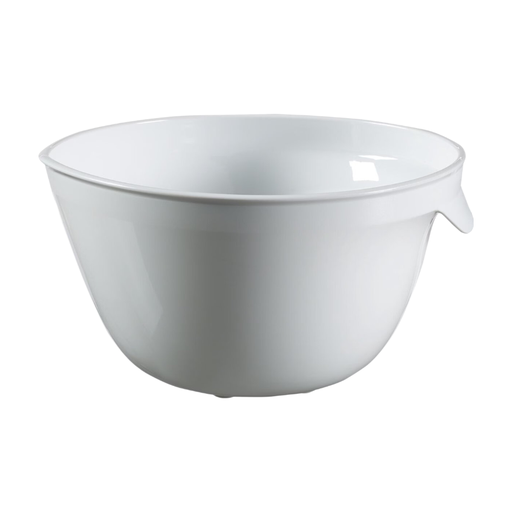
Why it suits these needs: The 3.5-litre capacity gives you plenty of room for batter, dough, marinades and large salads.
The product information clearly states that the bowl must not be used in a conventional oven or freezer.
BPA-free plastic, a handle and stabilising base; suitable for the microwave, fridge and dishwasher according to the product description.
We’ve put together a complete, up-to-date list of products that meet these strict selection criteria and current European safety regulations.
A medium-sized bowl of around 500 to 700 ml is practical for soup. For pasta, salad or ramen, a wider bowl with a capacity of around 800 ml to 1 litre or more is more convenient. Check the shape too: a shallow pasta bowl gives you room to mix ingredients without the rim being too high.
No. Ceramic bowls aren’t automatically oven-safe. Check the specific product information and look out for warnings about thermal shock. Don’t put a hot bowl straight into cold water, and use oven gloves when it’s hot.
Stackable bowls or nesting mixing bowls generally take up less space than bowls with wide bases, handles or fixed lids. A set with graduated diameters, such as a stainless steel mixing bowl set, is practical if you want several sizes without needing multiple separate stacks in your cupboard.
