
Vandaag of morgen in huis

Kwaliteit gegarandeerd

Welkomstaanbiedingen ontgrendelen: GRATIS bezorging | Tot 80% korting | Gratis 30 dagen JoyPlus-proefperiode
Download de app
A perfectly manicured lawn without having to lift a finger. That is the promise of an automatic lawnmower. The latest generation, the boundary wire-free robotic mower, promises even more convenience: no more hassle of burying cables. But the reality is that not every wireless robotic mower lives up to its promises. Many buyers fall into marketing traps and end up with an expensive gadget that constantly gets stuck or misses half the lawn.
As a Joybuy Product Recommendation Officer, I'll help you cut through the marketing jargon. We'll look at the specifications that truly matter, so you can choose a model that fits your garden, not a marketer's dream.
Before we get to the recommendations, let's discuss the 3 most common pitfalls:
To avoid the pitfalls above, there are two technical specifications you must check before buying a boundary wire-free robotic mower.
The way a wireless robotic mower finds its way is crucial. The two main technologies are RTK and vision-based systems.
Look beyond the maximum area advertised. Two figures are important here:
Below is a selection of models, matched to specific user profiles. These choices are based on objective product specifications that help avoid the pitfalls mentioned earlier.
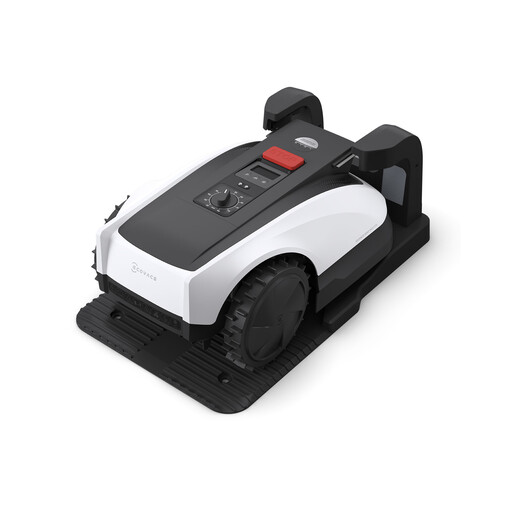
Why This Fits Their Persona: Ideal for the typical suburban garden up to 800m?. This user wants a reliable, 'set it and forget it' solution that won't get lost under the apple tree or next to the shed.
The combination of RTK technology and a vision system tackles the pitfall of unreliable navigation. It maintains its position even with a weak signal, preventing random 'getting lost' behaviour.
Centimetre-accurate navigation for systematic mowing paths and precise edge cutting. The automatic mapping function via the app simplifies installation.
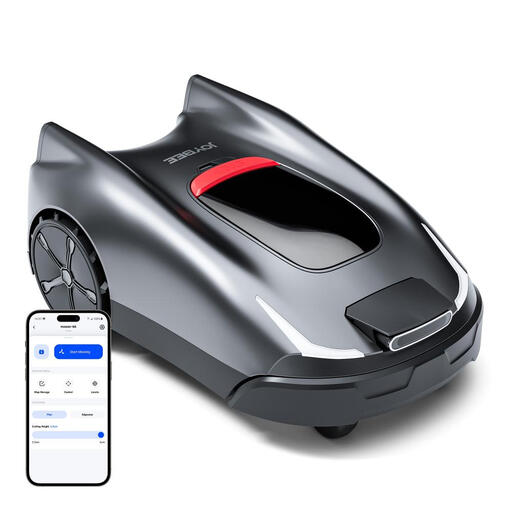
Why This Fits Their Persona: This user has a large property (up to 3000m?) with multiple zones, a patio, a pond, and perhaps some slopes. They want full control via an app and are willing to invest in top-tier technology.
The combination of an auto-lift camera and 3D ToF sensors provides much more robust obstacle detection than the overhyped "AI vision" of simpler models. According to the manufacturer, the system recognises sudden obstacles and reacts instantly.
Very large capacity (3000m?), can handle slopes up to 45%, and offers advanced multi-zone management via the app, including setting up to 50 no-go zones.
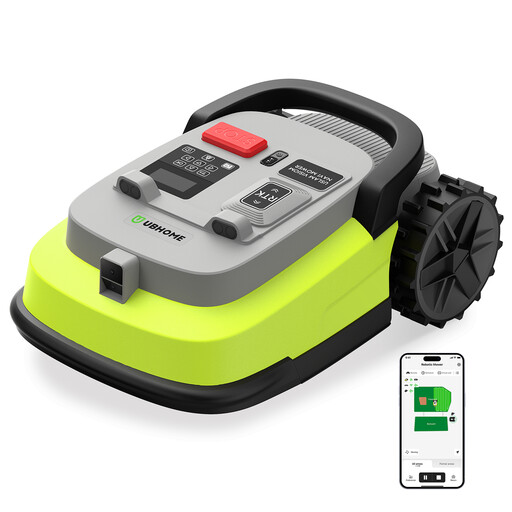
Why This Fits Their Persona: For the homeowner whose garden resembles a hilly landscape. The main concern is not size, but whether the mower can climb the slopes and maintain grip on uneven terrain.
According to the manufacturer, this model is specifically designed for rough terrain. Where standard mowers get stuck or lose grip on a slope, this model is equipped with oversized off-road rear wheels and a powerful motor to finish the job.
Exceptional performance on slopes, with a manufacturer-claimed ability to handle inclines up to 55% (28.8°). The combination of RTK and AI vision also ensures accurate navigation here.
We have compiled a complete, up-to-date list of products that meet these strict selection criteria and comply with local regulations.
The accuracy heavily depends on the technology used. Models with RTK navigation are generally the most accurate and can determine their position to within a few centimetres. This results in clean, straight mowing lines and ensures the mower doesn't get lost. Models that rely solely on a camera can be slightly less precise, especially in changing light conditions.
A standard robotic mower with GPS has an accuracy of several metres, which is often insufficient for a garden. An RTK robotic mower corrects this signal with a local base station, leading to centimetre-level precision. A model with only a camera depends on what it 'sees'. This can work well in a garden with distinct features but may struggle with a large, uniform lawn or at dusk. RTK is typically the most reliable technology for flawless operation.
The maintenance is relatively minimal. The main tasks are:
