
Vandaag of morgen in huis

Kwaliteit gegarandeerd

Welkomstaanbiedingen ontgrendelen: GRATIS bezorging | Tot 80% korting | Gratis 30 dagen JoyPlus-proefperiode
Download de app
A regular washing-up brush often can’t reach far enough into a baby bottle, flask or water bottle. This can leave milk, juice or coffee residue at the bottom and around the neck. The right bottle brush makes cleaning easier, but not every brush is suitable for every type of bottle.
When choosing one, pay particular attention to its shape, material and care instructions. Marketing claims such as “extra hygienic” or “suitable for all bottles” don’t mean much if the brush won’t fit through the opening or takes a long time to dry after use.
A wide brush head can be useful for glass jars, but it won’t work well with a narrow-necked bottle. So check the diameter of the brush head and the length of the handle. A bottle brush for narrow-necked bottles needs to be flexible enough to reach the bottom and inner walls without forcing the bottle opening.
Stiff bristles can scratch some plastic surfaces. Residue can build up more easily in these scratches. A softer head, such as one made from silicone, is a practical choice when cleaning baby bottles, teats or reusable water bottles. Just make sure the brush is firm enough to remove dried-on residue.
A wet brush left in a closed container takes a long time to dry. That’s not practical for everyday use. Look for a stand, ventilation holes or a hanging loop. Check the brush regularly and replace it if the bristles come loose, become misshapen or get damaged.
A silicone bottle brush generally feels soft and is suitable for surfaces where you want to minimise scratching. According to the product description, the Momcozy sets combine food-grade silicone with BPA-free plastic. The silicone parts can be boiled for sterilisation, following the instructions provided.
Rubber bristles can be extra flexible. The 5five Rubber Bottle Brush has rubber bristles and a plastic handle. The manufacturer states that this model is dishwasher-safe. Always check the care instructions for your specific bottle and brush before use.
A long handle is useful for tall water bottles and flasks. The 5five brush is 35 cm long and has a rubber scraper at the tip. This can help remove stubborn residue. However, a long handle is less practical if you mainly clean small baby bottles; a compact set with several attachments may be more convenient.
A single bottle cleaning brush isn’t always enough. Teats, valves and straws have smaller openings. A bottle brush set with a separate teat brush and straw brush means you won’t have to search for a different tool for each part.
Also consider how the parts are stored. A drying rack or ventilated case is practical for households that take the set to nursery, on holiday or to visit family.

Why it suits this profile: A simple brush for anyone who wants to clean baby bottles, vases, flasks and other narrow containers with one compact tool.
The flexible bristles are designed to reach awkward corners. The included stand helps the brush dry upright after use.
Lightweight at 0.04 kg, suitable for narrow openings and supplied with a separate stand.

Why it suits this profile: A comprehensive set for parents who want to clean teats, straws, teething rings and breast pump parts as well as bottles.
The set includes separate brushes for bottles, teats and straws. The foldable drying rack and storage case help keep all the parts together.
7-in-1 set, food-grade silicone according to the product information, and silicone parts that can be boiled.
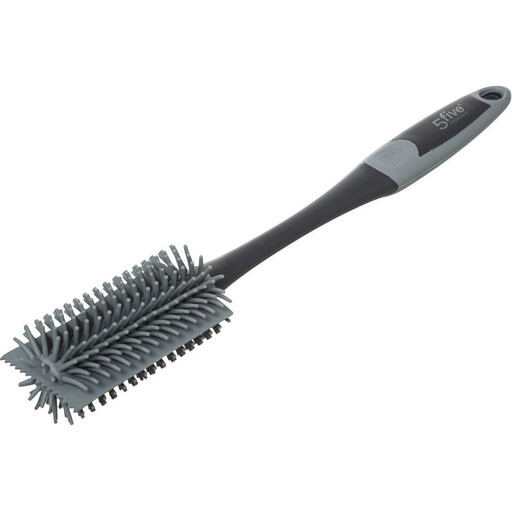
Why it suits this profile: Suitable for tall water bottles, flasks and narrow glasses when extra reach matters more than a complete baby care set.
Its 35 cm length helps you reach into tall bottles. The ridged tip is designed to loosen stuck-on food residue.
Dishwasher-safe according to the product information, with rubber bristles and a non-slip handle.
We’ve put together a comprehensive, up-to-date list of products that meet these strict selection criteria and the applicable European safety regulations.
Only use a dishwasher if both the bottle and the dishwasher-safe bottle brush are suitable for it. “Dishwasher-safe” doesn’t automatically mean that every part can be washed on every programme.
It depends on how often you use it and what it’s made from. Replace the brush as soon as the bristles come loose, the head becomes misshapen or you notice any damage. If you use it daily, regular checks are more important than sticking to a fixed replacement date.
A silicone brush can be a gentle option for bottles and accessories. Check the product specifications, particularly if you want to boil the parts. According to the product information, the silicone parts in the Momcozy sets are suitable for this.
A single brush is enough if you only want to clean the inside of a bottle. A set is more practical if you also clean teats, valves, straws or breast pump parts. Choose a set based on the accessories you actually use, so you don’t end up buying unnecessary parts.
