
Baker preparing lots of portions for sale
You want to plan for several tins or batches, while still taking the tin size and baking results into account.


Start by checking the internal dimensions: your baking tin needs to fit, as the stated capacity in litres won’t tell you whether it will. If you want to bake with several tins at once, the available oven settings and shelf positions matter, but they don’t guarantee an even result. For a single tin, an oven with the setting specified in your recipe may be all you need. Then choose based on the space available and whether you also need a microwave function.
You want to plan for several tins or batches, while still taking the tin size and baking results into account.
You’re weighing up a freestanding oven, one that fits a built-in space and a more compact combination oven.
You’re mainly looking for a suitable oven with straightforward time, temperature and setting controls, without prioritising extra features.
Choose this option: if you don’t have a suitable built-in space and can make room on your worktop.
Bear in mind: the capacity won’t tell you whether your tin will fit or whether several tins will bake evenly at the same time.
Choose this option: if you have a suitable built-in space and regularly want to bake with several tins.
Bear in mind: check the space dimensions and installation details. Having several shelf positions doesn’t prove that each one will give the same result.
Choose this option: if you need a microwave function as well as an oven and are looking for a compact built-in solution.
Bear in mind: check that your tin fits in the usable oven space. A microwave function alone says nothing about baking results.
| What to consider | What to look for when buying | Who is this important for? |
|---|---|---|
| Baking tin and capacity | Measure your tin and compare its dimensions with the internal space and available heights of the exact model. | If you need lots of portions, you’ll want to know whether your tin fits and how many batches you’ll need. Around 31% of consumers give baking capacity the highest priority. |
| Oven setting and baking results | Check the model’s settings and follow the oven-setting instructions in your recipe. | If you’re baking the full amount for the school bake sale, you’ll want to use the setting specified in the recipe and assess the result first. Around 31% of consumers prioritise the expected baking result. |
| Positioning and oven type | Check the available built-in or worktop space, the internal dimensions and the installation details for the exact model. | If your kitchen has limited space, you’ll want to know which oven will fit and whether you need a built-in model or a microwave function. Around 23% of consumers prioritise the space available in their kitchen. |
| Controls and energy use | Compare the controls for repeated batches and, where available, the energy use per cooking cycle. | If you’re baking several batches, you’ll want to set the time and oven setting easily and compare energy use. Around 15% of consumers give ease of use and energy consumption the highest priority. |
The stated capacity doesn’t tell you whether your square baking tin will fit in the oven. The Dutch Consumers’ Association recommends checking the internal dimensions.
Measure your tin and compare it with the internal space before choosing a model.
If the tin doesn’t fit, you may need a different tin or an extra baking batch.
The number of available shelf positions doesn’t prove that cakes will bake the same on each one. The Dutch Consumers’ Association assesses differences in browning between shelf positions as part of its oven tests.
Where possible, compare independent model tests and try your recipe before baking the full amount.
You may need a test batch or separate batches to assess the result with your recipe.
When comparing ovens, the Dutch energy advice organisation Milieu Centraal also recommends checking energy use per cooking cycle.
Compare the energy use with the amount you usually bake, and choose extra oven space only if it suits your baking plans.
If an oven is larger than you need for your usual portions, energy use per cooking cycle is another point to compare.
The Netherlands Food and Consumer Product Safety Authority (NVWA) says consumers must be informed about allergens present in unpackaged food.
Agree how you’ll sell the food with the school, and keep a record of the ingredients and allergens actually used.
Inventum makes freestanding ovens, including the OV607B.
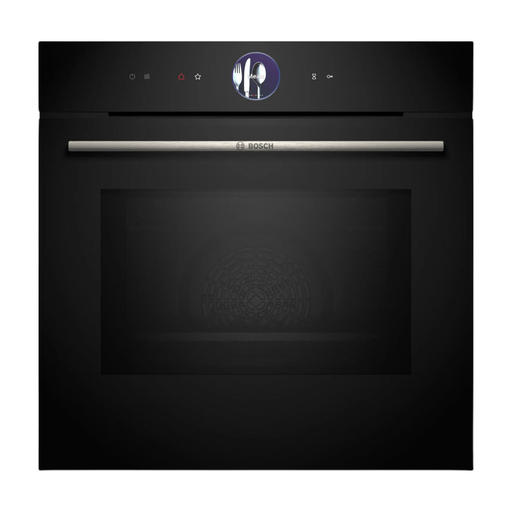
Bosch offers built-in ovens, including the HBA3140B4.
AEG offers both built-in ovens and compact combination ovens, with a range of space and feature options.
ETNA offers built-in ovens, including the OM316MZ.
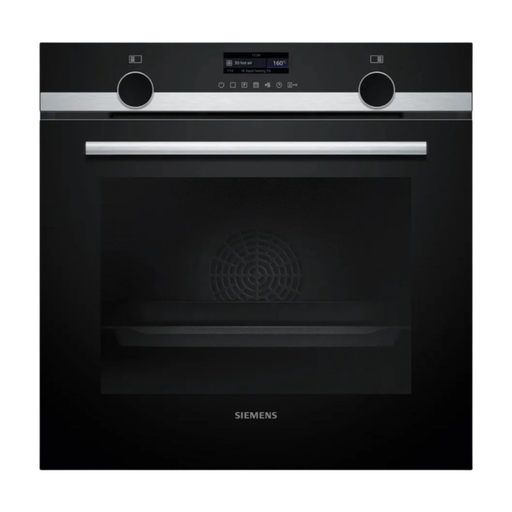
Siemens offers built-in ovens such as the HB337A0S0, with specified installation dimensions and a range of heating settings.
This selection includes freestanding and built-in ovens, including combination models, for baking boterkoek or butter cake.
 No image available
A freestanding model to consider if you don’t have a suitable built-in space; make sure you have somewhere suitable to put it.
Stated capacity: 65 L. Power according to the product name: 2000 W.
 No image available
An option to compare if you want to combine baking with a microwave function; check that your tin will fit and that your built-in space is suitable.
 No image available
A built-in option to consider if you want to plan for several tins per batch; check the built-in space and internal dimensions, and test the result with your own recipe.
Stated capacity: 71 L.
 No image available
A built-in model to compare if you have a suitable space; check the oven settings and the dimensions of your baking tin.
Stated capacity: 66 L.
 No image available
A built-in option to compare if you’re looking for a spacious oven; check the dimensions of the built-in space and whether your tin will fit inside.
Stated capacity: 71 L.
No. Start by following the oven setting in your recipe. The Netherlands Nutrition Centre notes that many recipes call for top and bottom heat. If you choose a different setting, follow the guidance for your recipe and assess the result with each batch.
Measure your tin and compare its dimensions with the oven’s internal space, including the room needed to place it on the rack. The Dutch Consumers’ Association recommends checking the internal dimensions, as the stated capacity doesn’t tell you whether a specific tin will fit.
It depends on the recipe. Rutger Bakt says that for boterkoek baked in a 20 by 20 cm tin, the cake should cool in the tin for at least 6 hours before you cut it into pieces. Don’t automatically use this method for butter cake.
Check the installation details for the exact model, along with the retailer’s and manufacturer’s guarantee terms. For example, Inventum lists a five-year guarantee for the OV607B; this period doesn’t automatically apply to other ovens.
Yes. The NVWA says that the rules for preparing, storing and selling food safely at markets and events also apply to individuals. According to the NVWA, anyone who prepares and sells food several times a year must have an HACCP food safety plan; based on that wording, a one-off school bake sale isn’t automatically subject to that specific planning requirement.
The NVWA outlines the requirement to inform consumers about allergens present in unpackaged food. Put the information together using the ingredients you actually use; don’t rely on a sample recipe if you’re making a different one.