When choosing bookshelf speakers for piano music, start by checking how your source connects and whether you have room for two speakers. An active stereo pair works without a separate amplifier; passive speakers need a suitable amplifier. A compact Wi-Fi speaker may suit you if app control is important, but you may need an adapter to connect an external source. If you want to play live on a digital piano, check for latency too: Sonos documents latency with line-in audio on the Era 100.
Who are these speakers suitable for?
Listeners with a computer or another audio source
You want to play recorded piano music through two speakers without buying a separate amplifier. Start by checking which audio output your source has and whether it matches the inputs on your chosen model. Edifier and Audioengine list the connection options available on their models.
Hi-fi listeners with an amplifier
You already have an amplifier, or want to choose one separately, so you can also consider passive models. Compare the speaker’s requirements with your amplifier’s specifications; for example, KEF specifies 15–150 W for the Q3 Meta.
Listeners with limited space
You need to fit two speakers and your listening position into a hobby room. Genelec points out that reflections and a balanced left-right setup can affect what you hear from your listening position.
What should you consider when choosing?
Active stereo pair
A good fit if: you want to play recorded piano music without a separate amplifier. Check that the inputs match your source.
Bear in mind: you’ll need space for two cabinets and their cables; connections vary by model.
Passive stereo pair
A good fit if: you already have a suitable hi-fi amplifier or want to choose one separately.
Bear in mind: the speakers won’t work without a suitable amplifier; KEF specifies an amplifier requirement of 15–150 W for the Q3 Meta.
Compact Wi-Fi speaker
A good fit if: wireless playback and app control matter more to you than a traditional stereo setup.
Bear in mind: you’ll need a separate adapter for an external line input on the Sonos Era 100; Sonos also notes that line-in audio can have latency.
| What to consider |
What should you check? |
Who is this important for? |
| Connecting to your source |
Compare the output on your computer, streamer or digital piano with the inputs on the exact model. Edifier lists two line inputs, optical, coaxial and Bluetooth for the R1280DBs; Sonos describes a separate adapter for an external line input on the Era 100. |
If I want to connect my source directly, I focus on having the right input and connection. Around 36% of consumers prioritise source compatibility. |
| Placement and stereo imaging |
Check that you have room for both cabinets and their cables. Genelec recommends a symmetrical stereo setup, with similar reflections on the left and right. |
In a small hobby room, I want to place two speakers so I can create a workable stereo setup from my listening position. This is the main concern for around 29% of consumers. |
| Amplifier and complete set |
For passive speakers, check the requirements of the exact model and whether the set you’re buying includes one speaker or two. KEF specifies an amplifier requirement of 15–150 W for the Q3 Meta. |
I want to know whether my amplifier is suitable and whether I can set up a pair. Around 21% of consumers prioritise amplifier compatibility and what’s included in the set. |
| Wireless convenience and control |
Check whether you want to use one speaker or two, and whether an external source needs an adapter. Sonos explains that two Era 100 speakers can be paired and that line-in audio may have latency. |
If I mainly want to play music wirelessly and control it through an app, I weigh up the convenience against the extra speaker or adapter I may need. Wireless control is a priority for around 14% of consumers. |
Things to look out for when buying
-
Assuming wireless also means you can connect a piano directly
The Sonos Era 100 needs a separate adapter for an external line input. Sonos also notes that line-in audio can have latency, which matters if you want to hear yourself as you play.
First, check the output on your digital piano and the connections on the exact speaker model. Consider playing live separately from listening to recordings.
-
Taking ‘bookshelf speaker’ as a guide to where to put it
The room, reflections and the position of your speakers and listening spot can all affect what you hear. A bookshelf won’t automatically provide the right place for two speakers.
Measure both speaker positions and try to place the speakers as evenly as possible on either side of your listening spot. Also follow the placement guidance for your chosen model.
Brands to consider
Edifier
The active R1280DBs is worth considering if you want to connect different sources without a separate amplifier.
- Edifier lists two line inputs, optical, coaxial, Bluetooth and a subwoofer output for the R1280DBs.
- Check the full model number and the inputs your source needs; connections alone won’t tell you which sound you’ll prefer in your room.
KEF
The passive Q3 Meta is an option if you already have a suitable amplifier or want to choose one separately.
- KEF specifies an amplifier requirement of 15–150 W and sells the Q3 Meta as a pair.
- Check that your amplifier is suitable for the model you choose. Manufacturer claims about driver technology don’t, by themselves, prove that a speaker will sound better in your room.
Q Acoustics
The passive 3020c is a standmount model to consider if you have a suitable amplifier or plan to choose one separately.
- This model offers a passive speaker option for a system you put together separately.
- Check whether the version you choose includes one speaker or a pair, and whether your amplifier is suitable.
Audioengine
The A5+ range is worth considering if you’re looking for active stereo speakers with connections for different sources.
- The Audioengine A5+BT manual lists built-in amplification, analogue inputs and Bluetooth.
- Check the full model name and connections; details for the A5+BT don’t automatically apply to every A5+ version.
Sonos
The Era 100 may suit you if compact Wi-Fi playback and app control are important.
- Sonos explains that two Era 100 speakers can be paired for stereo playback.
- You’ll need a separate line-in adapter to connect an external source. Sonos also notes that line-in audio can have latency, so bear this in mind if you want to play piano live.
Joybuy products for a passive stereo setup
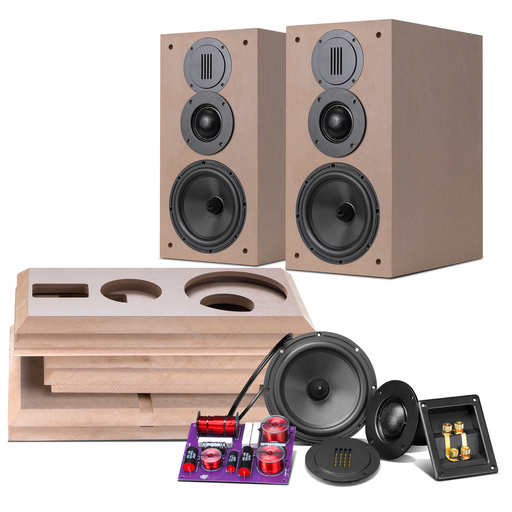
This Joybuy selection features passive bookshelf speaker pairs for listening to recorded piano music in stereo. You’ll need a suitable separate amplifier.
 No image available
HiVi-Swans DIY3.1 passive bookshelf speakers, pair, 6.5 inch
Suitable if you’re looking for a passive pair and already have a suitable amplifier or want to choose one separately.
2-way bass reflex design; 6.5-inch bass/midrange driver and 28-mm soft dome tweeter.
View at Joybuy
 No image available
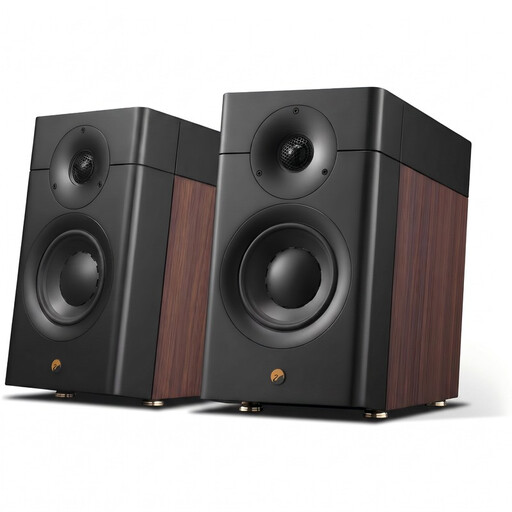
HiVi-Swans D3.1MKII passive bookshelf speakers, pair, 6.5 inch
Suitable if you want to connect a passive stereo pair to a suitable separate amplifier.
6.5-inch bass/midrange driver and 28-mm soft dome tweeter.
View at Joybuy
Frequently asked questions
Can you connect bookshelf speakers directly to a digital piano?
Only if your piano’s output matches the input on the exact speaker model and you use the right connection. You’ll need a Sonos line-in adapter to connect an external analogue source to the Sonos Era 100; Sonos also notes that line-in audio can have latency. Bear this in mind if you want to hear yourself playing live.
Where should you place two speakers in a hobby room?
Start by placing them as symmetrically as possible on either side of your listening spot, with similar surroundings for both speakers. Genelec points out that reflections and the position of a stereo pair can affect what you hear. Also follow the placement instructions for your chosen model.
Do passive bookshelf speakers need an amplifier?
Yes, passive speakers need a suitable separate amplifier. Compare the requirements for the exact model with your amplifier’s specifications; for example, KEF specifies 15–150 W for the Q3 Meta.
Does the legal guarantee in the Netherlands always last exactly two years?
No. The Dutch government states that the Netherlands has no fixed statutory guarantee period; you’re entitled to a product that works properly and meets what you could reasonably expect from it. If something is wrong, contact the seller. An additional guarantee doesn’t replace these rights.
Can you try a pair bought online at home?
For an eligible online consumer purchase, the Dutch government generally specifies a 14-day cooling-off period. Check the terms that apply to your particular purchase.


