Who are these options for?

Listener at the dining table

You want to follow voices and instruments from a regular seat, and need space to position two speakers around your listening area. Genelec explains that both room acoustics and speaker placement affect what you hear; this doesn’t predict exactly how a particular model will sound.

Cook who wants easy streaming

You play recordings from a phone or music service and want to control playback without touching the speakers. Check that Bluetooth, Wi-Fi, any app and any adapters are compatible with your source and preferred playback method.

Someone with limited safe space for speakers

You have limited shelf space near the kitchen worktop. Measure the available space and consider splashes, heat and ventilation; a compact cabinet doesn’t remove the usage restrictions in the manual. For example, the Edifier manual warns against water, splashes and heat around the R1280DBs.

What should you look for when buying?

Active stereo set

Choose this if: you can position two speakers safely and don’t want to use a separate amplifier.

Consider: Bluetooth doesn’t automatically mean Wi-Fi streaming or multi-room use; check that the connections suit your source.

Passive bookshelf speaker pair

Choose this if: you already have a suitable amplifier or want to choose the amplifier and speakers separately.

Consider: the amplifier, speaker cables and connection to your music source are all part of the complete set-up.

Compact Wi-Fi speaker

Choose this if: app control or listening to music in multiple rooms matters to you.

Consider: check your network and playback method; you may need extra components to connect a pair of speakers or an analogue source.

What to consider What to check before buying Who is this most relevant to?
Vocals and stereo imaging Assess your listening position and whether you can place the left and right speakers effectively. I want to follow voices and accompaniment from my regular seat; around 36% of consumers prioritise vocals and stereo imaging.
Connection to your source Compare the outputs on your phone, player or streamer with the inputs on the exact model. I want to play recordings from my own source without connection problems; around 29% of consumers prioritise source compatibility and control.
Safe placement Measure both locations and consider how far they are from the sink and hob. I need to find space for two speakers in my kitchen-diner first; around 21% of consumers prioritise available space and safe placement.
Complete set-up Check whether you’ll also need an amplifier, a second speaker or an adapter. I want to know in advance which components my chosen set-up requires; around 14% of consumers prioritise the complete set-up.

Buying pitfalls

  • Assuming wireless means no extra steps

    According to Sonos, the Sonos Era 100 must first be set up over Wi-Fi before you can use Bluetooth. A separate adapter is needed for an analogue line input, and Sonos describes using two Era 100 speakers as a pair.

    Map out the complete playback set-up before buying, and check the number of speakers and included accessories for the exact version.

  • Buying a passive pair as if it can play music on its own

    The KEF Q1 Meta is passive and, according to KEF, needs a suitable amplifier. Without that amplifier and a compatible connection to your source, the pair isn’t a standalone playback system.

    Check that your amplifier is suitable for the model you’ve chosen and how your music source will connect to it.

  • Putting a speaker next to the sink or hob just because it’s small

    The Edifier R1280DBs manual warns against water, splashes, heat and inadequate ventilation. These instructions apply to this specific model and shouldn’t automatically be treated as guidance for every other brand.

    First decide where both speakers can be placed safely, then follow the manual for the model you actually choose.

Brands to consider

Edifier

The R1280DBs is an active stereo set with Bluetooth and several wired inputs.

  • Edifier lists two speakers, 42 W RMS total, optical and coaxial inputs, a line input and a subwoofer output for the R1280DBs.
  • The manual warns against water, splashes and heat. The specifications alone don’t tell you how musical recordings will sound in your kitchen.

KEF

The passive Q1 Meta suits anyone who wants to use a separate amplifier and has space for a stereo pair.

  • KEF specifies an amplifier requirement of 10–150 W for the Q1 Meta and sells the model as a pair on its Dutch product page.
  • You’ll need a suitable amplifier and a compatible connection to your music source; KEF’s statements about sound quality are brand claims.

Sonos

The Era 100 is a compact Wi-Fi and Bluetooth speaker for anyone considering app control or linking speakers together.

  • Sonos describes using two Era 100 speakers as a pair.
  • The Era 100 must first be set up over Wi-Fi. An analogue line input requires a separate adapter.

DALI

The passive KUPID is a compact option for anyone considering a hi-fi set-up.

  • DALI lists a wall bracket as included with the KUPID.
  • Check that your amplifier is suitable for the model and which version of the pair you’re buying. DALI’s statements about its sound aren’t an independent comparison.

Denon

The Home 150 NV is an option for app and multi-room use if you’re looking for a version without built-in microphones.

  • Denon lists HEOS multi-room and AirPlay 2 for the Home 150 NV, and describes this version as having no microphones.
  • Denon’s claim that its sound quality matches the Home 150 is a brand claim, not an independent comparison.

Products at Joybuy

This selection includes passive bookshelf pairs and an Edifier Wi-Fi and Bluetooth speaker. If you’re considering a passive pair, check that you have a suitable amplifier; choose a playback method that works with your source and listening position.

HiVi-Swans DIY3.1 passive bookshelf speakers, pair

HiVi-Swans DIY3.1 passive bookshelf speakers, pair

This passive pair suits anyone who wants to position two bookshelf speakers around a listening area and has a suitable amplifier.

A pair of passive speakers; the product name specifies 6.5-inch speakers.

View at Joybuy

HiVi-Swans D3.1MKII passive bookshelf speakers, pair

HiVi-Swans D3.1MKII passive bookshelf speakers, pair

This passive pair suits anyone who wants to position two bookshelf speakers around a listening area and has a suitable amplifier.

A pair of passive speakers; the product name specifies 6.5-inch speakers.

View at Joybuy
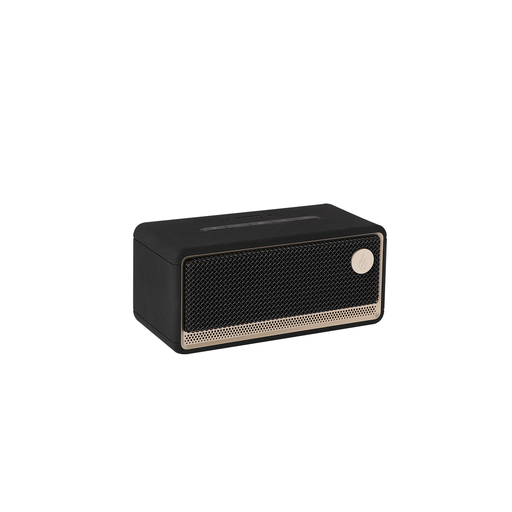
Edifier ES300 Wi-Fi and Bluetooth speaker

Edifier ES300 Wi-Fi and Bluetooth speaker

This speaker suits anyone who wants wireless playback and app control or multiple playback sources; check that the set-up you choose works with your listening position.

The product information lists 60 W, Wi-Fi, Bluetooth, AirPlay 2, a built-in battery, app control, USB and AUX inputs, and multi-room use.

View at Joybuy

Frequently asked questions

Do bookshelf speakers always need an amplifier?

No, it depends on the type of speaker. Edifier describes the R1280DBs as active; the KEF Q1 Meta is passive and needs a separate, suitable amplifier. Check the exact model and how your source connects before choosing any additional equipment.

Can you use a Wi-Fi speaker straight away with Bluetooth from your phone?

Not always. Sonos says the Era 100 must first be set up over Wi-Fi using the app before you can use Bluetooth. Check the set-up steps for the specific model you’re considering.

Where should you position speakers in a kitchen-diner?

Choose a stable position and follow the manual for the exact model. For the Edifier R1280DBs, Edifier warns against water, splashes and heat, among other things, and the manual says to keep the ventilation clear. Don’t automatically apply these model-specific instructions to other speakers.

What should you look for in a wireless speaker for use in the EU?

Check whether the exact version is intended for the EU market and what conformity information is provided with it. The European Commission describes the Radio Equipment Directive as the framework for radio equipment. According to Your Europe, CE marking is only required when applicable harmonised EU rules specify it; a CE logo isn’t a listening test.

Is the statutory guarantee in the Netherlands always exactly two years?

No. The Dutch government states that the Netherlands has no fixed statutory guarantee period: you’re entitled to a product that works properly for as long as you can reasonably expect. If there’s a problem, contact the seller; a manufacturer’s guarantee is separate.
