
Laptop listener without an amplifier
Wants to play jazz albums from their work computer through a stereo pair that connects without a separate amplifier. Check that the input on your chosen model is compatible with your computer’s output.


Start by considering your playback source and whether you already have a suitable amplifier. An active stereo pair connects without a separate speaker amplifier, while passive speakers need one. Then check whether the speakers will fit on or around your desk and which connections you’ll actually use. Specifications alone can’t predict how jazz will sound in your room.
Wants to play jazz albums from their work computer through a stereo pair that connects without a separate amplifier. Check that the input on your chosen model is compatible with your computer’s output.
Already has an amplifier or wants to choose one, and is looking for passive speakers to suit their system. Check the electrical connection and the space available.
Needs to fit two speakers around the screen and workspace. Dimensions, room for cables and speaker placement options are therefore important factors to consider.
Start with the connection to your source and the choice between active and passive speakers. Then check whether the pair will fit in your workspace and which components you already have.
| What to consider | What to look for | Who should pay particular attention? |
|---|---|---|
| Connection to your source | Compare the output on your computer or record player with the inputs on the exact model. If you have a turntable, also check whether you need a phono preamp. | If I want to play my albums from the device I already own, I want to know the connection is compatible before I choose. Around 33% of consumers consider source compatibility their top priority. |
| Space and placement | Measure the space available for both speakers and allow room for cables. Compare the dimensions of each speaker. | If you want to position a stereo pair around a screen on a crowded desk, it helps to choose dimensions that suit your workspace. Around 27% of consumers give desk placement top priority. |
| Listening to jazz | Use the specifications to check whether a model suits your set-up, but don’t treat them as a listening test. Where possible, look for a review of the specific model. | If I mainly want to judge how familiar jazz recordings sound, I want to look beyond a single manufacturer’s claim or technical specification. Around 20% of consumers put listening to the music first. |
| Complete stereo set-up | Check whether you’re choosing an active pair or passive speakers, and whether you’ll also need an amplifier and speaker cables for that set-up. | If you want to work out which components you need for a complete stereo set-up, it’s worth factoring in the whole system when you choose. Around 20% of consumers focus mainly on the complete set-up. |
One set-up needs a separate amplifier and the other doesn’t. So compare not just the speakers, but also the components you’ll need for your own system.
Make a note of the devices, cables and speakers you already have, and check whether the offer includes one speaker or a pair.
If you don’t already have them, you’ll need a suitable amplifier and speaker cables for passive speakers.
Edifier lists a subwoofer output for the R1280DBs; this connection isn’t necessarily confirmed for the R1280DB.
Check the full model number and connections in the product information and manual for the exact version.
For its testing method for wireless speakers, the Consumers’ Association (Consumentenbond) considers factors including sound balance, distortion and dynamics. That method isn’t a test result for the models on this page.
Use the specifications to assess connections and placement, and consult a review of the exact model to find out about its sound.
The active R1280DB is designed for a set-up without a separate speaker amplifier.
The active LSX II LT is a compact stereo pair with computer and network features.
The active A2+ Next Gen is designed for a compact computer set-up.
The passive Debut 3.0 B5.3, also known as the DB53, is designed for use with a separate amplifier.
The passive Diamond 12.1 is an option for a stereo system with a separate amplifier.
These Joybuy products are passive bookshelf speaker pairs for a stereo system with a separate amplifier. Check that your amplifier and desk space are suitable before you buy.
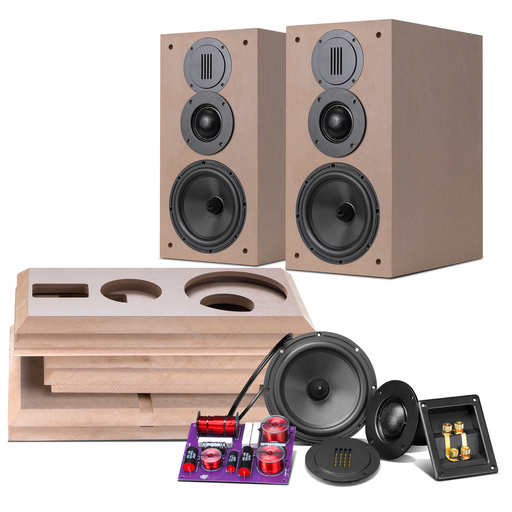 No image available
A passive stereo pair for use with a separate amplifier, whether you already have one or are adding one to your set-up.
The product description lists a 2-way bass reflex design, a 6.5-inch woofer and a 28 mm tweeter. A separate amplifier is required.
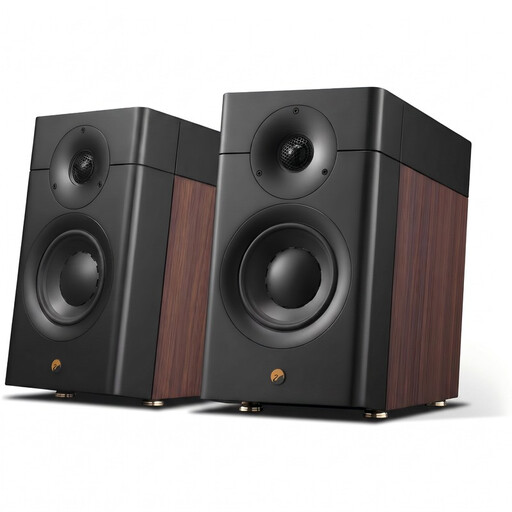 No image available
A passive stereo pair for an existing or planned hi-fi system with a separate amplifier.
The product description lists a 6.5-inch bass-midrange driver and a 28 mm tweeter. A separate amplifier is required.
No. In this set-up, passive speakers connect to a suitable amplifier. Then check how the amplifier receives the signal from your laptop, and follow the manual for connection and polarity.
Follow the manual for the exact model. ELAC advises switching off the equipment before connecting speaker cables and making sure the positive and negative wires don’t touch. For the R1280DBs, Edifier recommends keeping the ventilation openings clear and unplugging the speaker before cleaning it.
According to ACM ConsuWijzer, for an ordinary online product purchase you generally have up to 14 days after delivery to change your mind, subject to legal exceptions. A product must also meet the standards you’re entitled to expect. If there’s a fault that wasn’t caused by misuse, the seller is responsible for providing an appropriate free remedy. This doesn’t mean that all speakers have a fixed statutory two-year warranty.
Yes. Radio equipment placed on the EU market is covered by the Radio Equipment Directive framework, as described by the European Commission. CE marking is required where applicable harmonised EU rules say it is; check the exact product and version, as not all passive speakers are subject to the same radio regulations.
The Dutch government lists several options for old household appliances that need mains electricity or batteries, including handing them in when buying a new, similar appliance, taking them to a collection point or using your local council’s recycling centre. The take-back scheme applies to privately owned equipment, including online purchases; check the arrangements with the seller.