What should you look for when choosing?
If you already have a suitable amplifier, compare passive models too. If you want a simpler desk set-up, start with active speakers. Then work out which dimensions, connections and positioning will suit your workspace.
Compact active speakers
Choose this option: if you listen at a small desk and want to connect your computer directly.
Bear in mind: a compact pair won’t necessarily deliver the bass in your recordings to your liking; check the inputs on the exact model too.
Larger active bookshelf speakers
Choose this option: if you have room for larger cabinets and want to connect several sources.
Bear in mind: cabinet depth, connections and the position of the bass reflex port all matter; a power rating is no substitute for listening.
Passive speakers with a separate amplifier
Choose this option: if you already have a suitable amplifier or want to choose your speakers and amplifier independently.
Bear in mind: the amplifier, cables and space they need are all part of the complete system.
| What to consider |
What should you check? |
Who should pay particular attention? |
| Space and desk positioning |
Measure the width and depth needed for both cabinets, including room for cables. Check whether you can angle them towards your listening position. Genelec explains how positioning affects sound reproduction. |
If you listen at a small desk, first check whether both cabinets will fit and can be positioned properly. Around 33% of consumers prioritise space and listening position. |
| Rhythm and bass |
Compare speakers using music you know, and listen to how the specific model sounds at a suitable volume. Check whether it has a subwoofer output if you consider that an important upgrade option. |
If you mainly want to judge how your own dance music sounds, listen to familiar recordings and consider the positioning too. Around 25% of consumers give their preferred sound reproduction the highest priority. |
| Connections |
Note the outputs on your computer and phone, then compare them with the inputs on the exact speaker model. For example, USB audio isn’t listed among the inputs specified for the Edifier R1280DBs. |
If you switch between a computer and phone, you’ll want to connect your sources to the speakers without an unexpected extra step. Around 25% of consumers prioritise the connections they need. |
| Amplifier and system set-up |
Check whether you already have a suitable amplifier and speaker cables, then compare the components and space needed for the complete system. |
If you want to choose or replace components individually, check whether a passive pair will work with your amplifier. Around 17% of consumers give this type of system set-up the highest priority. |
Joybuy products
This selection includes passive bookshelf speakers and compact PC or desktop speakers. Check that each model’s design, connections and system set-up suit your desk and playback equipment.
 No image available
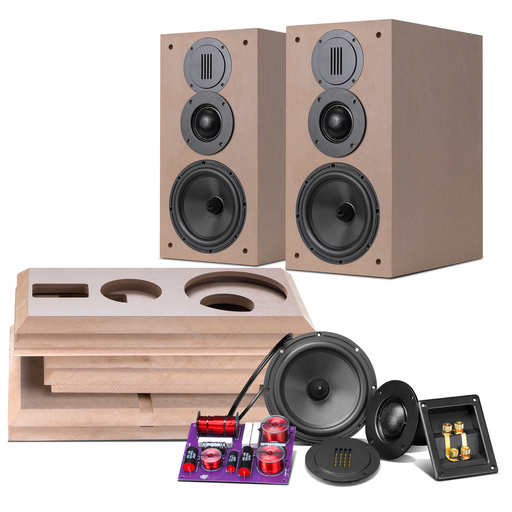
HiVi-Swans DIY3.1, passive bookshelf speakers, pair of 6.5-inch speakers
Suited to anyone looking for a passive stereo pair who already has a suitable amplifier.
The product information lists a 6.5-inch driver and a 2-way bass reflex design. A suitable separate amplifier is required.
View at Joybuy
 No image available
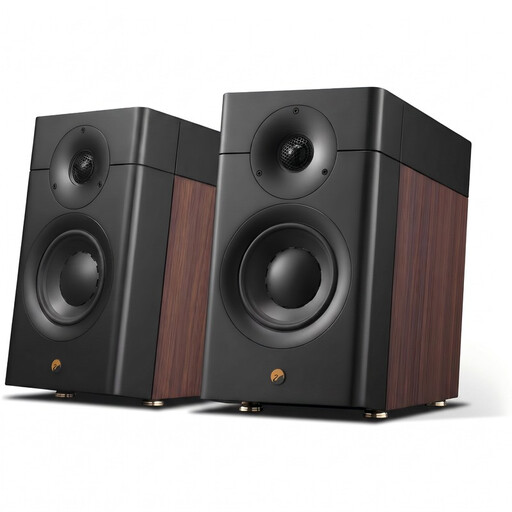
HiVi-Swans D3.1MKII, passive bookshelf speakers, pair of 6.5-inch speakers
An option if you want to connect a passive bookshelf pair to a suitable separate amplifier.
The product information lists a 6.5-inch driver. A separate amplifier is required.
View at Joybuy
 No image available
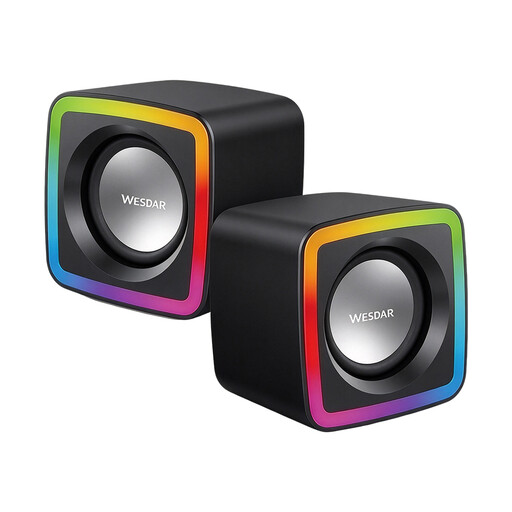
Compact RGB stereo speakers for PC and desk
Designed as a compact desktop set for PC and desk use; the product information doesn’t describe it as a bookshelf speaker.
The specified dimensions are approximately 72 × 73 × 65 mm per speaker. The product information lists RGB lighting.
View at Joybuy
 No image available
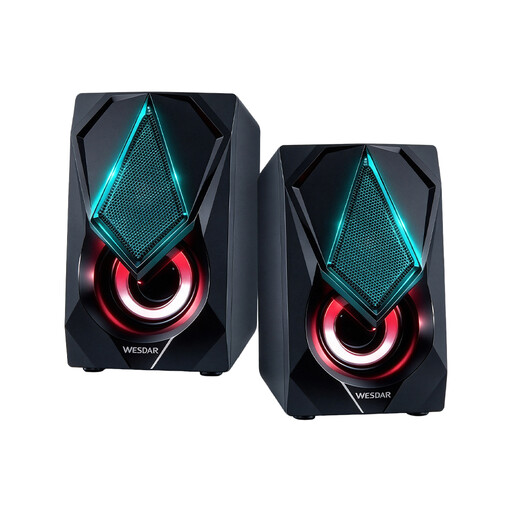
Compact stereo desktop speakers with coloured LED lighting
A desktop set to consider if you’re looking for compact stereo speakers for your workspace; the product isn’t described as a bookshelf speaker.
The specified dimensions are approximately 120 × 72 × 88 mm per speaker. The product information lists coloured LED lighting.
View at Joybuy
 No image available
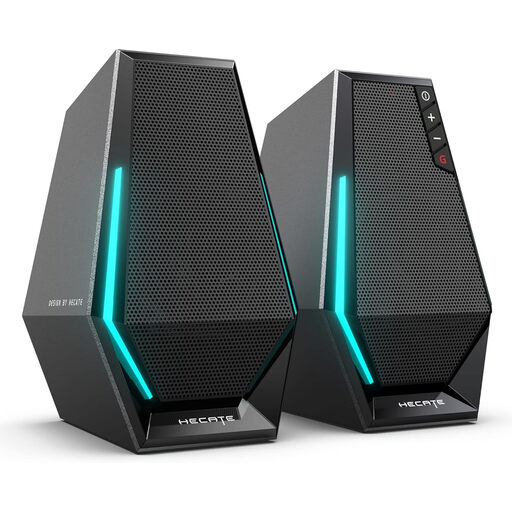
Edifier G1500 Hecate computer speakers
Suited to anyone looking for a stereo set for computer use; the product information describes these as computer speakers, not bookshelf speakers.
The product information lists a 2.0 stereo set with Bluetooth 5.3, USB and a 3.5mm AUX connection.
View at Joybuy
Frequently asked questions
Can I connect passive bookshelf speakers directly to my laptop?
A passive pair such as the Wharfedale DIAMOND 12.1 is designed to be used with a separate amplifier. Check that your laptop’s outputs are compatible with the amplifier’s inputs. An active pair has built-in amplification, but it still needs the right input.
How should I position two speakers on a desk?
Start with a set-up that’s as symmetrical as possible, and angle both speakers towards your listening position. Genelec’s guidance for monitors explains that positioning and reflections affect sound reproduction; it isn’t a mandatory measurement for every home office.
When buying online in the Netherlands, do I always get exactly two years’ warranty?
No, there’s no fixed statutory warranty period in the Netherlands. According to the Dutch government, you’re entitled to a product that works as it should, and the seller is your point of contact if there’s a problem. For online purchases from a business, you’ll also usually have a 14-day cooling-off period; check which exceptions apply.
Can you play music at home without any noise limits?
You can’t assume there’s a general exemption from noise nuisance rules. According to the Dutch government, noise nuisance from neighbours may fall under local by-laws in many municipalities; local rules and circumstances determine what applies.
What should I check for EU compliance when buying an active or wireless speaker?
According to the European Commission, CE marking is required when applicable harmonised EU rules say so; radio equipment is also covered by the Radio Equipment Directive. Check the compliance information for the exact model: these rules alone don’t prove that a product on offer complies with them.


