Start by asking whether you can position two speakers properly and enjoy a balanced sound from your usual seat, at a volume that works for shared use. Then choose between an active set, a passive pair with an amplifier, or two wireless speakers that can be paired, depending on your sources and equipment. Specifications alone can’t predict how chamber music will sound in your room.
Who are these speakers for?
Chamber music listener
You’re looking for an enjoyable left-to-right soundstage and a balanced sound from your listening position. Compare tracks you know and assess how the speakers sound in your room. DALI recommends experimenting with their position, as this can change the sound.
Someone with limited space for speakers
You share your living room and need to find two practical spots without furniture blocking the speakers. Bear in mind that positioning affects bass balance, and agree with the other people in your household on how and when you’ll use the music system.
Listener with multiple sources
You may want to switch between streaming and an existing audio source, for example. Check that the inputs on the exact model you’re considering work with your equipment, and whether you’ll need an adapter to connect it. Sonos, Edifier and Argon Audio describe different connection options for the models mentioned here.
What should you consider when choosing?
Active stereo set
A good fit if: you want a left-and-right speaker setup without choosing a separate amplifier.
Bear in mind: inputs vary by model, so compare them with the outputs on your sources.
Passive pair with a separate amplifier
A good fit if: you already have a suitable amplifier or want to choose your amplifier and speakers separately.
Bear in mind: the pair needs a suitable external amplifier; check compatibility with the exact model.
Two wireless speakers that can be paired
A good fit if: streaming and app control matter to you, and you have space for two speakers.
Bear in mind: one speaker isn’t the same as a stereo pair. A wired source may also need a separate adapter.
| What to consider |
What to look for when buying |
Who is this important to? |
| Stereo image and tonal balance |
Check whether the listing is for a pair or whether the speakers can be used as a stereo pair. Listen from where you’ll actually be sitting. |
I want to hear instruments convincingly positioned from left to right from my seat; around 40% of consumers say stereo image and tonal balance are their top buying priority. |
| Positioning and shared use |
Measure both spots and check the dimensions, space for cables and positioning guidance for the model. DALI recommends trying different positions. |
I need to find two suitable spots without making the shared room impractical to use; around 30% of consumers prioritise space for speakers and shared use. |
| Connections and control |
Compare the outputs on your sources with the inputs on the exact model, and check whether you’ll need an adapter. |
I want to connect my existing sources without overlooking a connection I’ll need; around 20% of consumers prioritise source connections and control. |
| Complete system and expandability |
Check whether you’re buying a pair or one speaker, and whether you’ll need an amplifier, adapter or other components. |
I want to know which components I’ll need for the setup I have in mind; around 10% of consumers make the complete system and flexibility their top consideration. |
Things to watch out for when buying
-
Assuming one speaker is a complete stereo pair
The model name or photo doesn’t always make it clear how many speakers are included. For Sonos Era 100 speakers, Sonos explains how to pair two units for a wider soundstage.
Check how many speakers are included in the listing and what you’ll need for left and right channels.
Depending on the setup you choose, you may need a suitable amplifier or line-in adapter.
Brands worth considering
Edifier
The R1280DBs is an active stereo set worth considering if you’re looking for a range of wired inputs and Bluetooth.
- For this model, Edifier specifies 42 W RMS total, two analogue line inputs, optical and coaxial inputs, and Bluetooth.
- These details tell you about the connection options, but not how the set will sound in your room. Check the positioning options and your sources too.
KEF
The Q1 Meta is a passive option for anyone who wants to use or choose a separate amplifier.
- KEF specifies an amplifier requirement of 10–150 W for the Q1 Meta.
- Without a suitable amplifier, the pair isn’t a complete playback system. The manufacturer’s description isn’t an independent comparison of sound quality.
Sonos
Two Era 100 speakers are worth considering if streaming and app control are important to you.
- According to the Sonos guide, two Era 100 speakers can be paired for a wider soundstage.
- A separate Sonos adapter is needed for a wired line-in connection. One Era 100 isn’t the same as a two-speaker setup.
Argon Audio
The FENRIS A4 is an active pair worth considering if HDMI ARC or the listed turntable input is also important to you.
- For this model, Argon Audio lists Bluetooth 5.0, HDMI ARC and a turntable input.
- Check that the connections work with your own sources. Product claims about sound quality aren’t an independent comparison for chamber music.
Q Acoustics
The passive 3020c is a model to compare with a suitable amplifier and enough space for positioning.
- Q Acoustics places the 3020c in its range of standmount speakers.
- A passive setup needs a suitable amplifier. Also check that the listing you choose includes a pair and the components you’ll need for your setup.
Joybuy product picks
The options below include wireless speakers that can be used as a stereo pair, as well as passive bookshelf speaker pairs. Check each listing for the number of speakers, the amplification required, and whether the model suits your available space and sources.
 No image available
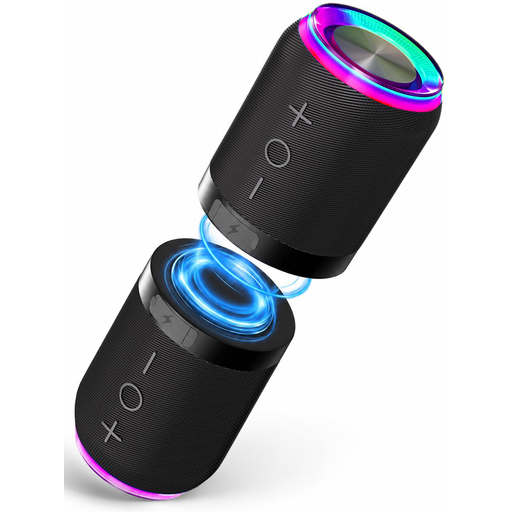
2-in-1 Bluetooth speaker set, 2 speakers, IPX6
The product description says the two speakers can be separated to create a left-and-right stereo setup.
Bluetooth, AUX and TF card playback are listed. The product name also mentions IPX6 and magnetic attachment.
View at Joybuy
 No image available
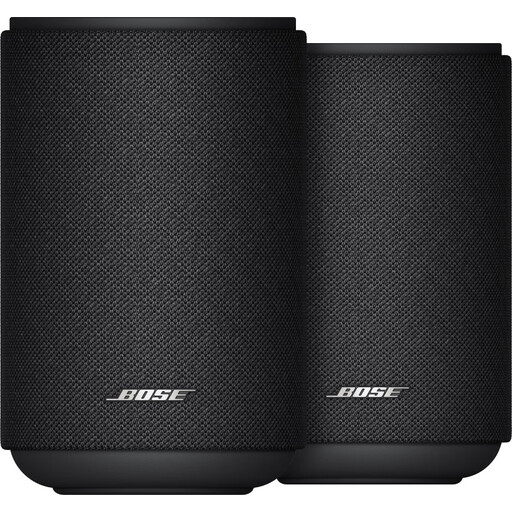
Bose Lifestyle Ultra Speaker Duo Pack, black
The product description says the two speakers can be used as a stereo pair. Check that this setup suits your room and preferred controls.
Wi-Fi, Bluetooth and Bose app control are listed.
View at Joybuy
 No image available
HiVi-Swans DIY3.1 passive bookshelf pair, 6.5-inch
This passive bookshelf pair is designed for use with a separate amplifier.
The product description lists a 6.5-inch driver and a 28 mm soft-dome tweeter. A separate amplifier is required.
View at Joybuy
 No image available
HiVi-Swans D3.1MKII passive bookshelf pair, 6.5-inch
This passive bookshelf pair needs a separate amplifier. Check that your current equipment is suitable.
The product description lists a 6.5-inch bass-midrange driver and a 28 mm soft-dome tweeter.
View at Joybuy
 No image available
Edifier ES60 Bluetooth speaker, stereo pairing, IP66
The product description says two ES60 speakers can be paired wirelessly for left-and-right stereo. The listing is for one speaker, so you’ll need two for this setup.
Bluetooth and IP66 dust and water resistance are listed. This model is described as a portable speaker, not a bookshelf speaker.
View at Joybuy
Frequently asked questions
How should I start positioning speakers for chamber music?
Start by making room for left and right speakers, then assess the sound from your usual seat. DALI recommends experimenting with their position; also follow the guide for your chosen model. A rear-ported speaker isn’t necessarily unsuitable close to a wall, but its position can change the bass balance.
Does a passive bookshelf pair need anything else to play music?
Yes. A passive pair needs a suitable external amplifier and a connected music source. Check the amplifier requirements for the exact speaker model and make sure the connections are compatible. Active speakers have amplification built in.
What if a pair I’ve bought online isn’t as described?
For distance purchases from a business, the Dutch government says you have a 14-day cooling-off period in many cases; check whether it applies to your purchase. If a product is faulty, the retailer is your point of contact for your statutory warranty. The Netherlands doesn’t have one set statutory warranty period of two years.
What should I look out for when buying electronics from outside the EU?
The Dutch government points out that when you buy from an online shop outside the EU, you may not always be able to establish whether electronics meet European safety requirements. It recommends checking, among other things, the CE marking and the seller. This isn’t in itself a judgement on any individual speaker; check the information for the specific product and seller.


