
Listening from your work computer
You want to play blues recordings from a computer without a separate amplifier, so you’re looking for an input that’s compatible with your computer.


An active stereo pair is a convenient choice if you want to play blues directly from a computer or another compatible source. Passive speakers are a good fit if you already have a suitable amplifier or want to build a separate hi-fi system. Next, check that the connections, cabinet dimensions and placement instructions suit your desk: a higher power rating alone won’t tell you how recordings will sound there.
You want to play blues recordings from a computer without a separate amplifier, so you’re looking for an input that’s compatible with your computer.
You want a wired stereo setup and need to check that its controls and placement instructions suit a spot close to your desk.
You want to connect a passive stereo pair and check in advance that your amplifier and other connections are suitable.
When to choose it: if you want to listen directly from a computer without a separate amplifier. Audioengine lists USB-C, Bluetooth and analogue connections for the A2+ Gen 3.
Things to consider: check that the speakers and cables will fit on your desk. The listed subwoofer output gives you the option to expand your setup; it isn’t a requirement for listening to blues.
When to choose them: if you want to connect different sources. Edifier lists Bluetooth, optical, coaxial and two RCA inputs for the R1280DB.
Things to consider: check which output is available on each source. RCA inputs don’t automatically mean that a turntable will work without extra equipment.
When to choose them: if you mainly listen at your desk and want wired inputs and controls to fine-tune your setup. Yamaha lists ROOM CONTROL and HIGH TRIM for the HS3.
Things to consider: check that the wired connections suit your source, and confirm the mains voltage of the item being sold.
When to choose them: if you already have a suitable amplifier or want to choose your speakers and amplifier separately.
Things to consider: the KEF Q1 Meta is passive; KEF specifies an amplifier requirement of 10–150 W for this model.
| What to consider | What to look for | Who it matters to |
|---|---|---|
| Connecting your computer and music source | Check your source’s output and whether it matches the inputs on the exact model. Audioengine lists USB-C, analogue and Bluetooth for the A2+ Gen 3; Edifier lists optical, coaxial, RCA and Bluetooth, among other connections, for the R1280DB. | If you want to connect your computer or another source without unnecessary extra steps, first check that the connections match. Around 33% of consumers prioritise this. |
| Controls for your listening position | Check whether the model has settings that suit your desk setup. Yamaha lists ROOM CONTROL and HIGH TRIM for the HS3. | If you listen close to your desk, you’ll want to check whether you can adjust the sound to suit your setup. Around 25% of consumers prioritise this. |
| Active or passive, and the rest of your system | Check what equipment you already have. The KEF Q1 Meta is passive and, according to KEF, requires an amplifier rated at 10–150 W; this isn’t a general guideline for every passive speaker. | If you want to use your existing amplifier or build a system from separate components, check which other parts and connections you’ll need. Around 25% of consumers prioritise system setup. |
| Space on or around your desk | Measure the available space, including room for cables, and follow the placement instructions for your chosen model. | If space around your desk is limited, you’ll want to know in advance whether both cabinets will fit comfortably. Around 17% of consumers prioritise the space available. |
The KEF Q1 Meta is a passive speaker and needs a suitable separate amplifier.
Before choosing a passive pair, check which amplifier you already have and how you’ll connect your music source to it.
Allow for the cost of the amplifier and connections if you don’t already have them.
The specifications for the Audioengine A2+ Gen 3 and Edifier R1280DB don’t necessarily apply to variants with different model names.
Compare the full model name, connections and what’s included with the version you’ve chosen.
The stated RMS output power of an active set and the amplifier requirement of a passive speaker describe different things.
Assess connections, amplification and placement separately; don’t infer a sound-quality advantage from those wattage figures.
The A2+ Gen 3 is a compact active stereo system for a desk, with several ways to connect a source.
The active R1280DB is an option for connecting different types of source to a single set of speakers.
The wired HS3 is an active monitor designed for listening at a desk.
The Q1 Meta is a passive pair designed to be used with a separate amplifier.
The 3020c is a standmount model in the 3000c range, designed for a separate hi-fi system.
These models suit a passive setup. Make sure you have a suitable separate amplifier before connecting them to your music source.
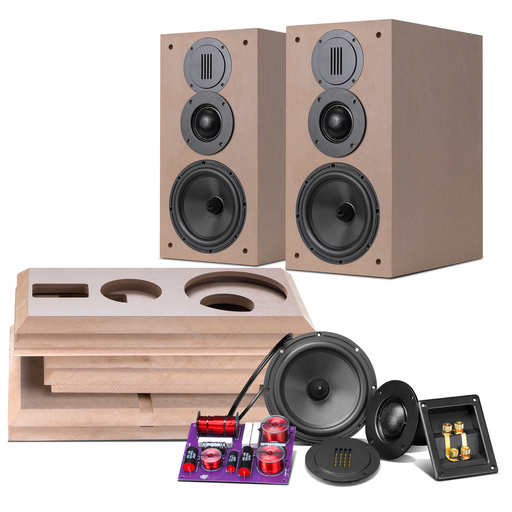 No image available
This passive pair suits a desk setup if you have a suitable separate amplifier.
Passive bookshelf speakers; one pair; 6.5 inch.
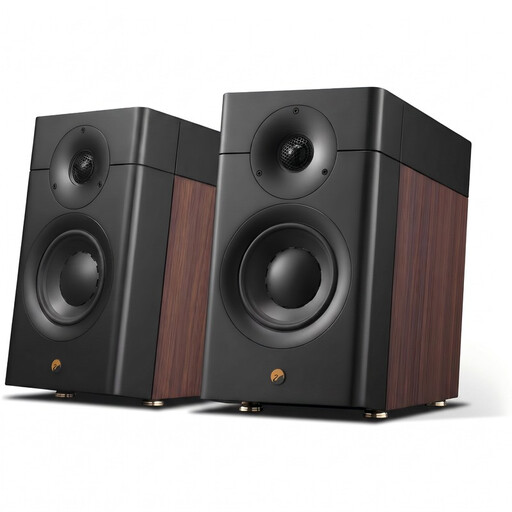 No image available
This passive pair suits a separate stereo system if you already have a suitable amplifier.
Passive bookshelf speakers; one pair; 6.5 inch.
No. A passive model such as the KEF Q1 Meta needs a suitable separate amplifier. Then check how you can connect your laptop to that amplifier.
Follow the instructions for your chosen model and listen from your usual seat. DALI recommends a symmetrical setup around the listening position for the OBERON range and notes that placement affects the sound. Don’t assume that this advice applies to other models.
Check whether the offer is for a pair and whether you’ll need a suitable amplifier and connections for a passive pair. In the Netherlands, the seller is responsible for resolving issues if a product is faulty; a manufacturer’s guarantee is in addition to your statutory rights.
For a standard online consumer purchase, you’ll generally have up to 14 days after delivery to change your mind; ACM ConsuWijzer lists some exceptions. According to the Dutch government, there’s no fixed statutory guarantee period for all products in the Netherlands: you’re entitled to a product that meets what you can reasonably expect.