
Vandaag of morgen in huis

Kwaliteit gegarandeerd

Welkomstaanbiedingen ontgrendelen: GRATIS bezorging | Tot 80% korting | Gratis 30 dagen JoyPlus-proefperiode
Download de app
A bookcase might seem like a straightforward piece of furniture, but the differences between models are significant. A narrow bookcase can fit into an unused corner, while a wide open bookcase offers more room for books and dÃcor. Yet many purchases go wrong because of three recurring pitfalls: the wrong size, insufficient weight capacity and a lack of attention to stability.
If you only look at colour or price, you might discover after assembly that a shelf isn't deep enough, the bookcase wobbles, or that wall fixing is required. By checking the right details beforehand, you can make a more informed choice when selecting a wooden bookcase, industrial bookcase, wall-mounted unit or a bookcase with compartments.
Product measurements aren't always presented in the same way. So always check which measurement corresponds to height, width and depth. A bookcase that is 30 cm deep may be suitable for paperbacks, baskets and dÃcor, but less practical for large ring binders.
Don't just measure the available space. Also take into account:
A narrow bookcase makes efficient use of an alcove, but a tall model requires extra attention when it comes to anchoring.
A stated maximum load can refer to the entire piece of furniture or to an individual shelf. That difference matters. Books are heavy, especially when you place several hardbacks side by side.
So check:
Place heavy books towards the bottom. Use the top shelves for lighter items such as photo frames or baskets.
An open bookcase is accessible and can make a room feel more spacious. At the same time, a tall, narrow bookcase can tip over if the weight is unevenly distributed or if someone pulls on it. An anti-tip kit or wall bracket is therefore not a minor detail.
Check beforehand whether fixing materials are included. For a wall-mounted bookcase or room divider bookcase, you may need to choose wall plugs and screws suitable for concrete, brick or plasterboard. Always follow the assembly instructions and use the correct wall fixings.
Look at the combination of external dimensions and usable storage space. A bookcase with lots of small compartments is handy for books, plants and accessories, but less suitable for tall ring binders. A model with a few wide shelves offers more flexibility, but can look cluttered more quickly.
For a living room, open shelves are often practical. In a bedroom or home office, a taller storage bookcase can help you make use of vertical space. For a hallway, bathroom or kitchen, narrower shelving units are usually more sensible than a full-sized bookcase.
Many compact models combine particle board or MDF with a metal frame. This can create a stable structure, but the quality depends on the thickness, joints and assembly. A wooden bookcase made from solid wood has a different look and maintenance needs than a piece of furniture made from engineered wood.
Pay attention to:
A steel frame suits an industrial interior. Bamboo or acacia fits better with a light, natural style.
A bookcase for the bathroom will be exposed to moisture and therefore needs to be suitable for that purpose. A bamboo bathroom shelf is designed for towels, shampoo or soap, but check the stated weight capacity and avoid prolonged contact with water.
The same applies to the kitchen. A kitchen organiser or spice rack is more practical for jars and tins than a large bookcase. Clean surfaces according to the product instructions and distribute the weight evenly.
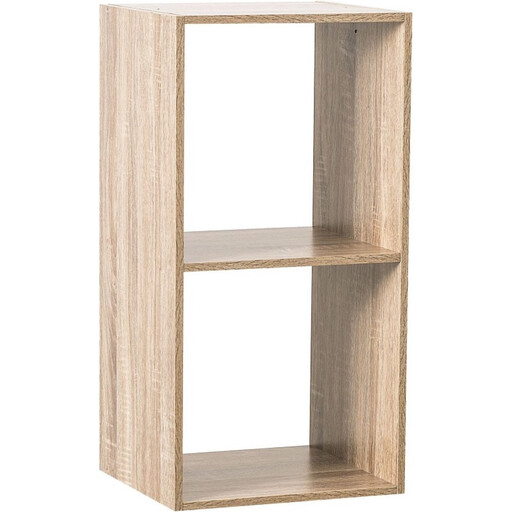
Why this fits the profile: This compact model measures 34.5 cm long, 32 cm wide and 67.6 cm high. It therefore fits into smaller spaces and combines open storage with two drawers.
The dimensions and maximum load of 25 kg are stated. This means you can better determine in advance whether the piece of furniture suits your available space and belongings.
Open shelves, two drawers, FSC certification and an estimated assembly time of around 30 minutes.
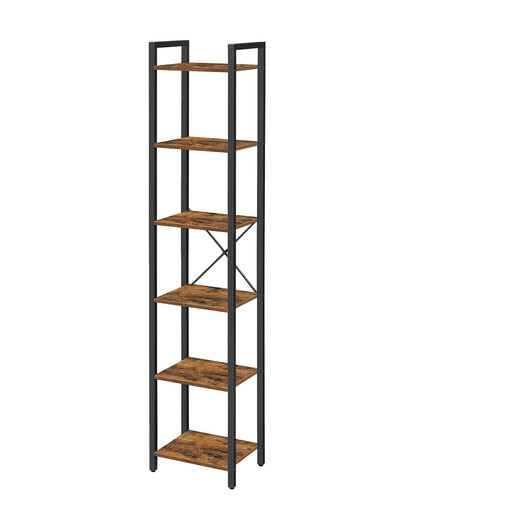
Why this fits the profile: This tall industrial bookcase measures 30 x 40 x 187.5 cm and offers six levels for a living room, office, study or bedroom.
The stated maximum weight capacity is 50 kg. The X-braces, adjustable feet and included anti-tip kit support stable assembly; fix the bookcase to the wall as instructed.
Six shelves, a steel frame, a combination of particle board and steel, and a shallow depth of 30 cm.
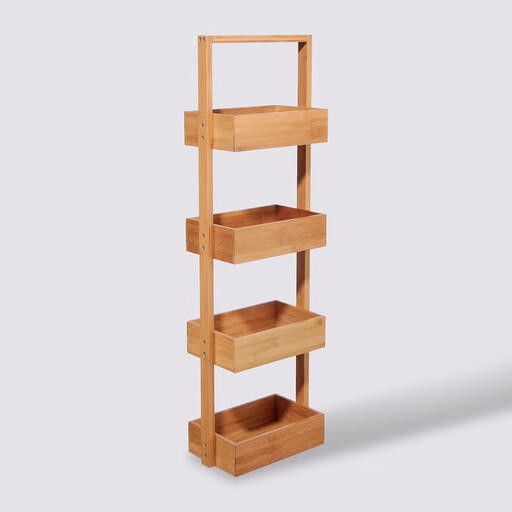
Why this fits the profile: This narrow shelf measuring 25 x 16 x 88 cm is designed for bathroom items such as shampoo, soap and towels, but can also be used in a kitchen or hallway.
The maximum weight capacity of 4 kg is clearly stated. This prevents you from mistaking the shelf for a heavy-duty bookcase.
Four tiers, a bamboo frame, compact dimensions and a low weight of just 2.27 kg.
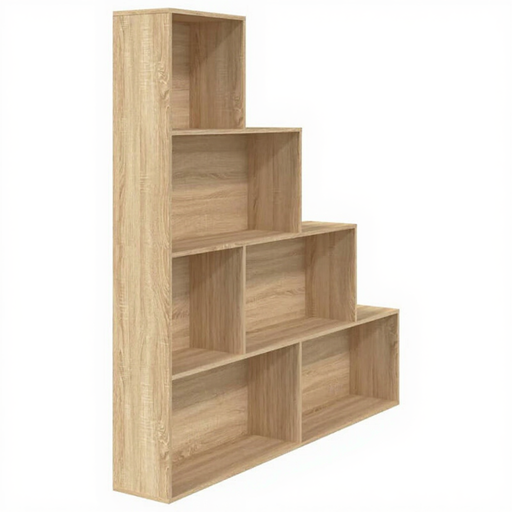
Why this fits the profile: At 155 cm long, 24 cm deep and 160 cm high, this model is ideal for anyone looking for a wide open bookcase or room divider bookcase.
The six open compartments and the need for wall fixing are stated. Note that screws and wall plugs are not included.
Six spacious open shelves, a Sonoma Oak colour and use as a bookcase or partition between two zones.
We've put together a full, up-to-date list of products that fully meet these strict selection criteria and current European safety regulations.
Use the included anti-tip kit if one is provided. Choose the correct wall plugs and screws for your wall type. For plasterboard, you'll need suitable cavity wall fixings; if in doubt, you can call in a fitter. First level the bookcase, then fix it according to the instructions.
This varies by model. Check both the maximum load of the entire bookcase and that of each individual shelf. A model with a stated capacity of 50 kg is not automatically suitable for 50 kg on one shelf. Distribute books and other items evenly and stick to the lowest stated limit.
That depends on the material, ventilation and maintenance. A dedicated bathroom shelf is usually more practical for light toiletries and towels. Don't leave a wooden or bamboo shelf in prolonged direct contact with water, and regularly check that the joints remain secure.
