For bound recipe booklets that you don’t want to press against a flatbed scanner’s glass, an overhead scanner with book curve correction is the best fit. A compact or folding arm makes it easier to put the scanner away when you have a small desk, but also measure how much room an open booklet takes up while you scan it. A book-oriented flatbed scanner is another option if you can lay the pages on the glass.
Who is this for?
Owner of bound recipe booklets
You want to preserve recipes without damaging the spine, so you’re looking for contact-free scanning and book curve correction. IRIS and ScanSnap describe book curve correction as a feature on models designed for bound documents.
Home cook scanning at a small desk
You want to be able to put the scanner away after use, but still need room for an open booklet while scanning. IRIS describes a compact design, while CZUR lists a folding arm for the Aura Pro.
Preserver of handwritten recipes
You want to check the handwriting, quantities and images in your scans. OCR, or text recognition, is a separate feature and does not, on its own, guarantee that handwritten text will be recognised correctly.
What should you look for?
Start by deciding whether you want to capture bound pages without pressing on the spine. Then measure your workspace with the booklet open and check that the scanning features suit your handwriting and the file types you need.
| What to consider |
What should you check? |
Who should pay particular attention? |
| Capturing bound pages clearly |
Check whether the exact model has book curve correction and, if possible, make a test scan of text and images near the spine. |
I want to scan a bound booklet without pressing the pages against glass; around 36% of consumers prioritise keeping the booklet intact. |
| Workspace and storage |
Measure the available space with the book open and check the scanner’s dimensions both in use and when stored away. |
If my desk has limited space, I want to be able to put the scanner away after scanning without running short of room for the open book while I use it; around 29% of consumers prioritise space. |
| Handwriting and recipe details |
If possible, test a page of your own with handwriting, small text and images; keep the page images as well as any recognised text. |
I want to check quantities and handwriting, even if text recognition gets them wrong; around 21% of consumers prioritise recipe readability. |
| Software and file output |
For the exact version, check the software, connection and compatibility with your computer and the PDF files you need. |
I want to save scans on my own computer and find them again later; around 14% of consumers prioritise a reliable digital workflow. |
Pitfalls to avoid
-
Assuming a compact scanner takes up hardly any room while in use
A folding arm can make the scanner easier to store, but an open booklet and the scanning area still take up room while you use it.
Measure your booklet while open where you plan to scan it, and compare the dimensions of your chosen model both in use and when stored away.
-
Choosing a camera for loose sheets to scan every bound booklet
CZUR positions the Shine 800 A3 Pro for flat, loose pages. That doesn’t automatically make it equivalent to a scanner with book curve correction.
If you mainly scan bound booklets, choose based on proven book-scanning features, not just whether the scanner folds away.
If the pages aren’t captured clearly, correcting them manually or scanning them again can take extra time.
-
Assuming OCR will recognise quantities correctly every time
A mention of text recognition doesn’t prove that the scanner will convert your handwriting without errors, so an incorrect quantity could go unnoticed.
Save the scan as an image and check any recognised quantities against the original recipe.
Reviewing and correcting recognised text can take extra time.
Brands to consider
IRIS
IRIS describes the IRIScan Desk 7 Pro as a compact overhead scanner with book curve correction and OCR.
- The short camera arm and book curve correction could be useful for bound booklets in a limited workspace.
- Manufacturer-listed features don’t guarantee a flawless scan. Test it with your own booklet to see how clearly text and images near the spine come out.
CZUR
CZUR describes the Aura Pro as suitable for thin books and lists a folding arm; the Shine 800 A3 Pro is designed for flat, loose pages.
- The Aura Pro’s folding arm can help if you want to put the scanner away after use.
- Don’t confuse the Shine 800 A3 Pro’s intended use for flat sheets with a model that offers book curve correction for bound booklets.
Plustek
The OpticBook 3800L is an example of a book-oriented flatbed scanner.
- A flatbed model suits a workflow where you can position pages on the glass.
- Check the dimensions and features of the exact OpticBook 3800L version before deciding; don’t rely on details for a different regional version.
ScanSnap
ScanSnap describes the SV600 as a contact-free overhead scanner for books and other delicate items.
- The manufacturer lists correction for bound documents and A3 support.
- These features don’t guarantee that every recipe or piece of handwriting will come out clearly; test it with a page of your own.
VIISAN
VIISAN positions the S21 as an A2 overhead scanner for larger books and documents.
- This stated use could be relevant if you want to scan exceptionally large recipe books.
- If your booklets are small, weigh up whether you need that size against the space available in your workspace.
Joybuy products
This selection includes a flatbed scanner for bound or thick books and a folding document camera mainly for flat, loose pages. They aren’t interchangeable: choose the camera for loose sheets, and check whether you can place bound booklets on the glass before you buy.
 No image available
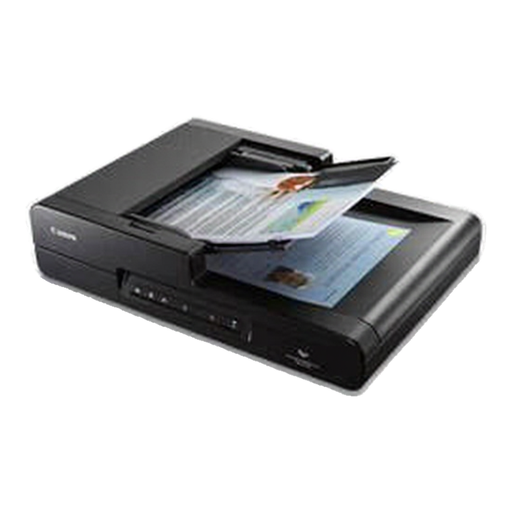
Canon imageFORMULA DR-F120 flatbed and ADF scanner
A good option if you’re looking for a flatbed scanner to place books and bound materials on the glass.
600 dpi; A4; ADF; output to editable PDF. For thick or bound items, open the cover and place the material face down on the glass.
Dimensions: 469 × 335 × 120 mm.
View at Joybuy
 No image available
CZUR Shine 800 A3 Pro
Suitable for a collection made up mainly of loose or flat pages. CZUR positions this model for flat sheets, not as an equivalent alternative to book curve correction for bound booklets.
Folding design; A3 support; OCR software; compatible with Windows and macOS.
Stated dimensions: 45 × 16 × 21 cm.
View at Joybuy
Frequently asked questions
Can I automatically make handwritten recipes searchable?
Don’t assume so based on an OCR listing alone. If possible, test a scan of your own handwriting and keep the original page image too, so you can check the quantities.
How can I avoid poor scans of glossy or full pages?
Make a test scan and check the lighting, reflections and whether fingers are covering any text. IRIS warns that reflections can affect scan results on certain Desk models, and that finger removal isn’t guaranteed when fingers cover text or images. Test the exact version you’re considering.
What are my rights if a scanner I bought online doesn’t work properly?
For a consumer purchase in the Netherlands, ACM ConsuWijzer says the seller must offer an appropriate solution if the product doesn’t perform as you could reasonably expect under normal use. Online purchases also generally come with a 14-day cooling-off period from delivery; the applicable terms and exceptions still matter.
Can I scan and share someone else’s recipe book?
The Dutch government distinguishes between making a private copy for your own use and distributing or publishing it. Scanning a book for private use doesn’t mean you can also share a copyright-protected recipe book online.


