
Scanning fragile family books
You have bound albums, diaries or other items that you don’t want to force flat. First, work out how to support and open the original safely.


A flatbed scanner is an obvious choice for loose photos and A4 letters; for larger, flat sheets, a document camera may be more practical. If your project mainly involves bound materials, only choose a book scanner if you can support and open the original without forcing it. A model designed for loose pages is not automatically suitable for a fragile book spine.
You have bound albums, diaries or other items that you don’t want to force flat. First, work out how to support and open the original safely.
You mainly want to digitise loose originals for a project. Check the scan size and make sure both colours and text come through clearly in the output.
You’re working with several pages of text and want to be able to find or edit the text. Check which OCR and export features are available on each model.
Start by considering the type of original and how you can position it safely. Then look at the size, output and number of pages.
| Consideration | What should you check? | Who is this most important to? |
|---|---|---|
| Fragile bound originals | Check how the book is supported and whether the pages can be captured without forcing them flat. | If I want to scan an album or diary, I don’t want to have to press the spine flat. Around 28% of consumers prioritise protecting bound originals. |
| Loose photos and letters | Measure the largest original and check that the output is suitable for both photos and text pages. | For loose family photos and letters, I mainly want a suitable scanning area and a usable image file. Around 22% of consumers share this priority. |
| Searchable or editable text | Check whether the exact model can create searchable PDFs or the editable file format you need; test it with your own documents. | If I want to find or edit text in my project, I need more than just an image. Around 17% of consumers prioritise OCR and text output. |
| Size and number of pages | Check the maximum scan dimensions for the specific version and assess a test scan of the whole document. | For larger sheets or multiple pages, I want to know whether the size and scanning process suit the task. Around 17% of consumers prioritise these factors. |
| Buying for a single project | Work out how many pages you actually need to scan and which features are essential. | If it’s a one-off project, I don’t want to pay for features I probably won’t need. Around 16% of consumers want to keep their purchase focused on a single project. |
Even with a book scanner, you need to be able to position the original appropriately. CZUR describes the Shine 800 A3 Pro as suitable for flat, loose pages; that positioning does not prove that it can safely capture a fragile spine.
First, assess how the original can be supported and opened without forcing it. Only then choose a scanning method.
An unsuitable method could damage the original or mean you have to use another scanning method after all.
A stated resolution or OCR feature doesn’t tell you how your faded text, handwriting or shadows will look in the scan.
Make a test scan of the most challenging original and check the small text and page edges. If you use OCR, keep the image file too; searchable text is no substitute for checking the scan itself.
Personal use, sharing images of identifiable people and distributing copyrighted material are separate issues.
Decide who will be able to see the files and check which personal data and rights are relevant before sharing them.
The features and uses mentioned apply to the specific models below, not automatically to every product from each brand.
The Shine 800 A3 Pro is an overhead scanner mainly for flat, loose items.
The Perfection V39II is an A4 flatbed scanner for loose letters and photos.
The OpticBook 3800L is an A4 flatbed scanner designed for bound materials, provided they can be placed on the scanner safely.
The IRIScan Desk 7 Pro is a document camera with OCR, designed for larger documents and text pages, among other things.
The CanoScan LiDE 400 is a compact A4 flatbed scanner for loose photos and documents.
This selection includes flatbed and sheet-fed scanners for loose originals, plus an overhead camera for larger, flat sheets. For bound materials, always check that the positioning method is suitable for the specific original.
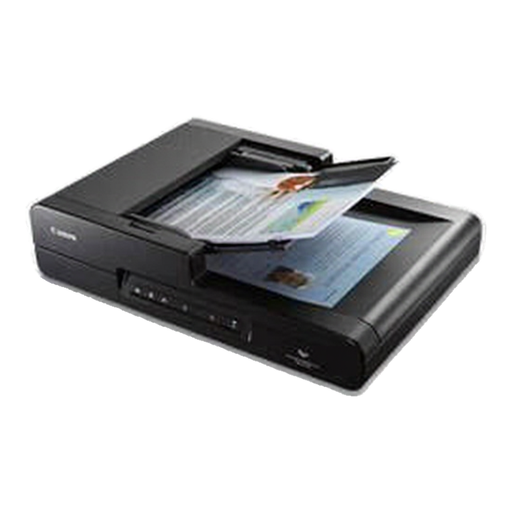 No image available
The combination of flatbed and ADF lets you choose between scanning loose originals and stacks of paper. For fragile books, first assess whether using the flatbed is safe.
The product description lists editable PDF output and a 50-sheet ADF.
Specifications from the product name: 600 × 600 dpi and A4.
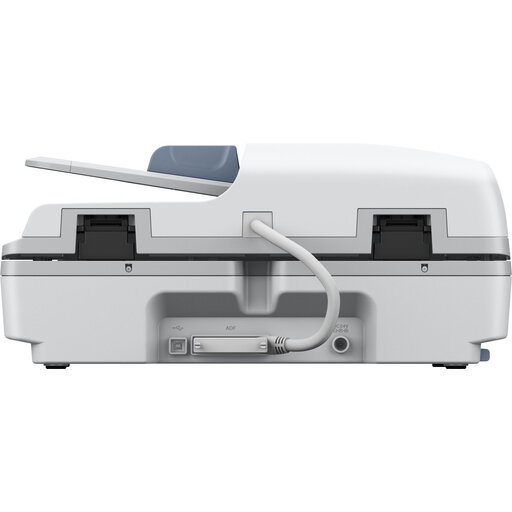 No image available
The flatbed and ADF options are suited to loose originals and multi-page documents. For bound materials, check whether they can be placed safely on the flatbed.
The product description lists searchable PDF output and PDF, JPG and TIFF files.
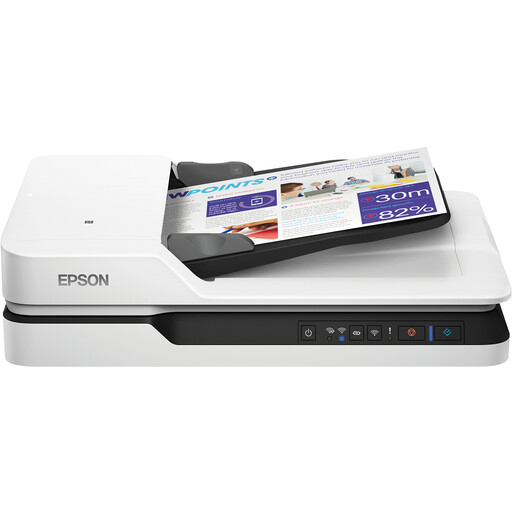 No image available
The product description mentions books and fragile items as suitable materials to scan, but this doesn’t guarantee that every bound original can be opened without risk.
Specifications from the product name: 1200 × 1200 dpi and A4. The description lists automatic double-sided scanning, wireless connectivity and image correction.
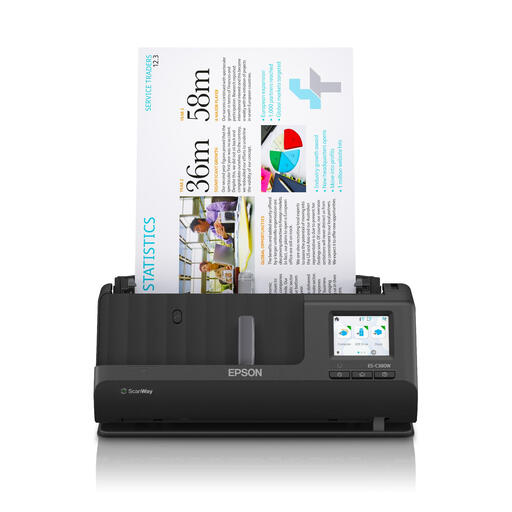 No image available
This model is designed for loose documents. According to the product description, its straight-through paper path is intended for booklets up to 5 mm thick; check this limit before feeding in bound materials.
Specifications from the product name: 600 × 600 dpi and A4. The description lists Wi-Fi.
 No image available
This overhead camera is designed for flat, loose pages and larger documents, not as a book scanner with flattening functionality. Check how the original is supported and note the product description’s warning about high-gloss materials.
The product description lists up to A3, OCR and output to editable files.
Start with a test scan and check the smallest text, the page edges and any text showing through from the back. Use OCR as an additional search or editing feature; a searchable PDF is no substitute for checking the image itself.
No, don’t force a fragile original flat. First assess how far you can open the specific item without forcing it. A book scanner or overhead camera offers a different way of working, but doesn’t guarantee that every book will remain undamaged.
Check that the software supports your operating system, which connection is required and whether it offers the output you need for the exact scanner model. IRIS lists Windows 10/11 and macOS 10.15 or later for its Desk models; CZUR lists searchable PDF output for the Shine 800 A3 Pro.
Report the fault to the seller. According to the Dutch government, the seller must provide a solution if there’s a problem with a product; a manufacturer’s warranty doesn’t replace this statutory right.
Not without first considering the content and how you plan to share it. According to the Dutch Data Protection Authority, the exception for personal use applies to photos that stay private or are shared only with a very small group. The Dutch government states that a private copy of copyrighted work must not be distributed or made public. Separate conditions apply to relevant quotations in a project, including citing the source; the specific assignment and any public sharing are key factors.