For fragile, bound exhibition catalogues, an overhead scanner is an obvious choice. It scans from above without pressing the spine against a glass platen. However, measure the open format first and assess a test scan. If a sturdy book can safely lie on glass, a book-edge flatbed scanner may be suitable, while a standard A4 flatbed scanner is most practical for smaller originals or occasional use. OCR, how glossy images are reproduced, and permission to share scans are separate considerations: a scanner feature or purchase does not automatically grant usage rights.
Who is this type of scanner for?
Those responsible for fragile catalogues
If you want to digitise bound copies without pressing the spine against glass, consider contactless scanning and check every capture carefully. ScanSnap Nederland describes the SV600 as a contactless overhead scanner; the National Archives lists checking image quality and missing pages as part of the digitisation process.
Groups with large illustrated catalogues
When a catalogue contains lots of illustrations, its open size and how glossy images are reproduced are important factors. CZUR, IRIS Nederland and VIISAN describe models with different scanning areas; test your own material with a sample scan.
Those managing a searchable collection
If you want to find text later, compare the OCR output and check the files for image quality and completeness. IRIS Nederland and Plustek describe OCR features on specific models; the National Archives emphasises checking scans and page order.
What should you look for when choosing?
Start by considering the condition of the binding and how the book can be positioned. Then measure the largest original and test the image and text output you need using your own pages.
| What to consider |
What should you check? |
Who is this important for? |
| Protecting the binding |
Assess the condition of the binding and whether the book can safely lie on glass; compare this with an overhead scan. |
If I want to protect a fragile binding, the scanning method matters more than ease of positioning; around 28% of consumers prioritise preserving the binding. |
| Capturing the open format |
Measure the catalogue when open and decide whether you want to scan a double-page spread in one go or scan each page separately. |
With large catalogues, I want to know whether the entire area I need will fit in one capture; around 22% of consumers choose mainly based on the size of the original. |
| Finding text later |
Check whether the exact model and software combination can create searchable PDFs, and test a page with small text. |
If I want to search for text later, it’s important that the text output is recognisable and can be checked; around 22% of consumers give searchability top priority. |
| Checking illustrations |
Test a glossy and a dark page, then check the capture for reflections, cropping and legibility. |
When illustrations are central to the catalogue, I want to see how my own images are captured first; around 17% of consumers prioritise image quality. |
| Fitting into your workspace |
Check the space available, the software’s system requirements and who will process the files. |
If the scanner needs to fit into a shared or small workspace, I want to be able to organise its operation and set-up easily; around 11% of consumers give this top priority. |
Common pitfalls when choosing a book scanner
-
Looking only at the A3 label on the box
A4, A3 and A2 models have different scanning areas. The area you can capture also depends on whether you want to scan a double-page spread at once or capture each page separately.
Measure the largest original in the position you plan to scan it, then compare that measurement with the specifications for the exact model.
-
Assuming a book-edge flatbed scanner is the same as contactless scanning
A book-edge scanner still uses a glass platen, while an overhead scanner captures images from above. These methods require you to assess the binding differently.
Only choose a contact scanning method after checking whether the specific book can safely lie on glass. Don’t force the binding to get a scan.
-
Treating OCR or lighting as proof of a successful scan
OCR, page correction and lighting are features of specific models. They don’t replace checking text recognition, image quality and page order.
Test representative text and image pages, then check the resulting files. The National Archives lists both image quality and missing pages as checks in its digitisation process.
-
Assuming scans can automatically be shared with the group
The Dutch government explains that a private copy for personal use must not be distributed or made publicly available. Different conditions apply to internal use within an organisation; Stichting Reprorecht’s business terms cover, among other things, small extracts from books. This does not automatically determine what is permitted for your group and catalogue.
Decide who will have access and check in advance what permission applies to the specific catalogues and intended use.
Brands worth considering
CZUR
The ET series includes overhead scanners for bound books. CZUR lists page correction and an A3 scanning area among the features of the ET24 Pro.
- According to CZUR, overhead scanning doesn’t put pressure on the book’s spine, and the software can correct page distortion.
- A user review of the ET24 Pro published by CZUR mentions limitations with colour reproduction and OCR. This is one user’s experience, not an independent test result for the entire series.
ScanSnap
According to ScanSnap Nederland, the SV600 is a contactless overhead scanner for books and fragile originals, among other things.
- ScanSnap lists support for up to A3 and correction of folds in bound documents up to 30 mm deep.
- Check whether the open book fits within the scanning area and whether the image quality meets the collection’s requirements.
IRIS
According to IRIS Nederland, the IRIScan Desk 7 Pro combines A3 capture, OCR and a document camera set-up.
- IRIS lists asymmetrical lighting, designed to reduce direct reflections, and export to searchable PDF.
- These manufacturer features are not an independent test of colour reproduction or results with exhibition catalogues.
Plustek
The OpticBook 4800 is a book-edge flatbed scanner for bound material that can lie on glass.
- Plustek Europe lists a 2 mm book edge and software for creating searchable PDFs.
- The book touches the glass platen; also check that the scanning size of the specific version is suitable for your catalogue.
Epson
According to Epson Nederland, the Perfection V39II is an A4 flatbed scanner for smaller, sturdy originals or loose pages.
- Epson lists USB power and an integrated stand.
- This is not a contactless book scanner; an A4 glass platen may be too small for an open catalogue.
VIISAN
VIISAN describes the S21 as an A2 overhead scanner for large-format books and other oversized material.
- The manufacturer lists page correction and OCR.
- The stated 600 dpi refers to software interpolation. It is not necessarily an optical resolution or proof of better image quality.
Joybuy products for scanning catalogues
This selection includes an A3 document camera, flatbed scanners and sheet-fed scanners. For each model, check whether the catalogue can lie on the glass, fits within the scanning area or can only be fed safely if it is a thin booklet.
 No image available
CZUR Shine 800 A3 Pro Document Camera
The description lists A3 documents and OCR, making this an option for capturing flat catalogue pages within that size.
The product information lists automatic cropping, page separation and compatibility with Windows and macOS. Glossy materials are not recommended, according to the description.
View at Joybuy
 No image available
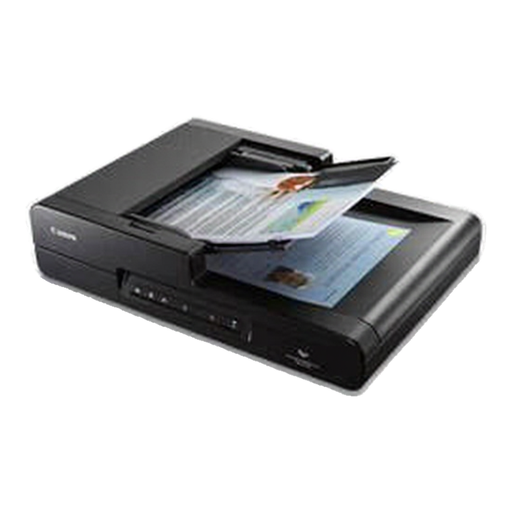
Canon imageFORMULA DR-F120 Flatbed & ADF Scanner
According to the product description, the flatbed scanner is suitable for books and delicate materials that can lie on glass.
The product name specifies A4 and 600 × 600 dpi. The description also lists a 50-sheet feeder, double-sided scanning and export to editable PDF. For bound material, the glass platen is a contact method.
View at Joybuy
 No image available
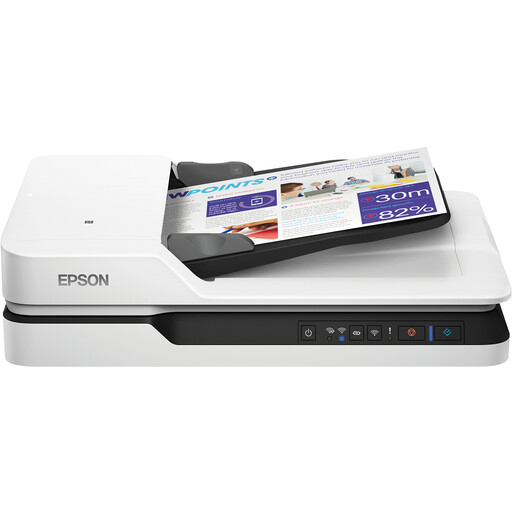
Epson WorkForce DS-1660W Flatbed Scanner
The description lists books and bound documents as suitable materials to scan, although the flatbed method requires the material to lie on glass.
The product name specifies A4 and 1200 × 1200 dpi. The description lists automatic cropping and skew correction, as well as wireless and USB connectivity.
View at Joybuy
 No image available
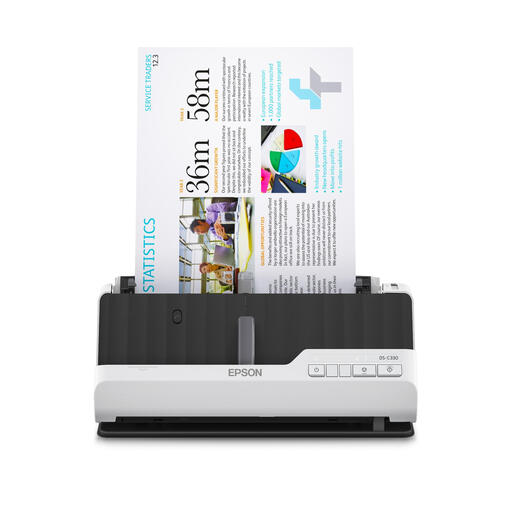
Epson DS-C330 ADF + Sheet-Fed Scanner
The feed path may suit loose pages or thin booklets; the description lists a U-turn feed for booklets up to 5 mm thick.
The product name specifies A4 and 600 × 600 dpi. The product description lists PDF, JPG and TIFF output, along with a compact design. Check that the material can be fed safely.
View at Joybuy
Frequently asked questions
Should the group measure the catalogue when it’s open?
Yes. Measure the original in the position you plan to scan it and decide whether you want to capture a double-page spread in one go or scan each page separately. Compare the measurement with the scanning area of the exact model.
How can we reduce errors during a long scanning session?
Agree on a file-naming system and page order in advance, then check both image quality and missing pages after scanning. The National Archives lists both as checks; this doesn’t mean consumer software will automatically detect errors.
Is a searchable PDF the same as an easy-to-read image?
No. OCR makes recognised text searchable, but you should check the page image separately for cropping, distortion, reflections and legibility. Test both outputs using sample pages from your own catalogue.
Can our group share scans of complete, copyright-protected catalogues with members or online?
Don’t assume that you can. The Dutch government explains that a private copy for personal use must not be distributed or made publicly available. For internal use within an organisation, the Dutch government describes a reprographic rights scheme; Stichting Reprorecht’s business terms cover small extracts from books. Check that the specific group, catalogue and intended access are covered by the applicable permission. A scanner does not grant that permission.
What warranty and aftercare should we check?
Check who is buying the device, what software support is needed and which purchase terms apply. The Dutch government’s guidance on statutory guarantees applies to consumer purchases; don’t assume that the same rights automatically apply when a society makes the purchase.


