
Journal scanners with limited desk space
You want to digitise a bound travel journal, but need to be able to put the device away after use or fit it on a small desk.


For a bound, fragile or difficult-to-lay-flat travel journal, a contactless overhead scanner is generally a better choice. A flatbed scanner is most practical for loose photos and pages that lie flat without pressure. Measure the space for the device and the room needed for the journal when open, then make a test scan of handwritten notes and pasted-in photos: OCR and image correction do not guarantee a flawless result.
You want to digitise a bound travel journal, but need to be able to put the device away after use or fit it on a small desk.
You want to capture pages without pressing down on a stiff or fragile binding.
As well as text, your journal contains photos or pasted-in keepsakes. You want to preserve the images and be able to find information again later.
First, check whether the journal can lie flat without pressure. Then consider the space you’ll need and test whether your handwriting, photos and pasted-in items are captured clearly.
| What to consider | What to look for when buying | Who is this important for? |
|---|---|---|
| Working and storage space | Measure the available space and the journal when open; check how much room is needed around the device. | If I have limited desk space, I want to know how much room the device takes up while scanning. Around 27% of consumers prioritise setup and storage space. |
| Binding and spine | Check that you can open the book without forcing it, and make a test scan near the spine. | If my journal is stiff or fragile, I want to protect the binding and check how the text near the spine comes out. Around 27% of consumers give protecting the binding their highest priority. |
| Photos and pasted-in keepsakes | Test a representative page and check for reflections, cropping and colour. | If my journal contains photos or glossy materials, I want to see whether those details are captured clearly. This is the top priority for around 20% of consumers. |
| Searchable text | Check the output format you need and test both handwritten and printed text. | If I want to find my notes again later, the OCR needs to handle my own handwriting. Around 13% of consumers put searchability above other buying considerations. |
| Cost and frequency of use | Decide how often you’ll scan bound pages and compare the current terms for the exact model. | For occasional use, I don’t want to choose a device with more features than I need. Around 13% of consumers weigh the purchase cost against how often they’ll use it most heavily. |
Even a device that folds away compactly needs working space for the open journal and the scanning area.
Before choosing a model, measure the space where you’ll scan and the area taken up by the open journal separately.
The product information for the CZUR Shine 800 A3 Pro highlights flat sheets; book correction is described for other models, such as the CZUR ET series.
Check the features of the exact version and assess a test scan of a bound page, especially near the spine.
If the correction isn’t suitable, you may need to spend extra time editing pages or scanning them again.
Listed features don’t tell you how well your own handwriting, pasted-in photos or reflective items will be captured.
Test text, photos and glossy materials separately, and keep the original scans.
Correcting recognition errors or capturing images again can take extra time.
The IRIScan Desk 7 Pro is an overhead book scanner that IRIS positions as suitable for smaller workspaces.
The foldable Shine 800 A3 Pro is designed for easy storage; according to CZUR, the ET series is better suited to bound books and curve correction.
The SV600 is a contactless overhead scanner for bound and fragile materials.
The Perfection V39II is an A4 flatbed scanner for photos and documents, with a stand for storing it upright.
The OpticBook 3800L is a flatbed scanner that Plustek positions for book scanning, with a design intended to accommodate the book’s edge.
This selection includes a compact sheet-fed scanner, flatbed and ADF models, and a foldable document camera. For a bound journal, the right choice depends on whether the book can lie flat and how much working space is available.
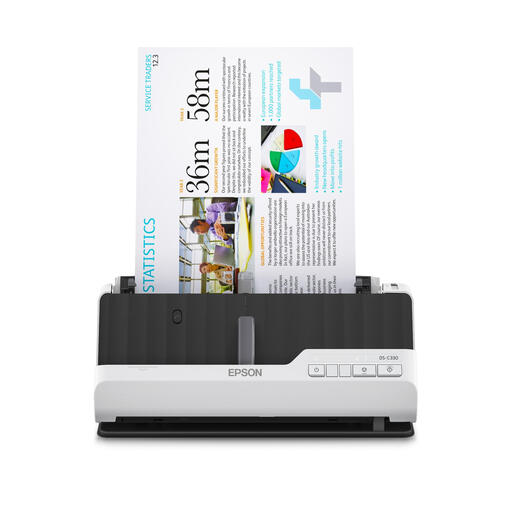 Image unavailable
A good fit if you want to scan a thin booklet and keep the space needed for a straight paper path to a minimum.
The product information lists booklets up to 5 mm thick, A4 and 600 × 600 DPI. Listed output formats include PDF, JPG and TIFF.
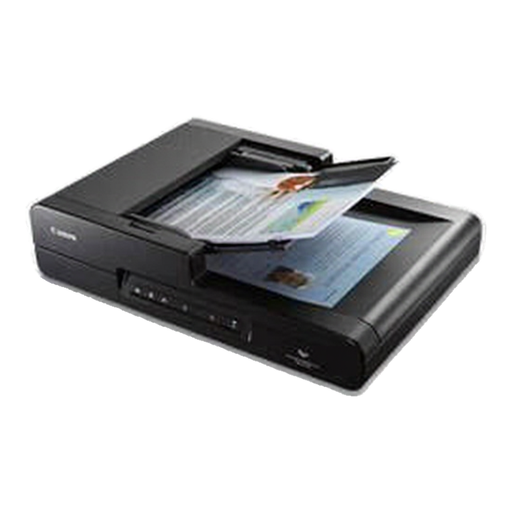 Image unavailable
A good fit if you want to scan loose documents through the feeder as well as books or fragile materials on the flatbed.
The listed dimensions are 469 × 335 mm. Books are placed on the glass, so this isn’t a contactless scanning option. The product information lists output to editable PDF.
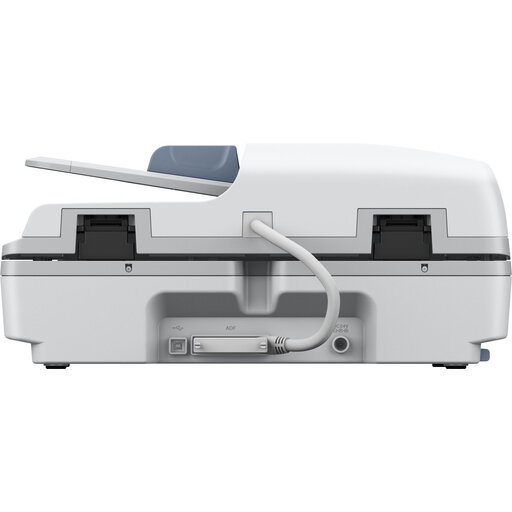 Image unavailable
A good fit if you want a flatbed scanner for originals alongside an automatic document feeder for loose sheets.
The listed dimensions are 495 × 360 mm. The product information lists a 100-sheet feeder, single-pass duplex scanning and PDF, JPG and TIFF output.
 Image unavailable
A good fit if you’re looking for a foldable camera for flat documents and A3 sheets; it’s less directly suited to bound journals.
The product information lists a 90° foldable design, OCR and a maximum paper size of A3. Use a test scan to check whether the model is suitable for your materials.
Measure the available space while the journal is fully open and ready to scan. A foldable design or a stand for storing the scanner upright doesn’t, by itself, tell you how much room it needs during scanning.
Choose a contactless scanning option if the book won’t lie open flat without force. Position it securely in the scanning area and, in a test scan, pay particular attention to the text near the spine. Book correction varies by model and doesn’t guarantee the same result for every original.
No, that isn’t guaranteed. Manufacturers list OCR or searchable output for certain models, but that doesn’t prove they’ll recognise your handwriting accurately. Test a representative page and keep the original scan too.
According to the Rijksoverheid, when you buy online from a business, you’re often entitled to a 14-day cooling-off period. You’re also entitled to a product that’s fit for purpose; if there’s a problem, contact the seller about your statutory guarantee. Check the terms of your specific purchase.
The Rijksoverheid states that you may make a private copy of copyright-protected work for your own use, but you mustn’t distribute it or make it available to the public. So, before sharing scans, distinguish between your own notes and, for example, photos or text pasted in from other people.