
Collector of bound programme booklets
You want to preserve the binding while regularly capturing pages. So compare an overhead scan with a book-edge flatbed; IRIS and Plustek describe these options for booklets.


For regular scanning of bound theatre programme booklets that you don’t want to open too wide, compare an overhead scanner with a book-edge flatbed scanner. A compact standard flatbed is best suited to occasional use, provided the booklet opens gently and the page you need fits within A4. Measure the largest single page or spread, along with your available workspace and storage space. Choose OCR only if you want to search the text later. The features mentioned are manufacturer specifications, not a guarantee of error-free text recognition or image reproduction.
You want to preserve the binding while regularly capturing pages. So compare an overhead scan with a book-edge flatbed; IRIS and Plustek describe these options for booklets.
You want to preserve photos, covers and page layouts. So check the capture size and assess a scan of glossy or illustrated paper for yourself.
You scan occasionally and want to put the scanner away afterwards. Canon says the CanoScan LiDE 400 can be stored vertically; Epson says the Perfection V39II has a built-in stand that lets you position the scanner flat or upright.
A good fit if: you often scan bound booklets and would rather not press them against a glass platen. IRIS lists a capture size of up to A3 and searchable PDF output for the IRIScan Desk 6 Pro.
Bear in mind: the space the scanner and open booklet take up on your desk. Check that the page fits within the stated capture area.
A good fit if: text close to the spine matters and you can gently lay the booklet on glass. Plustek lists a 6 mm book-edge design and a 216 × 297 mm scan area for the OpticBook 3800L.
Bear in mind: how far the binding opens and the scanner’s dimensions; the stated book-edge design doesn’t mean every booklet will lie flat on the glass.
A good fit if: you occasionally scan a booklet that opens easily or loose pages, and have limited storage space. Canon lists an A4 scan area and vertical storage for the CanoScan LiDE 400; Epson lists a built-in stand for the Perfection V39II.
Bear in mind: the page you need must fit within A4 and lie on the glass without forcing the binding.
| Consideration | What should you check? | Who is this important for? |
|---|---|---|
| Protecting the binding | Compare an overhead scan with a book-edge flatbed and see how far the booklet opens naturally. | I don’t want to open the booklet any further than necessary; around 33% of consumers prioritise preserving the binding. |
| Illustrations and size | Measure the page or spread you need in both directions and compare it with the scan or capture area. | I want to capture illustrations and the entire page I need; around 25% of consumers give image quality and size top priority. |
| Workspace and storage | Measure the space you have for use and storage; also check the scanner’s dimensions. | My desk and storage space are limited, so I consider both; around 25% of consumers put space ahead of other buying priorities. |
| Searchable text | Check whether the exact model offers searchable PDF output or OCR, and whether the software is compatible with your computer. | I want to find names and performances later; around 17% of consumers give searchable text top priority. |
The capture size determines whether the entire page or spread you need will fit in the image.
Measure the largest page or spread you want to preserve, then compare both dimensions with the scan or capture area of the exact model.
Text recognition and image correction features don’t guarantee that every name, illustration or glossy page will be captured accurately.
First, make a test scan of a challenging page and check the crop and recognised text against the original.
A compact A4 scan area won’t necessarily solve the problem of a booklet that is difficult to open or has text close to the spine.
Check how far the booklet opens and its condition before choosing between a standard flatbed, a book-edge flatbed and an overhead set-up.
The IRIScan Desk 6 Pro is an overhead option for booklets where a larger capture area or searchable PDF output is important.
The OpticBook 3800L is an A4 flatbed for booklets with text close to the spine, provided the booklet can be placed gently on the glass.
The CanoScan LiDE 400 is a compact A4 flatbed for occasional scanning when a page can lie on the glass.
The Perfection V39II is an A4 flatbed with a stand, designed for those who need to consider storage space.
The Shine Ultra is an overhead option worth comparing if portability and capturing books are important.
This Joybuy selection includes scanners for slim booklets and loose programme sheets, including A4 flatbeds and larger-format models. Check that each model’s feed, scan area and compatibility with your material suit your booklet.
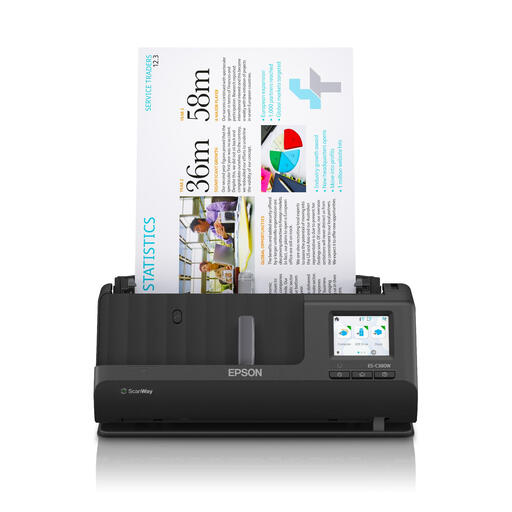 No image available
According to the product description, it is suitable for booklets up to 5 mm thick and has a straight paper path.
A4; 600 × 600 dpi. The description says automatic duplex scanning is not available.
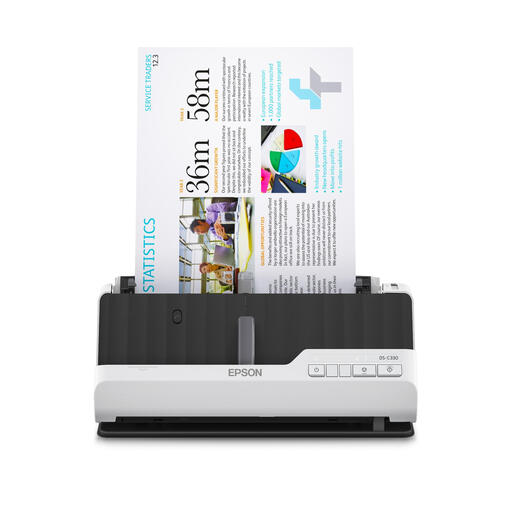 No image available
The product description mentions booklets up to 5 mm thick and paper protection.
A4; 600 × 600 dpi. Check that the feed is suitable for the condition and thickness of your booklet.
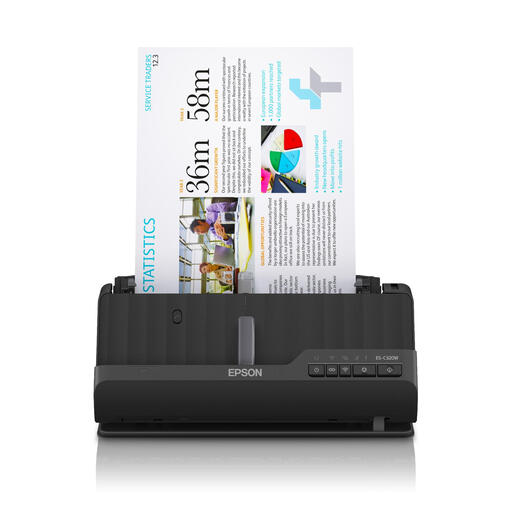 No image available
The product description mentions booklets up to 5 mm thick and a straight feed path.
A4; 600 × 600 dpi; the product description mentions Wi-Fi connectivity.
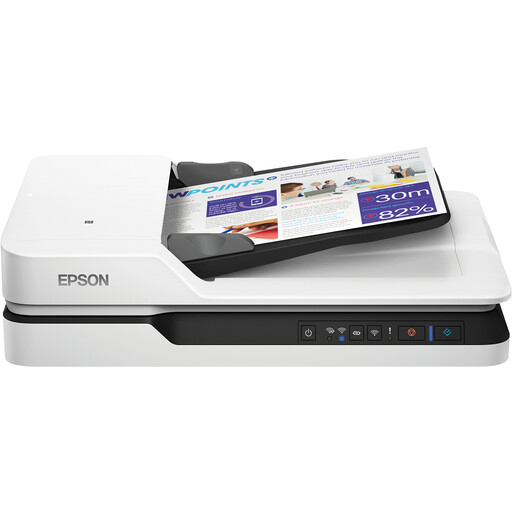 No image available
An A4 flatbed option for bound documents; check that the booklet can be placed gently on the glass.
A4; 1200 × 1200 dpi. The product description mentions Wi-Fi and USB 3.0.
 No image available
An option for loose programme sheets up to A3; the product description mentions OCR.
The product description lists an 8 MP sensor and advises against scanning glossy materials such as glossy photos and magazines.
Measure the page or spread you want to preserve and compare both dimensions with the stated scan or capture area of the exact model. Plustek lists a 216 × 297 mm scan area for the OpticBook 3800L; IRIS specifies a maximum size of A3 for the Desk 6 Pro.
Start with a page open at the angle the booklet naturally allows. If placing it on glass means opening it too far, compare an overhead set-up instead. Before scanning the rest, check the crop, any shadows and the automatic correction in a test scan.
Check the software and operating system support for the exact model. Plustek lists OCR for the OpticBook 3800L and IRIS lists searchable PDF output for the Desk 6 Pro; these features don’t guarantee that every name will be recognised correctly.
Not automatically. According to the Dutch government, you may make a private copy of copyright-protected material for your own use, but you may not distribute it or make it public. Ask the rights holder for permission before sharing protected text or photos.
According to the Dutch government, a 14-day cooling-off period applies in many cases when you buy online from a business. Check the applicable exceptions and the seller’s information for your purchase.