
Archivist with a small desk
You scan bound local history books at home and want to be able to use your workspace again afterwards. Avas Systemen describes the CZUR Aura Pro as foldable.


First, consider how fragile and large your books are, then measure how much space the open books and scanner take up when in use. A foldable overhead scanner could be a good fit if you want to scan hardback books from above and clear your workspace afterwards. A book-edge flatbed or standard A4 flatbed calls for a different approach to the spine and page size. For archiving, also check the file formats you need and the readability of a test scan: OCR does not guarantee error-free text.
You scan bound local history books at home and want to be able to use your workspace again afterwards. Avas Systemen describes the CZUR Aura Pro as foldable.
You want to handle old or difficult-to-open books with care when digitising them, and take the preservation of the binding into account. The KB and the National Archives cover preservation and quality checks when digitising heritage materials.
You want to be able to find names and places later, so you look beyond the page image at OCR, file output and page checking. IRIS and Plustek describe output and OCR options for specific models.
Measure the full set-up with your largest book open. Then consider whether the scanning method, page size and files you need are suited to your books and the way you archive them.
| What to consider | What should you check? | Who is this important for? |
|---|---|---|
| Space in use and for storage | Measure your desk with your largest book open, allowing for the scanner and any work mat. Compare the set-up in use separately from the storage position. | If I want to use my small desk again after scanning, the open book must fit on the workspace too. Around 26% of shoppers would make workspace their top priority when choosing. |
| Preserving the binding and pages | Check how far each book opens without forcing it, and whether you can support it safely. If necessary, ask a professional to assess fragile books. | If I scan fragile or bound originals, I don’t want to open the binding any further than is safe. Around 21% of shoppers would put book preservation first when choosing. |
| Searchable, checkable files | Make a test scan of old printed material and check small text, names, page edges and page order. Also check whether the exact model supports the file formats you need. | If I want to find names, places and passages later, I need both useful text recognition and page images I can check. Around 21% of shoppers would make searchability their top priority when choosing. |
| Book size and image detail | Measure the largest page or open spread, depending on the scanning method. Compare the measurements with the scan area and test the smallest text. | If my books contain maps, illustrations or small text, the scan area must be large enough and details must be readable in the test scan. Around 16% of shoppers would put size and detail first when choosing. |
| Workflow and purchase terms | Check software and computer compatibility, what’s included and the test scan. Also review the seller’s terms. | If I want to process lots of pages, I need a routine that suits my computer and the amount of checking involved. Around 16% of shoppers would make workflow and purchase terms their top priority when choosing. |
A scanner that folds away or can be stored upright still needs space for the book and set-up while you scan.
Open your largest book where you plan to scan and map out the full set-up before you choose.
If the workspace doesn’t fit during scanning, you may need to use a different surface.
OCR software can make text searchable, but errors in names or small print, as well as skipped pages, still need to be checked. The National Archives describes image quality checks and checking for missing pages as part of its digitisation process.
Test a challenging page and keep a checkable image of each page alongside any OCR text.
Allow time to check recognised text and page order when working with old printed material.
An A4 scan area may not be large enough for bigger pages. You also need to be able to position a bound book safely on the glass or at the book edge.
Measure your originals and, before choosing between an A4 flatbed and an overhead scanner, check how far the binding can safely open.
If pages are larger than the chosen scan area, you may need a different scanning method.
The Aura Pro is a foldable overhead scanner for bound books and documents.
The IRIScan Desk range includes overhead models with different scan areas and output formats.
The OpticBook 4800 is a book-edge flatbed for A4 pages, provided this scanning method is suitable for the binding.
The Perfection V39II is a standard A4 flatbed with a built-in stand for flat originals.
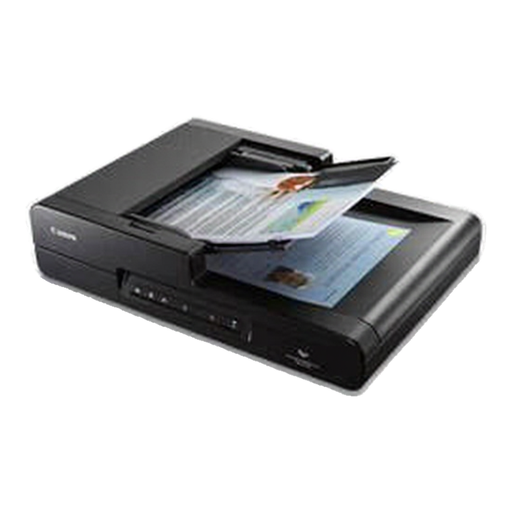
This selection includes a foldable A3 document camera and an A4 flatbed scanner with document feeder. For bound books, check that the positioning, scan area and space required are suitable for your books.
 No image available
This foldable document camera could be a good fit if you want to clear your workspace after a scanning session; check the set-up with your book open.
The design folds down by 90 degrees. The product description lists A3 as the maximum paper size, OCR and compatibility with Windows and macOS.
 No image available
According to the product description, the flatbed is designed for books and delicate materials; check whether a bound book will sit safely on the glass.
The title lists A4 and 600 × 600 dpi. The product description mentions double-sided ADF scanning and output to editable PDF. The stated dimensions are 469 × 335 × 120 mm; make sure you have this much space on your desk.
Don’t just measure the device: open your largest book on the intended spot too. Allow for the scan area or work mat with an overhead model, and room to position the book with a flatbed. A foldable arm or upright storage position mainly describes how the scanner is stored, not necessarily how much space it needs while scanning.
Start with a representative test page and check the gutter, edges, small text and page order. Don’t force the binding to make the book fit the scanner. The National Archives describes checking image quality and looking for skipped pages as part of its own digitisation process; this is not a quality certification for a home scanner.
Yes. Check whether the exact model can create the image files you need and searchable PDFs, then compare the OCR text with a test scan of your old printed material. IRIS lists TIFF and PDF-A for the Desk 7 Pro; output varies by model.
When you buy as a consumer in the Netherlands, you’re entitled to a product that meets legal quality standards. According to the Dutch government, there’s no fixed statutory guarantee period, and the seller is your point of contact if something goes wrong. A manufacturer’s guarantee is an addition, not a replacement.
Not simply because you own the book or are allowed to make a scan for personal use. The Dutch government states that a private copy of copyright-protected work for personal use must not be distributed or made public. Check the rights before publishing online and ask for permission if necessary.