If you only scan the occasional page and want to put your scanner away afterwards, consider a handheld scanner. For more frequent scanning of bound pages, an overhead scanner may be more practical, provided your open book fits underneath it. A book flatbed scanner is another option if you want to place individual pages on glass, but it needs a permanent spot on your desk. Before choosing, compare the space required while scanning, the output you need and computer compatibility.
Who is this relevant to?
Home worker with a small desk
Wants to copy reference pages without leaving a scanner out permanently. They are weighing up a portable handheld scanner against a compact or foldable overhead scanner, while also considering the space needed for an open book. IRIS describes both a handheld scanner and an overhead scanner for these different ways of working.
User of large reference books
Wants to capture bound pages without repeatedly pressing the spine flat. Look for contactless scanning, the stated curvature correction and the space needed for an open book. ScanSnap specifies correction for bound documents up to 30 mm thick for the SV600.
Someone building their own page archive
Wants to find copied text later, so checks whether the required output is searchable, what OCR software is needed and whether it works with their computer. CZUR and Plustek describe OCR features for specific models; check the software and version you plan to use.
What should you look for when buying?
First decide how you want to capture pages: by hand, from above with an open book, or individually on glass. Then check that the complete scanning setup will fit on your desk and whether you need searchable files.
| Consideration |
What should you check? |
Who should pay particular attention? |
| Desk space and storage |
Measure the clear desk space needed while scanning, as well as the space for the open book. Also check how you can store the scanner after use. |
If I want my desk clear again after scanning, a stowable option matters a lot. Around 36% of consumers say desk space and storage are their main concern. |
| Bound pages |
Compare overhead scanning with placing pages on a book flatbed. Check the book's thickness and the specifications for the exact model. |
If you want to capture pages near the spine without pressing the book flat each time, focus on the scanning method and the limits of the stated correction. Around 29% of consumers prioritise bound pages. |
| Finding text later |
Check whether the output offers searchable PDF and OCR, whether the software works with your computer, and what results you get from a test page. |
If I want to search copied text later, the software and output need to work with my computer. Around 21% of consumers say searchability is their main concern. |
| Scanning in different workspaces |
Check whether the device can scan independently or which computer and software it needs. Also consider the need to scan each page by hand. |
If you move between workspaces, consider how easy the scanner is to carry and set up temporarily, as well as what equipment you will need at each location. Around 14% of consumers say this is their main priority. |
Common pitfalls
-
Measuring only the base of an overhead scanner
Even with a compact or foldable camera arm, the open book still needs to fit underneath the camera.
Measure the complete setup with your largest reference book, then work out separately how much space the device takes up when stored.
-
Assuming OCR will work straight away on any computer
An OCR feature does not automatically mean you will get useful searchable files on your computer using your preferred software. CZUR notes a specific OCR limitation for MacBook users with an M2 chip.
Check the software for your operating system and, if possible, create a test file using text close to the book's spine.
An unsuitable workflow can mean extra work reprocessing pages or resolving software compatibility issues.
-
Assuming the same model name means identical specifications
Plustek lists a 6 mm book-edge design for the OpticBook 3800L on its Dutch product page and 2 mm on a UK specifications page. You cannot assume either measurement applies to a particular listing without checking.
Ask the seller for the specifications of the version on offer before using the book-edge measurement as a selection criterion.
Relevant brands
IRIS
IRIS offers both a handheld scanner and an overhead scanner in these models.
- IRIS says the IRIScan Book 7 can scan directly to PDF or JPEG without a computer. For the Desk 7 Pro, IRIS describes a short camera arm and OCR.
- With the handheld scanner, you move the device over each page; with the overhead scanner, the open book needs to fit under the camera.
CZUR
The Aura Pro is a foldable overhead scanner for books and bound pages.
- CZUR lists a foldable arm, curvature correction and searchable PDF output for the Aura Pro.
- Check the software for your computer: CZUR notes an OCR limitation for MacBook users with an M2 chip.
ScanSnap
The SV600 is a contactless overhead scanner for books and delicate documents, among other things.
- ScanSnap specifies curvature correction for bound documents up to 30 mm thick.
- That stated limit is not a specification for thicker books. Also allow space for an open book beneath the scanner.
Plustek
The OpticBook 3800L is an A4 book flatbed scanner with a book-edge design and OCR software.
- Plustek Netherlands lists a book-edge design, and Plustek specifies OCR for the OpticBook 3800L.
- Plustek Netherlands gives a 6 mm book-edge measurement, while Plustek United Kingdom lists 2 mm for a model with the same name. Check which version is on offer.
Joybuy products for reference pages
This Joybuy selection includes a document camera, flatbed and document-feed scanners, and handheld scanners. For each model, check whether its feed or capture method is suitable for loose pages, booklets or an open bound book.
 No image available
CZUR Shine 800 A3 Pro Document Camera
A foldable document camera may suit you if you want to put the scanner away after use; check that an open book will fit beneath the camera.
The product listing specifies an 8MP CMOS sensor, OCR, automatic cropping, USB connection to a computer and scanning of flat documents up to A3. It states that OCR supports more than 180 languages. Glossy materials, including glossy photos and magazines, are not recommended.
Joybuy
 No image available
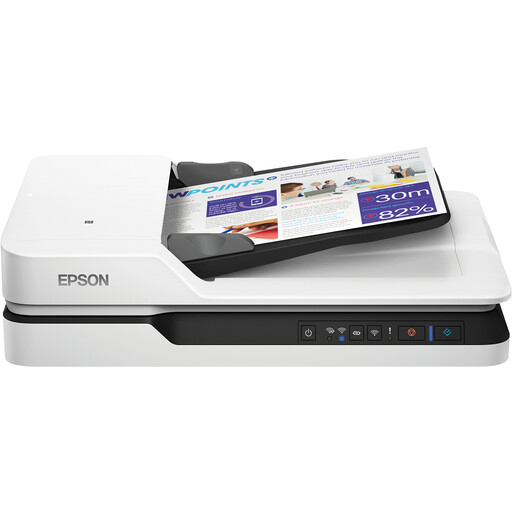
Epson WorkForce DS-1660W A4 flatbed scanner
A flatbed scanner may suit you if you want to place individual pages on the glass and have a permanent spot for the scanner.
The product listing mentions books and bound documents, a resolution of 1200 × 1200 dpi and dimensions of 451 × 315 × 120 mm. Bear in mind that the device will take up a permanent amount of desk space.
Joybuy
 No image available
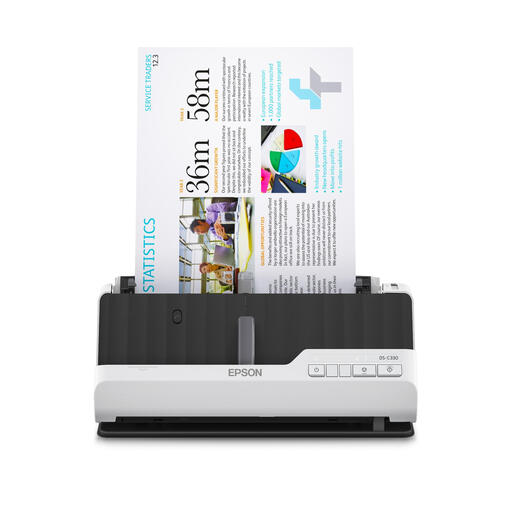
Epson DS-C330 ADF and sheet-feed scanner
This document-feed scanner may suit small booklets if the stated feed method and maximum thickness match what you want to scan.
The product listing specifies A4, 600 × 600 dpi and support for booklets up to 5 mm thick. The stated booklet limit does not confirm that thicker bound books are suitable.
Joybuy
 No image available
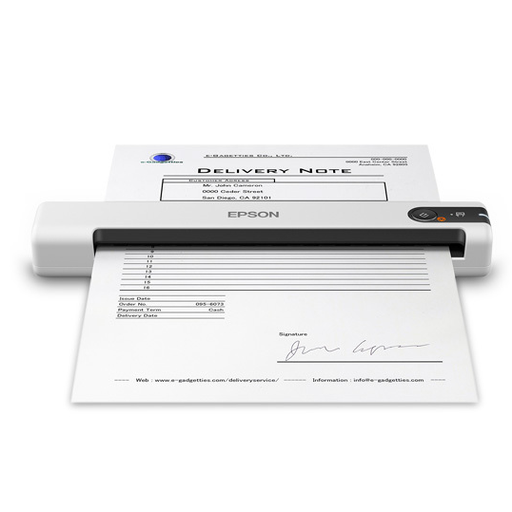
Epson WorkForce DS-70 A4 handheld scanner
A compact handheld scanner may suit you if you want to put the device away or take it with you; the stated feed method is not the same as capturing an open book from above.
The product listing specifies A4, 600 × 600 dpi, USB connection to a laptop or PC and OCR software for searchable PDFs. Check that the feed method is suitable for the pages you want to scan.
Joybuy
 No image available
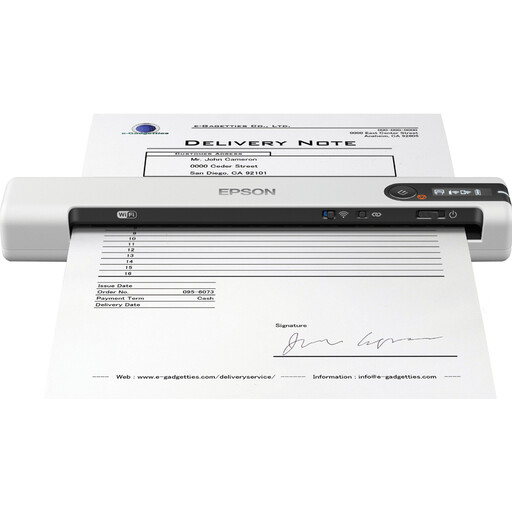
Epson WorkForce DS-80W A4 handheld scanner
A compact handheld scanner may suit you if you want to put the scanner away or take it with you; check that the document feed works for the reference pages you need to scan.
The product listing specifies A4, 600 × 600 dpi, USB connection to a laptop or PC and OCR software for searchable PDFs. The stated automatic document feed does not capture an open book from above.
Joybuy
Frequently asked questions
Can I scan reference pages and share the files with others?
The Dutch Government allows you to make a private copy of copyright-protected books for your own use, but not to distribute or publish it. Different permissions and reprographic rights terms apply to digital copying and sharing by a business or institution, so personal use does not automatically mean you have permission to use the material for business or education.
Does a book need to lie completely flat under an overhead scanner?
Not always: an overhead scanner can capture an image without the book resting on glass. Some models offer correction for curved pages, according to their manufacturers; ScanSnap specifies this feature for the SV600 for bound documents up to 30 mm thick. Check that the text near the spine of your book remains legible.
What do I need to create searchable files on my computer?
Before buying, check that the OCR output and software work with your operating system. CZUR provides separate Aura Pro downloads for Windows and Mac, but also notes a specific OCR limitation for MacBook users with an M2 chip.
What if the scanner or software does not work properly after I buy it?
If a product is faulty in the Netherlands, the seller is responsible for dealing with your statutory guarantee; there is no fixed statutory guarantee period. For online purchases from a business, you will usually also have 14 days to change your mind, subject to exceptions. Before buying, check which software and components the seller actually includes.


