
People responsible for fragile scrapbooks
You want to protect the binding and glued-in items, so first check how far each album can safely be opened. The Library of Congress advises against forcing a scrapbook to lie completely flat.


If a scrapbook cannot be opened flat without risking damage, an overhead book scanner is likely to be the better option. A flatbed scanner is only suitable for albums that can lie flat without pressure. First, measure the largest page, then make test scans of glossy photos and small handwriting. Agree with the volunteers how files will be checked and stored. Neither type of scanner makes a fragile album safe to handle by itself.
You want to protect the binding and glued-in items, so first check how far each album can safely be opened. The Library of Congress advises against forcing a scrapbook to lie completely flat.
You want to capture photos, captions and the page layout together, so measure the largest scanning area you need. Plustek lists a maximum scan area of 297 × 431,8 mm for the OpticSlim 1180.
You want different helpers to check, organise and save scans using the same process. Metamorfoze explains the difference between digital master files for long-term storage and derivative images for access.
Start by checking how far the album can safely be opened. Then measure the largest page and test image quality and the workflow on the computer the group will use.
| What to consider | What should you check? | Who is this important for? |
|---|---|---|
| Safe handling | Check how far representative albums can be opened without force, and whether the scanner can capture the whole page in that position. | If I want to protect a fragile binding or glued-in items, safe handling comes first; around 36% of consumers share this priority. |
| Full pages | Measure the largest page, including anything that sticks out. Compare it with the capture dimensions: Plustek lists a maximum of 297 × 431,8 mm for the OpticSlim 1180, while CZUR says its ET series supports up to A3. | If I want to preserve photos, captions and the page layout in a single scan, I focus on the scanning area; around 29% of consumers prioritise capturing complete, large pages. |
| Photos and handwriting | Make test scans of a glossy photo and the smallest handwriting. Check for reflections, cropped edges and legibility rather than relying on a dpi or megapixel figure alone. | If I want to keep old photos and small notes easy to read, I want to assess the results myself; around 21% of consumers prioritise photo detail and handwriting. |
| Group workflow | Test the software, file formats and a full batch of scans on the group’s computers. Agree who will keep the original scans and who will review images for publication. | If several volunteers are digitising the same albums, I need a process that can be handed over; around 14% of consumers prioritise a repeatable group workflow. |
A protruding photo, flap or other edge can mean the entire page will not fit in a single scan.
Measure a representative large page, including anything that sticks out, and compare its width and height with the stated capture dimensions.
If the scanning area is too small, you may need to take extra scans and stitch them together manually.
CZUR distinguishes the Shine 800 A3 Pro as a document scanner from Shine models that, according to the manufacturer, include book curvature correction.
Check the full model name and take a test scan of a bound page. Don’t assume it has book-scanning features based on the brand or A3 label alone.
Using an unsuitable workflow can mean extra correction work or having to scan again.
The Library of Congress advises against forcing scrapbooks to lie completely flat; doing so can put strain on the binding or glued-in items.
Check in advance how far the album can be safely opened. If necessary, have damaged albums assessed first and choose suitable support.
Identifiable people may be visible in the images as personal data. Photos and text may also be protected by copyright.
Distinguish between keeping scans, sharing them within the group and publishing them publicly. The Dutch Data Protection Authority explains the privacy rules around images. For protected material, check the rights and obtain any necessary permission before publishing.
The ET series offers an overhead scanning option for bound books. The ET16 Plus is one to consider if you don’t want to unbind an album.
The OpticSlim 1180 is designed for large pages that can lie flat safely, while the OpticBook range focuses on the book edge.
The IRIScan Desk 6 Pro is an overhead A3 document and book camera for anyone weighing up export options and a consistent capture workflow.
The Perfection V39II is an A4 flatbed scanner for loose photos and documents, and may not be suitable for large, bound albums.
This selection includes A4 sheet-fed scanners that also list support for booklets up to 5 mm thick, and a document camera for flat A3 sheets. According to the manufacturer, the CZUR Shine 800 A3 Pro does not have the book curvature correction found on other Shine models.
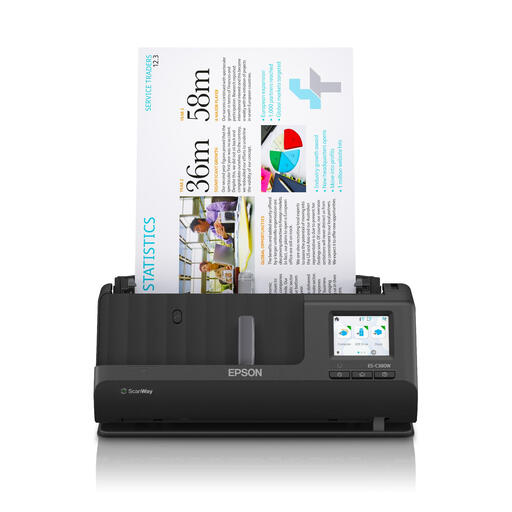 Image unavailable
Could be useful in a shared workspace; the product information mentions booklets up to 5 mm thick, not a complete page from a bound scrapbook.
600 × 600 dpi; A4; scan to network folders, email, USB and the listed cloud services.
Automatic double-sided scanning is not supported.
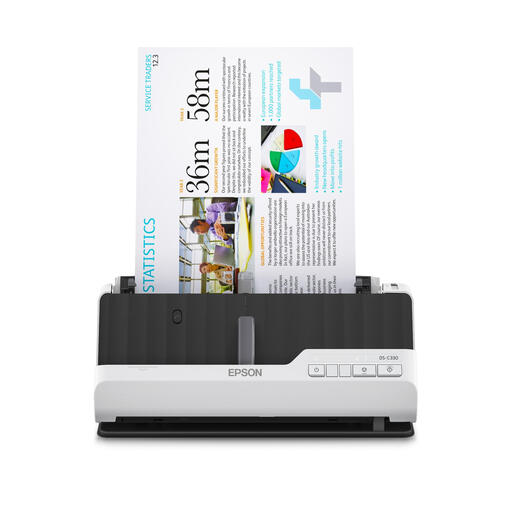 Image unavailable
Could suit a workflow involving booklets up to 5 mm thick; test whether the material is suitable for feeding through the scanner.
600 × 600 dpi; A4; output to PDF, JPG and TIFF.
The product information lists Epson Document Capture Pro.
 Image unavailable
Designed for flat sheets up to A3; it is not the same as a book scanner with the curvature correction found on other Shine models.
The product information lists OCR, a foot pedal and compatibility with Windows and macOS.
The product information advises against scanning high-gloss materials, including glossy photos.
No. Don’t force the binding flat. The Library of Congress advises against forcing scrapbooks to lie completely flat. Support heavy pages and choose a setup that suits the safe opening angle of the album.
Take test scans of the largest page, a glossy photo and small handwriting. Check the edges, reflections, legibility, file order and export on the computer the group will actually use.
Scanning doesn’t automatically mean you can share material publicly. The Dutch Data Protection Authority explains that identifiable people may count as personal data; copyright may also apply to protected photos or text. Check privacy, rights and any necessary permissions before the group publishes anything.
The Dutch Authority for Consumers and Markets (ACM) explains that statutory consumer guarantees apply to sales to consumers. Before ordering, agree who the buyer is: this consumer guidance doesn’t determine the terms that apply when the association itself buys the scanner for business use.