For bound or delicate magazines, an overhead scanner is an obvious choice, as you can capture pages without pressing them against glass. A book-focused flatbed scanner is better suited to individual pages that can safely lie flat; a handheld scanner can be useful if storage space is a priority, but you’ll need to move it by hand over each page. For any option, check the size, try a sample scan and make sure the OCR output meets your needs. These recommendations are based on the stated methods and specifications, not on an independent comparison of scan results.
Who is this choice relevant to?
Anyone looking to preserve bound magazines
If you’re digitising old, potentially fragile issues, you won’t want to flatten the spine every time you scan. Product information from CZUR, IRIS and Plustek describes different ways of handling bound pages.
Students with limited desk space
The space needed while you scan is different from the space an appliance takes up in storage. Even a compact model may need room for an open magazine.
Anyone who wants to find articles again later
If you want to search the text, you’ll need an OCR and PDF workflow that suits your needs. A saved PDF isn’t automatically searchable, so check the output for the exact model.
What should you look for when choosing?
When scanning old magazines in a student bedroom, the main considerations are the binding, available workspace, finding text again, glossy pages and the amount of scanning involved.
Overhead scanner
A good fit if: you want to capture bound pages without pressing them against a glass platen.
The trade-off: leave room for both the scanner and the open magazine, and check sample scans of the fold and glossy paper.
Book-focused flatbed scanner
A good fit if: you mainly scan loose A4 pages that can safely lie on the glass.
The trade-off: a larger open spread won’t fit in a single A4 scan; don’t force a fragile spine flat.
Compact flatbed scanner
A good fit if: you scan flat documents or photos as well as magazine pages, and want to put the scanner away when you’re done.
The trade-off: a stand for upright storage won’t increase the scan area or solve the problem of a difficult binding.
Handheld scanner
A good fit if: storage space is limited and you don’t need to process lots of pages one after another.
The trade-off: you move the device over each page yourself, so try a sample scan to check that the text and fold are captured clearly.
| What to consider |
What to check before buying |
Who is this most important to? |
| Protecting the binding |
Compare how the scanner handles the spine and open format; check that text near the fold remains visible. |
If I want to digitise a delicate magazine without forcing the spine, I’ll focus on how the scanner handles the binding. Around 26% of consumers put protecting the binding first. |
| Workspace and storage |
Measure the space for both the scanner and the open magazine, and think about where you’ll store the device. |
In a small room, I want to know whether there’s enough space while I’m scanning and whether I can put the device away afterwards. Around 21% of consumers give workspace and storage the highest priority. |
| Finding text again |
Check whether the exact model supports OCR and the PDF output you want; test recognition on a page with small print. |
If I want to find articles by keyword later, I’ll check whether the scan includes a searchable text layer. Around 21% of consumers prioritise searchability. |
| Glossy pages |
Make a sample scan of a glossy image with small text, then check for reflections and readability. |
If illustrations and captions on glossy paper matter, I’ll want to see how the lighting performs first. Around 16% of consumers give image quality and glare the highest priority. |
| Scanning effort and cost |
Weigh the number of pages against the need to position them by hand and the workflow for the exact model. |
If I have a lot of pages, I’ll want to know how much handling is involved and whether the approach suits occasional or regular use. Around 16% of consumers prioritise the balance between cost and scanning effort. |
Buying pitfalls
-
Assuming a high dpi or megapixel count guarantees readable scans
A stated resolution or lighting feature won’t necessarily tell you how well small print, the fold or glossy paper in your magazine will be captured.
Try a representative page with small text and a glossy image. Check the fold and the saved file before scanning a whole volume.
Sample scans, changing the lighting or rescanning can all take extra time.
-
Choosing an A4 flatbed scanner for a full open spread
Plustek’s Dutch specification for the OpticBook 3800L lists a scan area of 216 × 297 mm. A larger spread therefore won’t fit in a single scan.
Measure the open magazine and compare it with the scan area for the exact version. Bear in mind that you’ll need to position the pages individually.
Individual scans can mean extra work when putting the pages back in order.
-
Assuming every version of a model has the same book edge
Plustek’s Dutch product specification lists a 6 mm book edge for the OpticBook 3800L, while its UK specification lists 2 mm. The model name alone doesn’t mean these figures are interchangeable.
Check the full model name and specifications for the version being sold; don’t rely on regional information without verifying it.
A version that differs from what you expect may be less suitable for text close to the fold.
Brands to consider
CZUR
The ET18 Pro is an overhead option for open, bound magazines; a Dutch retailer also describes it as suitable for A3 originals.
- CZUR lists book-curvature correction, searchable PDF and side lighting for glossy materials.
- These are the manufacturer’s specifications and instructions, not an independent assessment of scanning or OCR quality on old magazines.
IRIS
The Desk 7 Pro is an overhead scanner for desk use; the Book 7 is a separate handheld scanner for occasional use.
- IRIS lists a short arm, OCR and asymmetrical lighting for the Desk 7 Pro. For the Book 7, the brand lists direct PDF and JPEG saving.
- With the Book 7, you move the scanner over the page yourself; this is a different workflow from using an overhead model.
Plustek
The OpticBook 3800L is an A4 flatbed option designed for books, for pages that can safely lie on the glass.
- Plustek Netherlands lists a scan area of 216 × 297 mm, a 6 mm book edge and OCR.
- Plustek UK lists a 2 mm book edge for a model with the same name, so check the version being sold.
Epson
The Perfection V39II is a compact A4 flatbed scanner for anyone who also scans flat documents and photos.
- Epson Netherlands lists a built-in stand that lets you store the device upright.
- This doesn’t make the model suitable for a full, large spread; also check that the magazine binding can safely lie flat.
Joybuy products
This selection includes document scanners and flatbed models for booklets, flat pages and text recognition. For magazines, always check that the version you choose is suitable for the binding, paper and scan size you need.
 No image available
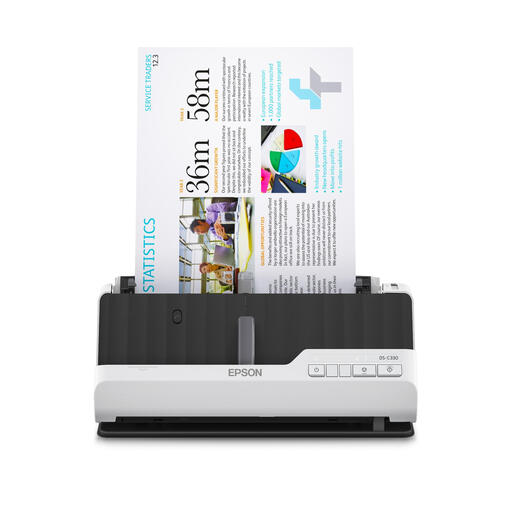
Epson DS-C330 ADF + Sheet-Fed Scanner, 600 × 600 DPI, A4, Black, White
Consider this model only if the described booklet-scanning method suits your material; the stated maximum thickness is 5 mm.
The product information describes a straight-through scanning path for passports and booklets up to 5 mm thick. The product name lists 600 × 600 DPI and A4.
View at Joybuy
 No image available
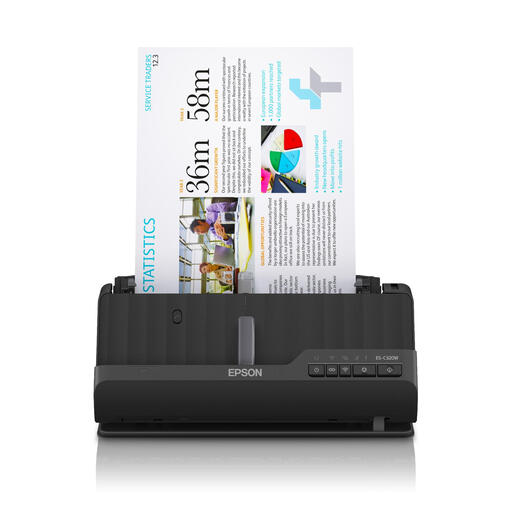
Epson ES-C320W ADF + Sheet-Fed Scanner, 600 × 600 DPI, A4, Black
Consider this option if desk space is limited and you need to scan thin booklets; the stated support is for items up to 5 mm thick.
The product name lists 600 × 600 DPI and A4. For a magazine, check that the described paper path suits the way you want to scan the page.
View at Joybuy
 No image available
CZUR Shine 800 A3 Pro Document Camera
This option is better suited to loose sheets and text recognition than to glossy magazine pages.
The product information advises against scanning highly glossy materials, including magazines. Check that the size and intended originals suit your needs.
View at Joybuy
 No image available
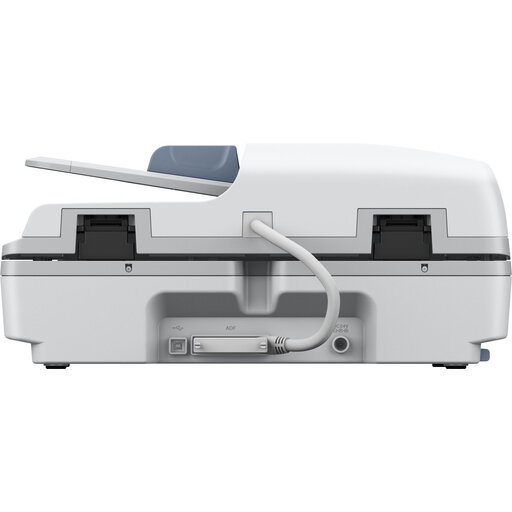
Epson WorkForce DS-6500 Power PDF
Consider this model if you can safely lay your pages flat and need searchable PDF output; bear in mind how much space the device takes up.
The stated format is A4. The listed dimensions are 495 × 360 × 217 mm and the weight is 9,8 kg.
View at Joybuy
 No image available
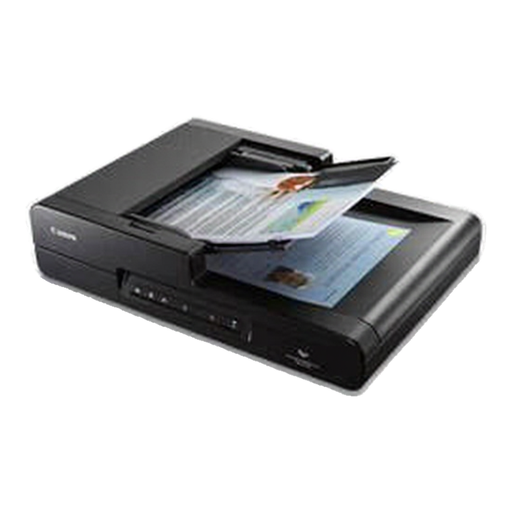
Canon imageFORMULA DR-F120 Flatbed & ADF Scanner, 600 × 600 DPI, A4, Black
The product information lists books, magazines and delicate materials as suitable for flatbed scanning. Choose this method only if the material can safely lie on the glass.
For flatbed scanning, place the material face down on the glass. The stated dimensions are 469 × 335 × 120 mm.
View at Joybuy
Frequently asked questions
Can I scan an entire old magazine and share the PDF with my housemates?
Don’t assume that you’re allowed to distribute or share an entire issue. The Dutch Government describes a private copy for personal use, not for distribution or making it publicly available; Erasmus University Library warns that copying an entire magazine issue is generally not allowed without permission or an applicable exception. Consider the rights and intended use separately.
How can I reduce glare when scanning?
Start with a sample scan of a glossy page and check the image. For glossy materials, CZUR recommends side lighting rather than top lighting for the ET18 Pro; IRIS describes asymmetrical lighting for the Desk 7 Pro. Check the result before scanning lots of pages.
Will scanning to PDF automatically give me searchable text?
No. Check whether the exact model supports OCR and searchable PDF output. CZUR lists searchable PDF for the ET18 Pro; IRIS lists direct PDF and JPEG saving for the Book 7, but that information alone doesn’t tell you whether it includes a searchable text layer.
What are my rights if a scanner I bought online disappoints or develops a fault?
For online purchases by consumers, the Dutch Government says you’ll often have a 14-day cooling-off period; check the terms of your specific purchase. In the Netherlands, there’s no fixed period for the statutory guarantee. If a product isn’t as it should be, the seller may need to provide a solution, depending on the circumstances; a manufacturer’s guarantee doesn’t replace your statutory rights.


