What should you look for when buying?
Start by choosing a scanner that suits the book’s binding and the scanning process you want to use. Then check that the output is suitable for archiving and that the scanner will work with the classroom computer and fit your workspace.
Overhead book scanner
Best for: bound books that you’d rather not press against a glass scanning bed.
Bear in mind: positioning, lighting, turning pages and checking the results are still necessary; a quoted capture speed is not the same as the total processing time.
Book-focused flatbed scanner
Best for: books whose pages can lie safely and sufficiently flat on the scanning bed.
Bear in mind: you scan one page at a time and need to check whether the book can be opened safely.
Compact standard flatbed scanner
Best for: a small scanning station where you also want to handle loose documents or photos, and only scan suitable books.
Bear in mind: a compact design does not automatically make a stiff book spine suitable for the scanning bed.
| What to consider |
What should you check? |
Who is this important for? |
| Book preservation and spine text |
Make a test scan of a challenging bound book and inspect the small print, illustrations and text near the spine. |
If I want to protect a fragile binding, I need to see whether the whole page is legible without flattening the book. Around 36% of consumers prioritise book preservation and legibility near the spine. |
| Searchable files |
Test both the page image and the searchable PDF, and check how well place names and old spellings are recognised. |
If pupils need to find historical passages, I want to be able to check the OCR text alongside the original page image. Around 29% of consumers prioritise searchability and usable archive files. |
| Multiple books and formats |
Measure the largest book while it is open and try a short, complete session, including rescanning any pages that do not come out well. |
If I’m processing a series of books or larger pages, I want to know how much page-turning and checking the whole session will involve. Around 21% of consumers focus mainly on the workflow for multiple books and formats. |
| Space and computer |
Check the available table space, connection and software on the classroom computer; also see how the book sits during scanning. |
If the scanning station is shared and space is limited, I need to be able to set up and use the scanner with the computer available. Around 14% of consumers make space and suitability for the classroom their main priority. |
Joybuy products
These Joybuy product picks are suited to A3 document capture, flatbed scanning and searchable output. Before buying, check separately that the book can lie safely and sufficiently flat, and that the setup will fit in the classroom.
 No image available
CZUR Shine 800 A3 Pro
An option if you want to capture flat pages up to A3 and need OCR output; test it with a book to check whether the images are usable right up to the spine.
The product name lists A3, OCR and compatibility with Windows and macOS.
View at Joybuy
 No image available
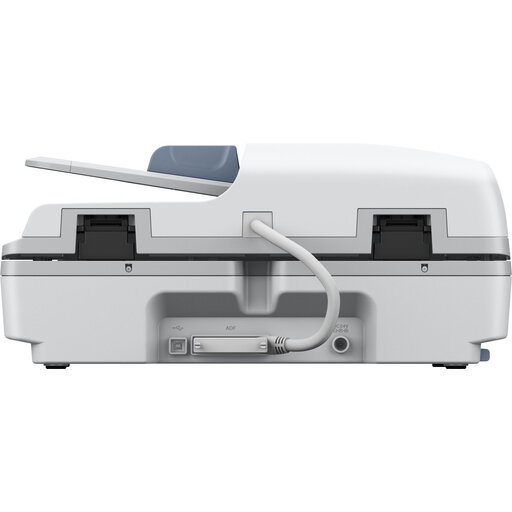
Epson WorkForce DS-6500 Power PDF
Consider this model if you want to scan pages that lie flat and need searchable PDF output; check that the device and software suit your available workspace and computer.
Beforehand, assess how much space the scanner takes up and whether your book can lie safely on the scanning bed.
View at Joybuy
Frequently asked questions
Is a scan searchable straight away?
No. OCR must convert a page image into computer-readable text. The KB notes that old spelling, historical letterforms and damaged pages can make recognition more difficult, so check important passages against the image file.
How can I scan an old book without putting unnecessary strain on its binding?
First check that the book can be opened safely, then make test scans to assess the text near the spine and any distortion. A contactless scanner avoids pressure from a scanning bed during capture, but it does not guarantee that the whole page will be legible.
What extra work is involved in archiving?
Allow for page-turning, quality checks, OCR corrections and file management. When an organisation digitally copies and shares copyright-protected publications, permission and payment under the applicable schemes may be required; assess the intended use beforehand.
Can a class put scans of local history books online?
Not automatically. The Dutch Government states that copyright-protected books must not be used without the creator’s permission. Auteursrecht.nl describes conditional options for reproducing material for certain educational uses as an explanation or supplement, not as a replacement for the work. Check the rights and intended use before publishing scans.
What if a scan shows identifiable pupils?
Consider this separately from the copyright in the book. The Dutch Data Protection Authority refers to the need for consent to create and publish identifiable images of pupils; for pupils under 16, the AP specifies parental consent. Store the files securely.


