Who is this scanner guide for?

Scanning bound notes

You want to keep your pages without taking your notebook apart. Check the inner margin and book thickness, and whether the scanner captures the page near the spine. IRIS and CZUR describe models with a book-edge design or an overhead scanning method.

Working at a small desk

You may only have room to lay out a book temporarily and want to put the scanner away afterwards. The device’s storage position doesn’t tell you how much space the complete scanning setup needs. Epson and Canon publish device dimensions that you can compare with your available workspace.

Searching your own handwriting

You may want to do more than save page images and search the text later. Check the software, language settings and recognition using a page from your own notebook. ABBYY describes handwriting recognition subject to specific settings and language requirements.

Which concerns should guide your choice?

Handheld scanner

Choose this if: you don’t have a permanent scanning spot and mainly want to save individual pages as images or PDFs. IRIS says the Book 7 can scan directly to PDF or JPEG.

Trade-off: you move the scanner over each page yourself, so check that you can capture the entire inner margin evenly.

Foldable document camera

Choose this if: you can lay the book open and want to capture pages from above. CZUR positions the Shine Ultra for thin books.

Trade-off: folding it makes storage easier, but you’ll still need room for the book and possibly a scanning mat while you scan.

Book-focused overhead scanner

Choose this if: your notebook is too thick for a thin-book model and you can set aside a permanent scanning area. CZUR distinguishes the ET series from the Shine Ultra series by the supported book thickness.

Trade-off: check the specifications for the exact ET model and measure the available scanning space. Support for thicker books doesn’t tell you whether handwriting will be recognised.

A4 flatbed scanner

Choose this if: you scan loose A4 pages or pages that can lie flat, and want to put the scanner away between sessions. Epson says the Perfection V39II has a built-in stand so you can store it upright.

Trade-off: a stiff, bound book won’t necessarily lie flat on the glass. A book-focused flatbed has a book edge, but Plustek says the OpticBook 3800L is 19,3 inches wide.

What to consider What should you check? Who is this most important for?
Inner margin and book thickness Compare the book thickness and scan size for the exact model. Try scanning a page close to the spine. If I want to keep my notebook intact, the text near the spine needs to be captured too. That’s why around 33% of consumers give binding and the inner margin top priority.
Space while scanning Measure the space needed for both the scanner and the open book. Being foldable or storable upright doesn’t indicate how much room you’ll need while scanning. If I only have temporary space on my desk, I want to know whether the open book will really fit while I scan. Around 27% of consumers prioritise the workspace and storage space required.
Readability and searchability If needed, keep the original page images and test your chosen OCR process on a representative page in your own handwriting. If I want to find words in my own notes later, I need more than a legible image. Around 27% of consumers prioritise useful handwriting recognition.
Controls and workflow Decide whether you want to scan without a computer, and check which software and workflow come with the exact model. If I’m mainly looking for a simple scanning routine, I want to know whether I move the pages myself or use software. Around 13% of consumers give ease of use and operation top priority.

Which pitfalls should you avoid when choosing a book scanner?

  • Assuming OCR will make your handwriting searchable

    A PDF scan or an OCR label doesn’t prove that the software can recognise your handwriting. Recognition may depend on the software settings and language support.

    Test a page in your own handwriting and keep the original page image too.

    Allow time to check and, if necessary, correct the recognised text.

  • Measuring only the folded size

    A scanner may be compact to store, but the open notebook can still take up space while you’re using it.

    Measure the available space with the book open and the scanner in scanning position.

  • Choosing a thin-book model for a thick volume

    For the specified A4 scan size, CZUR gives a reference book thickness of 10 mm for the Shine Ultra. That specification doesn’t automatically make it suitable for a thicker notebook.

    Check the thickness limit for the exact model against your thickest notebook, and try scanning a page near the spine.

Which brands are worth comparing?

IRIS

IRIS positions the Book 7 as a handheld scanner for pages that doesn’t need a permanent scanning setup, and its Desk range as document cameras. These use different scanning methods.

  • IRIS says the Book 7 can scan directly to PDF or JPEG and has a book-edge design.
  • You move the scanner over the page yourself; its design doesn’t prove how well it captures your handwriting or the entire inner margin.

CZUR

CZUR positions the Shine Ultra for thin books and distinguishes the ET series by the supported book thickness.

  • CZUR lists scan sizes, a reference book thickness and OCR output for the Shine Ultra.
  • The stated thickness limit may make it unsuitable for thicker bindings. Model specifications aren’t an independent test of handwriting recognition.

Epson

The Perfection V39II is an A4 flatbed scanner for pages that can be laid flat.

  • Epson says it has a built-in stand for upright storage and is powered via USB.
  • If you’re scanning a bound book, check that the page lies flat enough on the glass and that there’s room for the open book.

Canon

The CanoScan LiDE 400 is an A4 flatbed scanner powered via USB, with the option to position it vertically.

  • Canon lists device dimensions of 250 × 367 × 42 mm and a maximum document size of 216 × 297 mm.
  • The device dimensions don’t include the space needed for an open notebook beside the scanner.

Plustek

The OpticBook 3800L is a book-focused flatbed scanner to consider if the inner margin matters.

  • Plustek describes this model as having a book-edge design.
  • The UK model specifications give a width of 19,3 inches. Check the exact version and measure your available desk space.

Joybuy scanners for notebooks and small workspaces

This selection includes flatbed scanners for bound or delicate pages, feed scanners for thin booklets, and a document camera that captures pages from above. OCR labels don’t guarantee that handwritten text will be recognised.
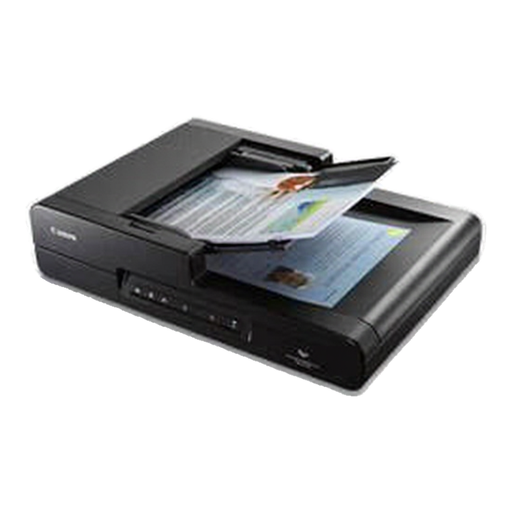
Canon imageFORMULA DR-F120 flatbed and ADF scanner

Canon imageFORMULA DR-F120 Flatbed & ADF Scanner

The flatbed may suit bound or delicate pages, while the ADF is designed for processing loose documents in batches.

A4; 600 × 600 DPI.

Joybuy
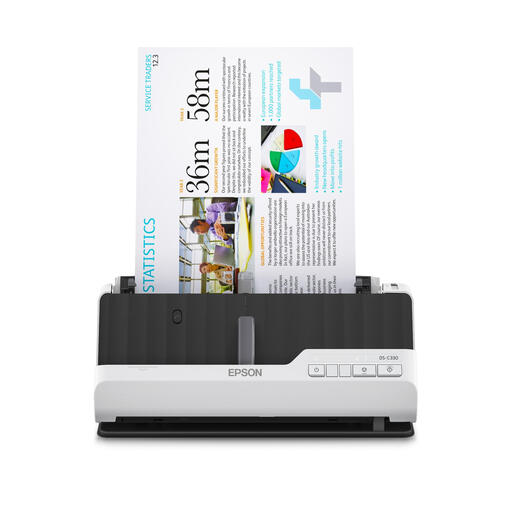
Epson DS-C330 ADF and sheet-fed scanner

Epson DS-C330 ADF + Sheet-Fed Scanner

Consider this model only for booklets within the specified thickness limit. It doesn’t have a flat glass bed for a thick, bound notebook.

A4; 600 × 600 DPI; booklets up to 5 mm according to the product description.

The description mentions a U-turn feed and a straight-through feed position for booklets.

Joybuy
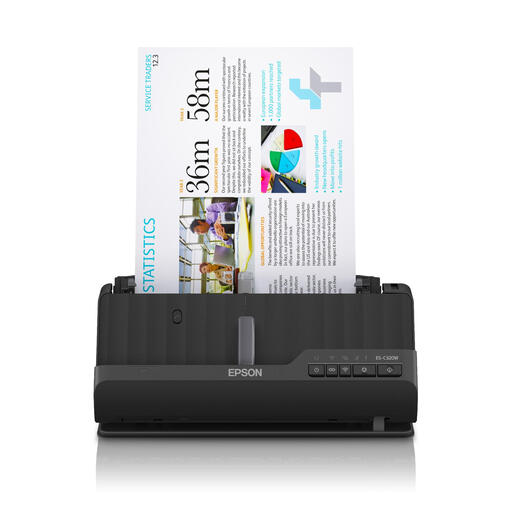
Epson ES-C320W ADF and sheet-fed scanner

Epson ES-C320W ADF + Sheet-Fed Scanner

The description mentions a compact feed setup for booklets. Check your booklet’s thickness before choosing this feed scanner.

A4; 600 × 600 DPI; booklets up to 5 mm according to the product description.

The described feed has a U-turn and a straight-through position.

Joybuy
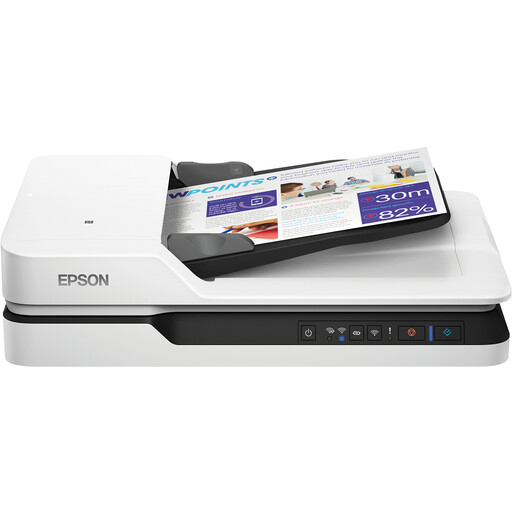
Epson WorkForce DS-1660W flatbed scanner

Epson WorkForce DS-1660W Flatbed Scanner

A flatbed lets you place bound documents on the glass instead of feeding them through a scanner. Check that your notebook lies flat enough.

A4; 1200 × 1200 DPI.

The product description lists Wi-Fi and USB connectivity.

Joybuy

CZUR Shine 800 A3 Pro document camera

CZUR Shine 800 A3 Pro Document Camera

A document camera captures pages from above without feeding them through a scanner. Measure the space needed for your open book and check how the binding affects the scan.

The product description lists support for A3 and A4 documents, as well as OCR software to convert them into editable text files.

OCR support doesn’t prove that the software can recognise your handwriting; check with a sample page.

Joybuy

Frequently asked questions about book scanners

Does a scanner for handwritten notes need OCR?

Not if you only want to save legible page images. If you want to search the text, test the software with your own handwriting. ABBYY describes handwriting recognition under certain settings and language requirements; that doesn’t mean every OCR scanner can recognise your notes.

How can you check the scanning setup before digitising a whole notebook?

Open the book in the space available and use a sample page to check the inner margin, how flat the page lies and its readability. For the Shine Ultra, CZUR gives a reference book thickness for a specific scan size. With a flatbed, you’ll also need room for the part of the book beside the glass.

How should you store scans of work notes containing personal data?

Keep the documents secure and consider who has access to them. The Dutch Data Protection Authority advises protecting documents containing customer data when working from home. It recommends storing them on the work server or, if that isn’t possible, on an encrypted USB stick. Make sure your approach is suitable for the documents and complies with your organisation’s rules.

What can you expect from the seller if your scanner develops a fault?

In the Netherlands, the seller must supply a product that works properly; according to the Dutch government, there’s no fixed statutory warranty period. The seller is your point of contact if something goes wrong, and the appropriate solution depends on the circumstances and normal use.

Can you scan and share a notebook containing copyrighted material?

You may make a copy for your own personal use, but that doesn’t give you permission to distribute or publish the material. The Dutch government makes this distinction between a private copy and sharing it with others.
