Who is this relevant for?

Preserving fragile bindings

You want to digitise local history books without forcing the binding open unnecessarily. CZUR describes the ET series as a contactless scanner that doesn’t put pressure on the spine; ScanSnap describes the SV600 as contactless.

Searching historical texts

You want to find names and places in digital files, and are happy to check OCR results where old spelling or damaged pages may cause problems. The KB, the national library, identifies image file quality as one factor affecting OCR.

Digitising lots of pages

You want to process whole books, so you’ll need to consider turning pages, the available workspace and checking for missing pages. The National Archives includes checking for skipped pages as part of digitisation.

What should you look for?

Contactless overhead scanner

Choose this if: you don’t want to press a fragile binding against a glass platen. CZUR describes contactless capture for the ET series; ScanSnap describes the SV600 as contactless.

Trade-off: you’ll need to position the book and check scans for curvature, shadows and missing pages. The SV600 specifies automatic correction for curvature up to 30 mm deep; this isn’t a guarantee for every book.

Compact document camera with book-scanning features

Choose this if: you have little permanent workspace in your hobby room and want to scan loose documents as well as books. IRIS describes the Desk 7 Pro as having a short camera arm; Canon Nederland specifies capture up to A3.

Trade-off: check with your own books that the text near the spine remains legible and that the work mat and lighting suit your workspace. A compact setup alone says nothing about OCR performance on older printed material.

Book scanner with a narrow glass platen edge

Choose this if: you mainly scan sturdy books up to A4 and can safely place the page on the glass platen. Plustek specifies a 2 mm book edge and searchable PDF output for the OpticBook 4800.

Trade-off: the page rests on glass, so don’t choose this setup if the book would need to be opened too far.

Overhead scanner for large originals

Choose this if: you have books, maps or inserts that won’t fit within A3. VIISAN describes the S21 as an A2 overhead scanner.

Trade-off: allow enough workspace and check the stated resolution carefully: VIISAN specifies up to 600 dpi as software interpolation, not as an optical resolution of 600 dpi.

What to consider What should you check? Who is this important for?
Protecting the binding and paper Check the required opening angle, how the book is supported and sample images of text near the spine. I want to put as little strain as possible on a fragile binding, so I’m looking for contactless capture. Around 36% of consumers put preserving the binding first.
Searchability of older text Check whether searchable PDF output is available, and test small print, old spelling and text close to the spine. I want to be able to search my scans for names and places, and I’m prepared to check the OCR. Around 29% of consumers prioritise searchable historical text.
Processing whole books efficiently Scan a sample sequence and check the page order, cropping and any missing pages. I want to process lots of pages without skipping the completeness check. Around 21% of consumers prioritise efficiency when scanning whole books.
Size of books and inserts Measure the largest original in the position in which you can scan it safely, then compare the measurement with the maximum scan size. I want to capture a large book or map in one go, so I’m checking the capture area. Around 14% of consumers prioritise large-format scanning.

Common pitfalls

  • Assuming a dpi figure proves archival quality

    For the VIISAN S21, ‘up to 600 dpi’ refers to software interpolation. The KB, the national library, points out that OCR also depends on the quality of the image file.

    Compare optical specifications with interpolated output, and assess sample scans of small print and text near the spine.

    Set aside time for sample scans, checking and rescanning if necessary.

  • Choosing a document feeder based on loose-sheet speed

    A feeder for loose sheets isn’t the same as a setup for a hardbound book. Check that the scanner can handle the original books you want to preserve.

    Choose based on your bound material, not just the speed for loose documents.

    Hardbound books may require extra manual work or a separate scanning setup.

  • Assuming page correction will detect missing pages

    Correcting page curvature and checking that every page is present are separate steps. The National Archives specifically lists checking for skipped pages.

    Check page numbers and order before putting the originals away.

  • Sharing a personal scan without checking the rights

    The Dutch government allows a private copy for personal use, but says it must not be distributed or made publicly available.

    Keep private archiving separate from publication, and obtain the necessary rights before sharing protected material.

Brands to compare

CZUR

The ET24 Pro is a contactless overhead option for hardbound books, when pressure-free capture and correction of curved pages are important.

  • CZUR describes the ET series as offering contactless capture and laser-assisted curvature correction.
  • These are manufacturer claims; check the lighting and OCR using sample pages from your own collection.

ScanSnap

The SV600 is a contactless overhead option for books and fragile materials up to A3.

  • The Dutch product page specifies automatic correction of curvature in bound documents up to 30 mm deep.
  • That limit is a model specification; don’t assume it applies to thicker or differently shaped books.

IRIS

The IRIScan Desk 7 Pro combines a compact document camera with book-curve correction, OCR and capture up to A3.

  • IRIS describes a short camera arm and detection of turned pages; Canon Nederland specifies support up to A3.
  • These features don’t indicate how accurately OCR will handle older printed material in your collection.

Plustek

The OpticBook 4800 is a book scanner with a narrow glass platen edge for bound material up to A4.

  • Plustek specifies a 2 mm book edge and searchable PDF output.
  • The page rests on glass; check whether your book can be opened far enough without putting it under unsafe pressure.

VIISAN

The S21 is an overhead option for A2 originals, such as large books, maps and inserts.

  • VIISAN specifies a 20.1 MP sensor, book correction and OCR.
  • The manufacturer describes ‘up to 600 dpi’ as software interpolation; don’t judge image quality on that figure alone.

Joybuy products for this use

This selection includes a flatbed and ADF scanner for books, plus a document camera with OCR for digitising pages.
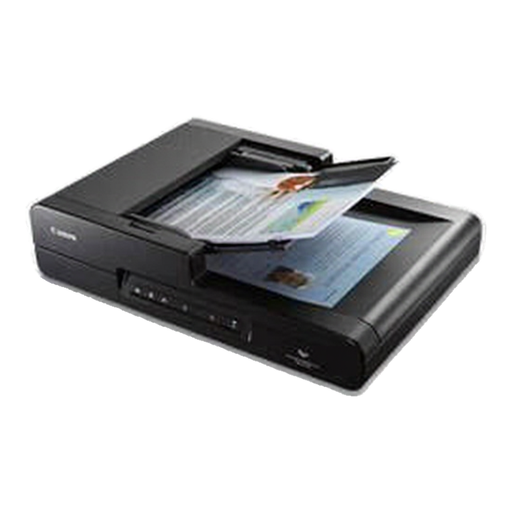
Canon imageFORMULA DR-F120 Flatbed & ADF Scanner, A4, 600 × 600 dpi, black

Canon imageFORMULA DR-F120 Flatbed & ADF Scanner, A4, 600 × 600 dpi, black

This may suit you if you can place your books on a glass platen; bear in mind how far they’ll need to open.

The product name specifies A4 and 600 × 600 dpi. The product information mentions editable PDF output; check OCR on pages with older text.

View product at Joybuy

CZUR Shine 800 A3 Pro document camera

CZUR Shine 800 A3 Pro document camera

This may suit you if you want to use OCR while digitising; test the recognition with representative pages from your books.

The product name specifies A3 as the maximum size for flat originals. The product information advises against scanning glossy materials.

View product at Joybuy

Frequently asked questions

Can I scan a copyright-protected local history book and put the PDF on my society’s website?

No. Being allowed to make a private copy for personal use doesn’t mean you can make the PDF publicly available. The Dutch government says such a copy must not be distributed or made publicly available; obtain the necessary rights before sharing protected material.

Why isn’t a searchable PDF of an old book automatically error-free?

OCR can make mistakes because recognition is affected by the scan, the condition of the original and historical spelling. The KB, the national library, identifies image quality as a factor, so keep the page images too and check important names, dates and places.

How do I check a scanned book before putting it away?

Check the page order, look for missing pages and assess image quality, paying particular attention to text near the spine. The National Archives recommends both technical and visual quality checks, as well as checking for skipped pages.

What if the book scanner breaks sooner than I expected?

For purchases made by consumers in the Netherlands, statutory guarantee rights are separate from any manufacturer’s warranty. ACM ConsuWijzer explains that, under the applicable conditions, the seller must offer a solution if a product is faulty; there isn’t simply one fixed statutory guarantee period of two years.

Can I try out a scanner bought online and send it back?

For a standard online consumer purchase, you’ll generally have 14 days from delivery to change your mind, subject to exceptions and conditions on trying out and returning the item. ACM ConsuWijzer explains these rules; check which conditions apply to your purchase before ordering.
