For sharp book covers against a dark background, you don’t automatically need to buy a new camera. Start with a stable setup, soft, adjustable lighting and a test shot in which both the cover and the background are clearly visible. For occasional flat-lay shots, a camera you already own may be enough; if you take photos regularly or need RAW and a wider choice of lenses, consider a mirrorless camera. A higher megapixel count alone won’t solve exposure or reflection problems, and with a mirrorless camera, the lens needs to suit your working distance.
Who is this choice for?
Creator of clear catalogue photos
You photograph book covers regularly and want a consistent crop with a background that stays dark. A stable camera setup and control over exposure are important; Canon Europe describes a tripod as a useful way to frame shots consistently.
Creator of true-to-colour cover images
You want to capture colours and details accurately in changing light. Adjustable white balance and, if you want to edit your photos afterwards, RAW are useful features to look for. Canon Europe describes the flexibility RAW files offer for colour correction.
Occasional flat-lay photographer
You want to get started with minimal extra equipment and first see whether soft lighting and a camera you already own are enough. Canon Europe describes flat-lay photography using a standard lens or compact camera; just check that your camera can fit the whole book in the frame from the distance available.
What should you look for?
Existing camera or compact camera
Choose this option: if you photograph covers occasionally and your camera can capture the book sharply from your working distance.
Bear in mind: a fixed lens limits your framing options; check whether you can adjust the exposure and white balance.
Mirrorless camera with interchangeable lens
Choose this option: if you photograph covers regularly and want to choose a specific lens, shoot in RAW or adjust your framing.
Bear in mind: a camera body without a suitable lens won’t automatically give you the right working distance or framing; you’ll also need room for a stable mount and lighting.
| What to consider |
What to check when buying |
Who is this important for? |
| Clear cover, dark background |
Adjust or compensate for the exposure; review the cover and background together in a test shot. |
If I want to keep the text and image clear without making the dark background look grey, exposure is my main consideration. Around 36% of consumers prioritise clear details and background tone. |
| Colour and reflections |
Check the white balance and RAW support on the exact model; try soft lighting and a different light or camera angle. |
If I need recognisable cover colours, I look for adjustable white balance and want to be able to avoid distracting glare. Around 29% of consumers prioritise colour and reflections. |
| Series of shots |
Check that you can mount the camera securely above your work surface and that the screen, focus and lens are usable from that position. |
When I photograph several books with the same framing, I don’t want to work out the camera distance and setup from scratch each time. Around 21% of consumers prioritise consistent shots in a series. |
| Easy start |
Try the camera you already own first; for a mirrorless camera, check which lens is included and whether it suits your working distance. |
If I only photograph covers occasionally, I first want to know whether my existing camera and a better setup will be enough. Around 14% of consumers prioritise a simple way to get started. |
Common mistakes
-
Comparing only the camera body or megapixel count
The lens, together with the image sensor, affects the photo. A stable setup also helps you frame book covers consistently from one shot to the next.
Check the exact kit contents, working distance and framing before choosing a camera body.
Depending on the body you choose, you may still need a suitable lens or a stable setup.
-
Judging a dark background using only automatic exposure
With a scene containing lots of dark tones, the light meter may make the shot look too bright, leaving the background looking different from what you intended.
Take a test shot and assess both the cover and the background. Adjust the exposure if needed, without losing important details on the cover.
-
Assuming video stabilisation also applies to photos
Panasonic lists five-axis Hybrid I.S. for video recording on the DC-G100DW. This specification does not describe the same stabilisation for photos.
Check the stabilisation specifications for each shooting mode. For book photos, first see whether you can mount the camera securely.
Camera brands to consider
Canon
According to Canon Europe’s specifications, the EOS R50 is an APS-C mirrorless camera with an RF mount and 24.2 effective megapixels. For book covers, the lens you choose and your exposure settings are just as important to consider.
- Canon Europe lists manual focus.
- Canon Europe does not list sensor-shift image stabilisation; this specification alone does not prove better or worse image quality for book covers.
Sony
According to Sony Netherlands, the Sony ILCE-6400 has an APS-C sensor, an E-mount and RAW support. This may be relevant if you want to choose a lens to suit your shooting distance or edit colours afterwards.
- Sony Netherlands specifies approximately 24.2 effective megapixels and RAW support for this model.
- These specifications don’t indicate how reflections on a glossy cover will turn out; your lighting setup still matters.
Nikon
According to Nikon Netherlands, the Z50II is a DX mirrorless camera with a Z mount, 20.9 million effective pixels and a vari-angle screen. A movable screen can be useful when operating the camera from above.
- Nikon Netherlands lists the vari-angle screen and pixel specification for the Z50II.
- Check which lens is included with the version you choose; these specifications don’t demonstrate an advantage for book covers.
Panasonic
According to Panasonic Netherlands, the DC-G100DW kit is a Micro Four Thirds kit with 12–32mm and 45–150mm lenses, RAW support and 20.30 effective megapixels. Check whether the included 12–32mm lens suits your working distance.
- According to Panasonic Netherlands, the kit includes two lenses with different focal lengths.
- Panasonic lists five-axis Hybrid I.S. for video recording; don’t interpret this specification as five-axis stabilisation for photos.
Cameras at Joybuy
This selection includes cameras for different ways of photographing book covers, including compact models and mirrorless cameras with zoom lenses. When choosing, focus on the lens, how easy the camera is to operate from your shooting position, and the exposure and colour settings.
 No image available
Komery W6 digital camera, 12× optical zoom
The zoom may be useful if you want to try different framings from the working distance available; check in a test shot that the whole cover fits clearly in the frame.
The product name lists 64 MP, 12× optical zoom, Wi-Fi and 4K.
Joybuy
 No image available
DJI Osmo Pocket 3 Creator Combo
According to the product description, the rotating screen supports both horizontal and vertical framing; check whether the camera can be positioned conveniently for your overhead shots.
The description lists a 1-inch CMOS sensor, 10-bit D-Log M, fast focusing, a rotating 2-inch screen and support for still images.
Joybuy
 No image available
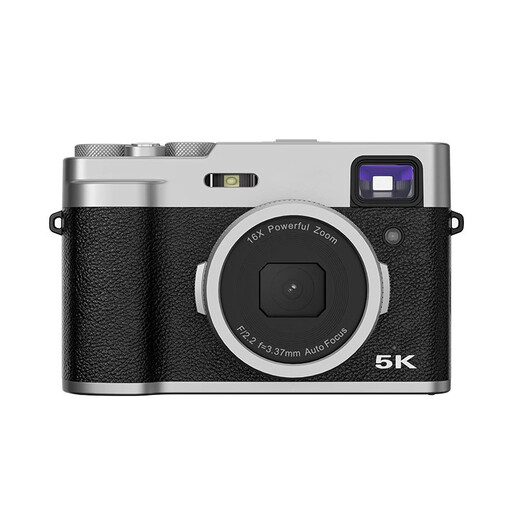
Songdian compact digital camera, 48 MP
If you want to start with a compact camera, check that the lens can fit the whole book in the frame from your working distance.
The product name lists 48 MP and autofocus; the description mentions a 2.8-inch LCD screen and an optical viewfinder.
Joybuy
 No image available
Sony ZV-E10 + 16–50mm Zoom Black
The included 16–50mm zoom lens gives you different focal lengths to adjust the framing from your workspace; check that the distance you choose suits the size of your book.
The product description lists a 24.2 MP APS-C sensor and a rotating touchscreen.
Joybuy
 No image available
Sony Alpha A6100 + 16–50mm f/3.5–5.6 OSS II
The included 16–50mm zoom lens may be useful if you want to adjust the framing from your shooting distance; check that the whole cover fits within the space available.
The description lists a 24.2 MP APS-C camera, manual focus and a tilting screen.
Joybuy
Frequently asked questions
Should I use a darker exposure for a black background?
Not automatically. Take a test shot and assess both the cover and the background: a scene with lots of dark tones can cause the light meter to make the photo look too bright. If needed, adjust the exposure and change the lighting on the book separately. Canon Europe describes this effect in scenes with lots of dark tones.
How can I keep a consistent frame across a series of book photos?
Secure the camera in place and keep the work surface, camera distance and lighting as consistent as possible. This makes it easier to use the same approach for the next cover; a camera body alone won’t ensure consistent framing.
What can I do if my camera is faulty?
For a consumer purchase in the Netherlands, the product must conform to the contract. Business.gov.nl states that the statutory guarantee applies and takes precedence over any additional commercial guarantee. If you have a specific fault, contact the seller to discuss an appropriate solution.
Can I post photos of other people’s book covers online without permission?
Don’t assume that you can. The Dutch government distinguishes between making a copy for personal use and distributing or publishing it. Before publishing, check who owns the rights and whether the intended use is covered by permission, a licence or an applicable legal exception.


