Start with a test shot of a complete cover in even lighting. If the colours, text and edges are clear enough at the size you want to display them, you don’t need to buy a new camera straight away. Adobe suggests a smartphone as an option if you’re on a tight budget. If you want more control or small details aren’t coming through clearly, choose a camera with a lens suited to your working distance. More megapixels won’t fix glare or uneven lighting on their own.
Who is this choice for?
Creators who want to show colours accurately
You want the paper, ink and cover colours to remain recognisable in a series of portfolio photos. A consistent lighting setup and controlled white balance matter just as much as the camera. Adobe explains how changing light can affect colour reproduction.
Creators who want to capture fine detail
You also want to show lettering, embossing, stitching or binding. Assess a test crop and the lens at your working distance, rather than looking only at the camera body’s megapixel count. MPB and the Dutch Consumers’ Association discuss what to consider when photographing products and choosing cameras with interchangeable lenses.
Creators who want to get started simply
You mainly want to photograph complete covers without buying extra equipment straight away. First, try your existing device with a stable setup and even lighting. Adobe suggests a smartphone as an option if you’re on a tight budget.
What should you look for when buying?
Your current smartphone or camera
Choose this if: a test shot shows the whole cover and the details you want clearly enough at the size you plan to use in your portfolio.
Bear in mind: your existing device may offer fewer settings or less room to crop. Assess the final file.
Mirrorless camera with a standard lens
Choose this if: you regularly photograph complete covers and want more control over exposure, framing and files.
Bear in mind: a camera body on its own isn’t a complete setup. The lens needs to capture the whole cover from your working distance.
Mirrorless camera with a separate detail lens
Choose this if: small binding details, embossing or material texture aren’t clear enough in a test shot.
Bear in mind: check the focusing distance, magnification, mount and room for lighting for each lens. A detail lens isn’t automatically included.
| What to consider |
What to look for when buying |
Who is this important for? |
| Recognisable cover colours |
Check the adjustable white balance and, if you want to edit your photos, RAW support on the exact model. Compare a test shot taken in your own lighting with the cover. |
If I want to keep paper and ink colours recognisable, I compare the photo with the physical item under the lighting I plan to use. Around 28% of consumers put colour reproduction first. |
| Readable text and material texture |
Take a test photo of the smallest detail you want to show, then check the focusing distance and magnification of the exact lens. |
If you want to show small lettering, embossing or binding clearly, check that the details remain visible in the final crop. Around 22% of consumers prioritise detail reproduction. |
| Consistent full-cover shots |
Check that the camera and lens can frame the entire cover in your workspace. Take test shots without moving the setup. |
If I want to present several complete covers consistently, I want to be able to repeat my framing and lighting setup. Around 22% of consumers prioritise consistent full-cover shots. |
| Cost and what’s included in the kit |
Check whether the version includes just a body or a lens too. Use test shots to work out what extra equipment you actually need. |
If you want to avoid unnecessary purchases, first test whether your current equipment is enough and check what’s included in any new kit. Around 17% of consumers say a low initial cost is their top priority. |
| Glare on glossy covers |
Test a glossy cover under your planned lighting and assess glare, colour and sharpness before choosing a different camera body. |
If glare obscures text or part of the design, I want to see what changing the lighting setup can do first. Around 11% of consumers prioritise glare control. |
Common buying mistakes
-
Comparing megapixels alone
How useful a cover photo is also depends on the lighting, framing and how close the lens can focus. More megapixels won’t eliminate these considerations.
First, compare test shots of the complete cover and the smallest detail you want to show. Only then choose a camera body and lens.
-
Assuming a body-only deal is a complete kit
A body-only version and a kit with a zoom lens are different options. Sony, for example, distinguishes between a body-only version and versions with a 16–50 mm zoom lens. Panasonic states that the lens isn’t included with the LUMIX G97.
Read the full model and kit name, and check which parts are actually included in the version you’re considering.
-
Trying to fix colour problems by changing cameras alone
Adobe explains that the light source can affect the colour temperature of photos. A new camera is no substitute for checking your lighting and white balance.
Test the cover under the lighting you plan to use and compare the photo with the physical item before choosing a different camera body.
Camera brands to consider
Canon
The EOS R50 is an APS-C mirrorless camera for anyone looking to choose an interchangeable RF or RF-S lens for a fixed cover-photography setup.
- Canon specifies 24.2 effective megapixels and support for RF and RF-S lenses.
- Canon doesn’t list in-body sensor-shift stabilisation. Check which version and lens are included in the kit.
Nikon
The Z50II is a DX mirrorless camera for anyone looking to choose a Z lens for full-cover shots and, potentially, detail work.
- Nikon specifies 20.9 effective megapixels, a Z mount and NEF RAW.
- Check which lens is included in the specific kit and whether it suits your working distance.
Sony
The α6400 is an APS-C option with an E mount for anyone considering different lenses or a suitable E-mount lens.
- Sony lists 24.2 megapixels and distinguishes between a body-only version and versions with a 16–50 mm zoom lens.
- Sony highlights tracking autofocus, but this alone isn’t a proven advantage for photographing stationary book covers.
Fujifilm
The X-S20 is an X-mount option for a workflow involving RAW editing and a separately chosen lens.
- Fujifilm specifies 26.1 effective megapixels, 14-bit RAW and sensor-shift stabilisation.
- These manufacturer specifications don’t prove that colours will be more accurate without controlled lighting. Also check which lens is included.
Panasonic
The LUMIX G97 is a Micro Four Thirds option for anyone looking to choose a suitable lens for cover and detail shots.
- Panasonic specifies a 20.3 MP sensor for this model.
- The body-only version doesn’t include a lens, so check which version you’re considering.
Cameras at Joybuy
These Joybuy product picks are related to photographing book covers. For each model, use a test shot to assess whether the image, details and framing suit your setup.
 No image available
Komery W6 64 MP camera with 12× optical zoom
If you want to adjust the framing, use a test shot to check whether the field of view suits your working distance.
The product name lists 12× optical zoom, 4K, WiFi and 64 MP.
Joybuy
 No image available
DJI Osmo Pocket 3 Creator Combo
For a fixed cover-photography setup, a test shot of the colours, text and details is a practical way to see whether this camera suits your workflow.
The product name lists a 1-inch CMOS sensor, 4K/120 fps video, 3-axis stabilisation and an included microphone.
Joybuy
 No image available
DJI Osmo Pocket 3
When photographing stationary book covers, use a test shot to assess whether the composition and details you want are coming through clearly.
The product name lists a 1-inch CMOS sensor, 4K/120 fps video, 3-axis stabilisation and a 2-inch rotating touchscreen.
Joybuy
 No image available
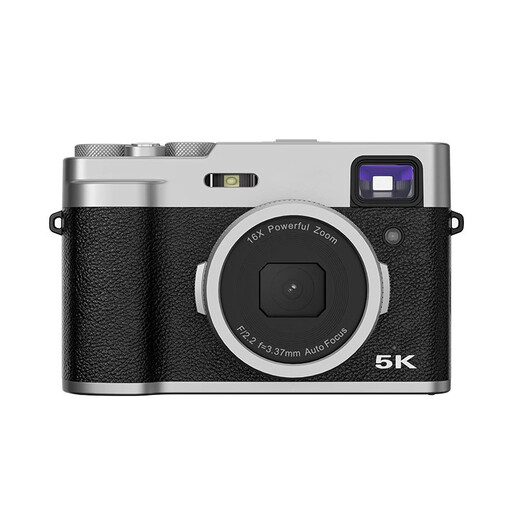
Songdian retro digital camera, 48 MP
If you want to check the framing through a viewfinder, take a test shot of a complete cover and the smallest detail you want to show.
The product name lists autofocus, 5K, a 2.8-inch LCD screen and an optical viewfinder.
Joybuy
 No image available
Sony ZV-E10 + 16–50 mm zoom lens
The listed zoom lens may be useful if you want to adjust the framing. Test whether you can capture the complete cover from your working distance.
The product name lists a 16–50 mm zoom lens; the product description lists an APS-C sensor.
Joybuy
Frequently asked questions
Do I need a mirrorless camera for an online portfolio?
Not necessarily. First, try your existing device with controlled lighting. Check both the complete cover and the smallest details at the size you plan to display them. Adobe suggests a smartphone as an option if you’re on a tight budget.
How can I keep photos of different covers consistent?
Use a stable frame, keep the lighting as consistent as possible and check the white balance when the light changes. MPB explains how a tripod can help you adjust the composition without having to set up the camera frame from scratch each time.
What should I check about the kit and warranty?
Check whether the version includes just a body or a lens too, and whether your setup needs extra lighting or support. According to the Dutch Government, products are covered by a statutory guarantee, with no fixed statutory guarantee period. If a product is faulty, the seller must provide a solution.
Can I publish photos of book covers in my portfolio?
That depends on the rights to the design shown and any other protected content. Taking the photo yourself doesn’t settle the question. The Dutch Government states that other people’s protected creative work can’t be used without permission. Copyright in designs you create as an employee may belong to your employer, so check the rights or get permission for the specific publication.
Can I return a camera bought online if the controls don’t suit me?
For online purchases from a business, you generally have a statutory cooling-off period of up to 14 days after delivery. ACM ConsuWijzer explains the exceptions and conditions for unboxing, trying out and returning a product. Check what applies to your specific purchase.


