
Vandaag of morgen in huis

Kwaliteit gegarandeerd

Welkomstaanbiedingen ontgrendelen: GRATIS bezorging | Tot 80% korting | Gratis 30 dagen JoyPlus-proefperiode
Download de app
Search online for Bolognese products and you’ll soon find plenty of options: jars of Bolognese sauce, frozen meals, lasagne, crisps and baby food spaghetti Bolognese. They may share a similar flavour, but they’re not interchangeable. Pasta sauce is intended to be part of a meal, while a ready meal is mainly designed to save you time.
Packaging can also suggest an Italian style without the product necessarily suiting your dietary preferences or family needs. So, pay particular attention to the ingredients, allergens, portion size and preparation instructions.
An Italian name, a picture of tomatoes or a reference to a traditional recipe doesn’t give you the full picture. Check whether the product contains beef, pork, chicken, cheese or other animal-derived ingredients. If you’re choosing a vegan tomato sauce, don’t just look at the front of the pack – check the allergen and ingredients lists too.
A 690 g jar may be handy for feeding several people, while a 190 or 200 g portion may be more practical for a baby or a meal on the go. Compare the price per 100 g and check how many portions the pack actually provides.
“Free from artificial colours” or “free from preservatives” tells you nothing about gluten, milk, egg, celery or soya. A product can be free from certain additives and still contain allergens. Always check the current packaging, especially when choosing gluten-free Bolognese, baby food or food for a medically necessary diet.
Start with the basics:
Bear in mind that a brand’s marketing claims aren’t an independent assessment. According to Grand'Italia’s own product information, Sugocasa Piccante is suitable for a vegan and gluten-free diet, but the same information also lists cereals containing gluten as an allergen. If the information is inconsistent, it’s best not to use the product until you’ve checked the current labelling.
Compare products on the same basis. For example, a sauce may contain around 80 to 102 kcal per 100 g, while Bolognese crisps come in at around 505 to 515 kcal per 100 g. This difference is mainly down to the type of product and its fat content.
Also consider:
A jar of Bolognese pasta sauce is usually stored unopened in a cool, dry place, while a frozen product needs to stay frozen. According to the product information, IGLO lasagne Bolognese is ready in around 10 minutes in the microwave. Baby food has stricter instructions: Ella’s Kitchen Spaghetti Bolognese Cheese is intended for babies from 10 months and should be refrigerated after opening and used within 24 hours.
For each product, check:
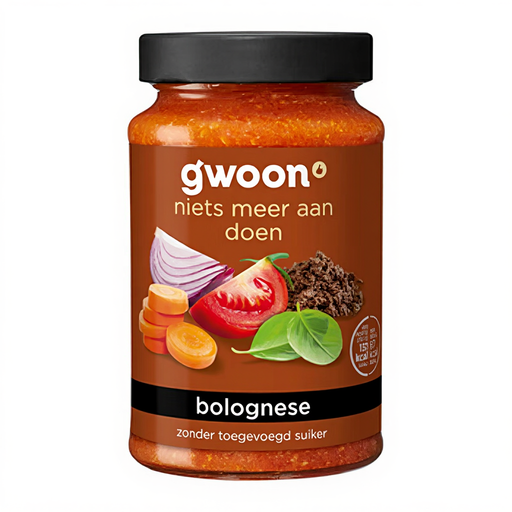
Why it suits this profile: The sauce is ready to heat and works well with spaghetti, penne or lasagne. The 480 g jar is a practical size for a family meal.
The ingredients and nutritional values are listed, so there’s no need to buy separate herbs or extra sauce ingredients.
480 g pack, ready to use and, according to the product information, free from artificial colours and preservatives.
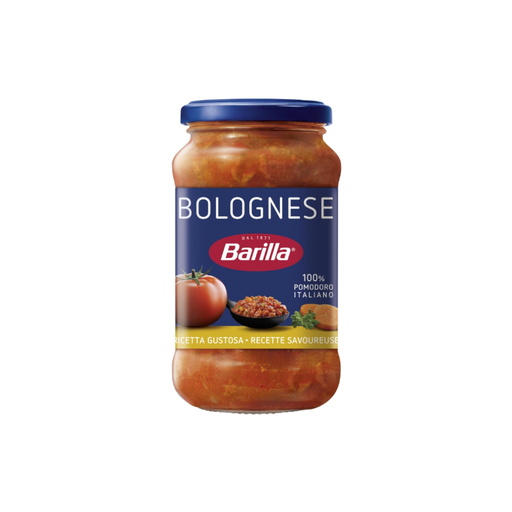
Why it suits this profile: This jar is for anyone looking for a compact sauce with clear preparation instructions to serve with fresh pasta.
The product information lists beef, pork and celery, so you can check what’s in it before you buy.
400 g pack, with 86 kcal and 1.0 g salt per 100 g according to the nutritional information provided.
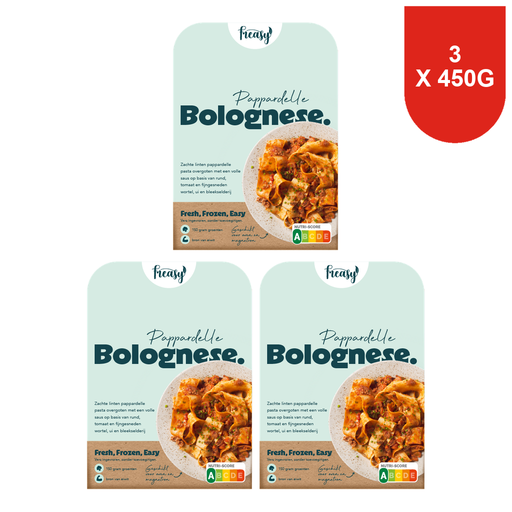
Why it suits this profile: This multipack is a good fit for households planning several quick frozen meals.
The pack contains three 450 g portions and there’s no need to cook pasta separately. You will need space to store it in the freezer, though.
Pappardelle with beef, tomatoes and vegetables; the information provided lists 0.3 g salt per 100 g.
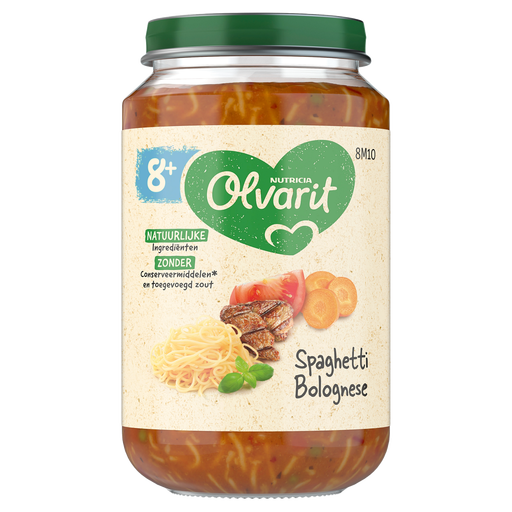
Why it suits this profile: The portion is designed for baby food and, according to the product information, is suitable from 8 months.
The age guidance and storage period after opening are clearly stated. The product does contain wheat and egg.
200 g pack, a texture adapted for babies according to the product description, and 0.1 g salt per 100 g.
For a snack, Bolognese crisps are a different category from sauces and meals. According to the product information, Lay’s Bolognese Flavor contains none of the 14 main EU allergens, while Croky Bolognese crisps contain soya and are described as gluten-free. If you have an allergy, always check the label on the pack you receive.
If you’d rather cook from scratch, you could also use a base such as Sugocasa Piccante. This tomato sauce contains peppers and chilli, so it’s not the same as a mild Bolognese pasta sauce. For lasagne Bolognese, there are also meal options such as IGLO or a Knorr cooking kit. With Knorr, you still need to add ingredients including mince, vegetables, milk and cheese, so it isn’t a completely ready-made meal.
We’ve put together a complete, up-to-date list of products that meet these strict selection criteria and the applicable European safety regulations.
A ready-made sauce such as g'woon, Barilla or Grand'Italia only needs heating before you mix it with pasta. Before buying, check the number of portions, salt content and allergens such as celery.
Ready-made Bolognese can be eaten straight away with pasta or used as part of a lasagne. A meal kit usually contains a dried sauce mix and pasta, but you’ll still need fresh ingredients and extra preparation time.
Check the recommended age, texture, allergens and storage instructions after opening. Olvarit states that its product is suitable from 8 months; Ella’s Kitchen says from 10 months. Always check that the age guidance and ingredients are right for your child, and follow the instructions on the packaging.
