
Vandaag of morgen in huis

Kwaliteit gegarandeerd

Welkomstaanbiedingen ontgrendelen: GRATIS bezorging | Tot 80% korting | Gratis 30 dagen JoyPlus-proefperiode
Download de app
At first glance, a body trimmer seems simple: charge it, switch it on and trim. In practice, models vary significantly in how they feel to use, how easy they are to maintain, and how suitable they are for different areas of the body. An electric body trimmer for chest hair, for example, won’t necessarily have the same features as an intimate trimmer or a nose and ear hair trimmer.
The most common mistakes aren’t always obvious from the product photos. So before you order, pay close attention to these three pitfalls.
Water-resistant can mean that a device can only handle splashes, whereas another model can be rinsed under the tap. Always check the IP rating stated:
Never use a trimmer while it’s plugged in, in the bath or shower. Even with a waterproof body trimmer, you must follow the manufacturer’s instructions.
A 7-in-1 body hair trimmer sounds versatile, but extra heads are only useful if you’ll actually use them. Check which head is suitable for:
A universal trimmer can handle several jobs, but a dedicated nose and ear hair trimmer often has a narrower head that’s better suited to those areas.
A trimmer usually shortens hair to a specific length. That’s different from shaving for a smooth finish. Look at the minimum length, the combs supplied and the type of blade. A comb from 1 to 9 mm offers different possibilities than fixed combs of 2, 4 and 6 mm.
Also check whether the manufacturer promises a particular result or simply lists product specifications. Claims about skin comfort or less irritation come from the brand’s product information and are not a guarantee for every user.
For regular home use, a cordless trimmer is practical. Don’t just look at the maximum run time – also consider the charging time and the type of connection.
A battery indicator prevents the device from cutting out unexpectedly during a trim. The MAXGROOM and Sparoma TC-021 have a digital display, according to the product information.
For thicker body hair, a powerful motor and a suitable blade are important. The Sparoma RFCD-8106 combines ceramic and stainless steel blades and states a motor speed of 5000 rpm. The MAXGROOM has a stainless steel T-blade and an adjustable comb from 1 to 9 mm.
Also look for rounded edges and a guard comb. These can limit contact between the blade and the skin, but correct use is still essential: don’t press hard, move slowly and avoid damaged or irritated skin.
A model for wet and dry shaving can offer flexibility, but “wet” doesn’t always mean the whole device can be submerged for long periods. Check the IP rating and the cleaning instructions.
A rinseable head makes maintenance easier. Remove hairs after use, rinse only the parts that the manual says can be washed, and let everything dry thoroughly before storing.
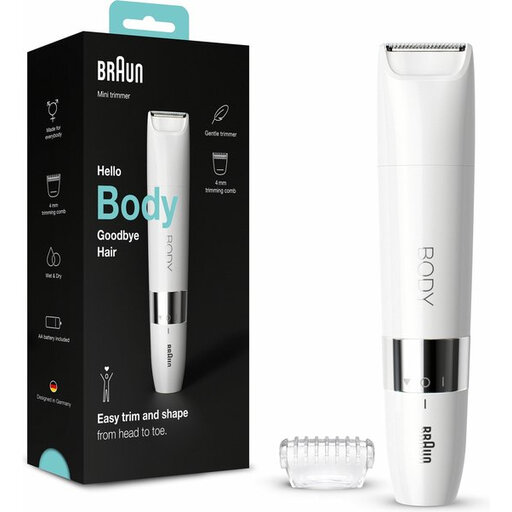
Why this fits the profile: This compact model runs on batteries and is designed for portable use and precise trimming of body hair. According to the product information, it’s suitable for wet and dry use.
The IP67 rating is clearly stated. The set includes a trimmer comb and cleaning brush, so you’re not reliant on a large number of separate accessories.
Compact size, wet and dry use and battery power.
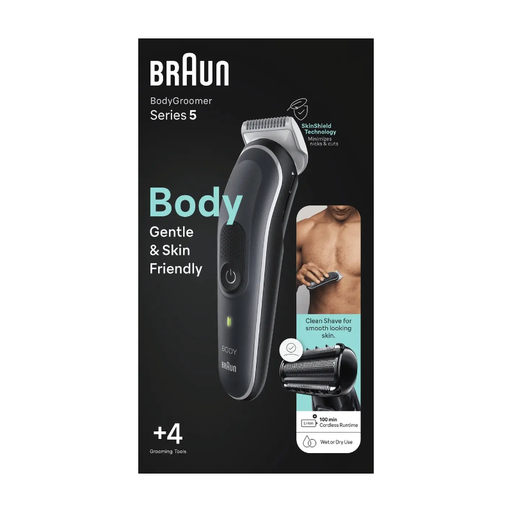
Why this fits the profile: This model is designed for the chest, armpits, legs and pubic area. According to the product description, it offers a fixed 1 mm comb and a sliding comb from 3 to 11 mm.
The length settings are clearly stated. When buying, do check the IP specification listed; the product information mentions both waterproof use and IP64.
100 minutes of run time according to the product information and multiple trim lengths.
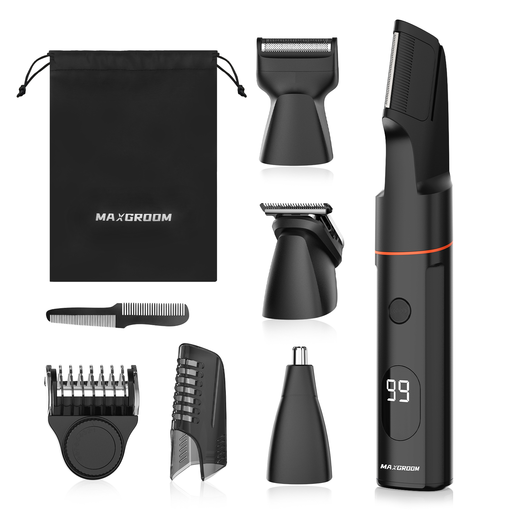
Why this fits the profile: The set is aimed at users who want to groom body hair, beard, head hair and nose hair with one device.
The functions are linked to separate magnetic heads and an adjustable comb from 1 to 9 mm. This makes it clearer which application you’re choosing.
IPX6 rating, 90 minutes of run time and a display for battery and cleaning alerts.
We’ve put together a full, up-to-date list of products that fully meet these strict selection criteria and current European safety regulations.
Trim on clean skin and use a guard comb when you don’t want to cut hair very short. Where possible, keep the skin taut, move gently in the direction of hair growth and don’t apply excessive pressure. Use an intimate trimmer for external use only and avoid cuts, irritated skin and mucous membranes.
For nose and ear hair: don’t insert the head deep into the nostril or ear canal. Clean the device after use according to the manual and store a battery-powered model in a dry place. If the blade becomes blunt or damaged, replace the head or the device as recommended by the manufacturer.
That depends on the IP rating and the product manual. A model with IPX6 or IPX7 can handle water better than a splash-resistant model, according to the stated specifications. Don’t use a trimmer that’s connected to the charger in the shower or near a bath.
The lifespan depends on how often you use it, how you clean and store it, and the condition of the blade. Only rinse washable parts, let them dry completely and avoid dropping the device or exposing it to prolonged heat. Also check whether replacement heads are available.
With a rechargeable model, the ongoing costs are usually limited to electricity and possibly a replacement blade. A battery-powered nose and ear hair trimmer requires AA batteries. So don’t just compare the purchase price – also consider the battery type, charging cable, accessories and replacement parts.
