
Vandaag of morgen in huis

Kwaliteit gegarandeerd

Welkomstaanbiedingen ontgrendelen: GRATIS bezorging | Tot 80% korting | Gratis 30 dagen JoyPlus-proefperiode
Download de app
A body thermometer may seem straightforward, but the range varies considerably. Are you looking for a digital thermometer for the whole family, a forehead thermometer for a sleeping baby or an ear thermometer for quick readings? The measuring method is particularly important. A low price says little about ease of use, and you may not need a long list of features.
As a Joybuy Product Recommendation Officer, I filter the most important product specifications and common purchasing pitfalls. This helps you choose a body thermometer that suits your household, measuring habits and budget.
An infrared thermometer can display a value within a few seconds. That does not automatically mean that every reading is comparable under the same conditions. With a forehead thermometer, sweat, hair, a hat, direct sunlight or a cold room can affect the reading.
Therefore, check:
If in doubt, it is sensible to take another reading according to the instructions and assess the result alongside any other symptoms.
A contactless thermometer is hygienic and practical, particularly for sleeping children. However, an ear thermometer may be more suitable in some situations, for example if you want to use a consistent measuring method for the whole family. A classic digital thermometer with a flexible tip is compact and often affordable, but it does require contact with the body.
So consider the combination of:
Memory storage, silent mode, colour codes, object measurement and a fever alert can be useful. But first check whether you actually need these features. Object measurement is intended for items such as formula, bathwater or surfaces and does not replace body temperature measurement.
A temperature sensor for monitoring a room is also different from a medical thermometer for home use. The TP-Link Tapo Smart Temperature & Humidity Monitor measures the environment and, according to the product information, is not a medical device. Do not use this type of sensor to diagnose a fever.
A digital thermometer with a measuring tip may be suitable for oral, armpit or rectal measurements, depending on the instructions. A forehead thermometer and infrared thermometer generally measure without direct contact. An ear thermometer uses infrared measurement in the ear and requires correct positioning.
For families with babies and young children, a silent mode and simple operation are practical features. For adults who only take occasional readings, a pen-style model with one button may be sufficient.
Do not focus only on terms such as “professional” or “clinical”. Check the technical information:
Brands’ accuracy claims are not a universal guarantee for every user. Results may have been established under certain conditions through a brand’s own research or internal measurements. Therefore, always follow the instructions for use.
A memory function is useful when you want to compare readings taken at different times. Check how many values are stored: this can range from just the last reading to 35 or 60 readings, for example.
Also check the battery type. Many models use 2 AAA batteries, while pen-style models often use a small button cell. Check whether batteries are included, and remove them during long-term storage if instructed to do so in the manual.
Clean the sensor or probe according to the manufacturer’s instructions. Do not immerse an electronic body thermometer in water. With an ear thermometer that uses lens filters, it is important to follow the hygiene instructions and use any disposable accessories as recommended.
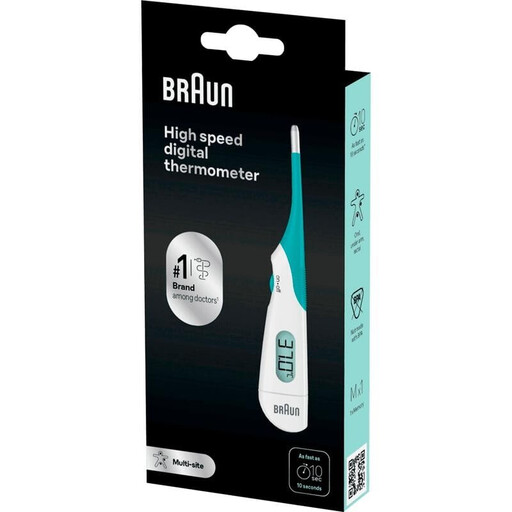
Why it suits this profile: This pen-style model is suitable for anyone looking for a simple body thermometer without additional contactless features. According to the product information, it is designed for oral, rectal and armpit measurements, with a flexible tip and one-button operation.
The measuring method and applications are clearly described. You are not paying for object measurement or extensive app features that you may not use.
Readings in around 8 seconds according to the product information; memory for the last reading and a flexible tip.
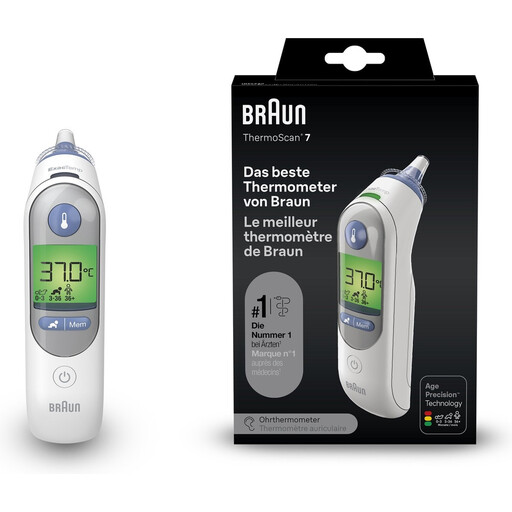
Why it suits this profile: This ear thermometer is designed for families that value guided positioning, age settings and hygienic use with lens filters.
According to the product description, ExacTemp helps with stable positioning. Using a clean lens filter for each reading supports good hygiene.
Age settings for three groups, a colour-coded display, pre-warmed tip and storage for 9 readings.
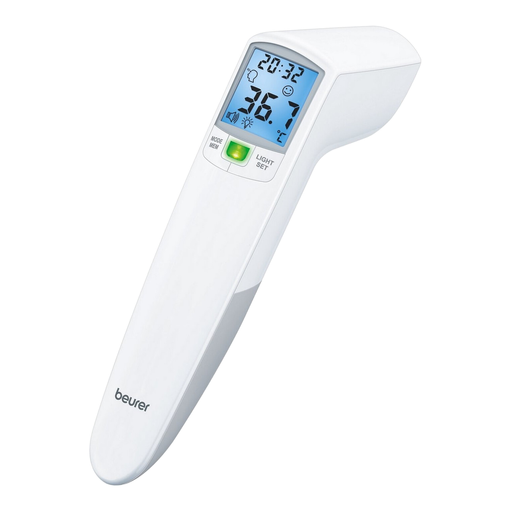
Why it suits this profile: A household that takes readings frequently can benefit from contactless measurement, 60 memory slots and measurements of body, surface and ambient temperature.
The recommended distance of 4–6 cm is specified. This makes it clearer how to take contactless measurements correctly.
60 memory slots, colour indication, automatic measurement at the correct distance, plus batteries and a storage pouch included.
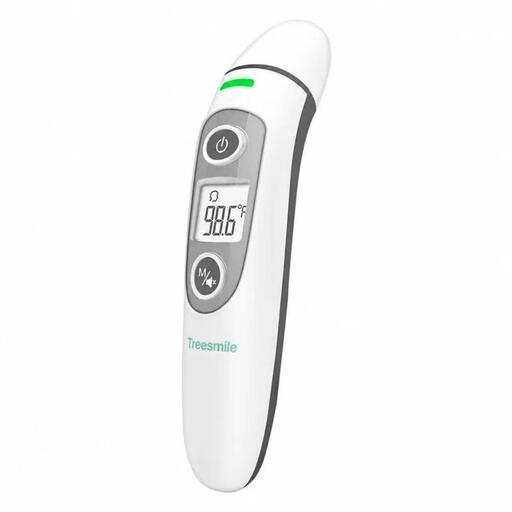
Why it suits this profile: This model combines ear, forehead and object measurement. This can be useful for families that want to use one device for body temperature, milk, food or bathwater.
The three measuring modes are listed separately. This lets you check in advance whether the additional features suit your everyday needs.
Ear, forehead and object modes, 35 memory slots, silent mode and 2 AAA batteries included.
We have compiled a complete, up-to-date list of products that fully meet these strict selection criteria and the applicable European safety regulations.
This depends on the child’s age, the chosen measuring site and the manufacturer’s instructions. A forehead thermometer can be practical for a sleeping baby, while an ear thermometer requires precise positioning. Always check whether the model is suitable for the relevant age group. For newborns, persistent fever or worrying symptoms, it is important to consult a GP.
Its lifespan depends on battery use, cleaning, storage and how often the device is dropped or exposed to moisture. A digital thermometer does not have a fixed replacement date like a food product. Replace the batteries when the device indicates that you should, and stop using the model if the casing, sensor or display is damaged.
Alongside the purchase price, batteries and any accessories are the main factors to consider. A contactless thermometer usually uses AAA batteries. An ear thermometer may incur additional costs for disposable lens filters. Therefore, check what is included in the packaging and whether accessories can be purchased separately later. The right body thermometer is not necessarily the one with the most features, but the one you can use consistently according to the instructions.
