
Livraison le jour même et le lendemain

Qualité garantie

Débloquez vos offres de bienvenue: Livraison GRATUITE | Jusqu'à -80 % | 30 jours d'essai gratuits à JoyPlus
Téléchargez l'application
Body oil can leave dry skin feeling supple, help lock in moisture and give it a well-cared-for glow. However, not every oil is suitable for every purpose. A product designed for hair, for example, may be too lightweight for dry body skin, while a heavily fragranced oil may be less suitable for sensitive skin.
If you are looking for body oil, body oil for the skin or oil for dry skin, it is therefore worth looking beyond the packaging. Below, you can find out which properties matter, which marketing claims to view critically and which popular options suit different uses.
A natural body oil may contain plant oils, but that does not automatically mean the product is suitable for every skin type. Essential oils and fragrances can cause irritation for some people. Always check the full ingredients list, particularly if you have sensitive skin or known allergies.
Look out for ingredients such as parfum, limonene, linalool, geraniol and various flower or citrus oils. These substances are not necessarily problematic, but they may be relevant if your skin reacts easily.
A glow body oil sometimes contains mica or other light-reflecting ingredients. This creates a visibly radiant effect, but says little about its skincare properties. A glow oil is mainly suitable for a special occasion or if you want a subtle optical effect. For daily use on dry skin, the base oils, texture and directions for use are more important.
Brands may state that their product helps reduce the appearance of stretch marks, scars or pigmentation. Treat such statements as product claims, not guaranteed results. According to Weleda’s own research, 92% of women experienced smoother skin when using its pregnancy oil. This is a brand claim, not a universal result.
Bio-Oil’s product description also states that, according to the manufacturer, the oil may help reduce the appearance of scars, stretch marks and pigmentation. Results vary from person to person. A cosmetic product is not a substitute for medical advice and should not be applied to damaged skin.
For dry or mature skin, formulas containing ingredients such as almond oil, jojoba oil, argan oil, macadamia oil, sunflower oil or sea buckthorn oil may be worth comparing. Also check whether the product contains fragrance or essential oils.
For sensitive skin, a short ingredients list is often easier to assess. Carry out a small patch test before using a new product. Stop using it if irritation occurs and avoid contact with the eyes.
A classic body oil can feel rich and be suitable for dry areas. A multi-purpose dry oil is generally lighter and, according to the product description, absorbs more quickly. This can be useful after showering or when you want to get dressed straight away.
Apply oil to slightly damp skin whenever possible. This helps a small amount spread more easily. Use a few drops or a thin layer rather than applying too much at once; this helps reduce a sticky or greasy feeling.
Check whether the oil is intended for the body, face, hair or several areas. A product that is also suitable for hair can be convenient when travelling, but not every skin type needs the same formula.
A spray bottle is practical for larger areas of the body. A dropper bottle gives you more control when applying oil to the face or dry patches. Also consider the volume: a 200 ml bottle may offer better value for daily body use, while a 30 ml bottle is suitable for trying out a concentrated oil first.
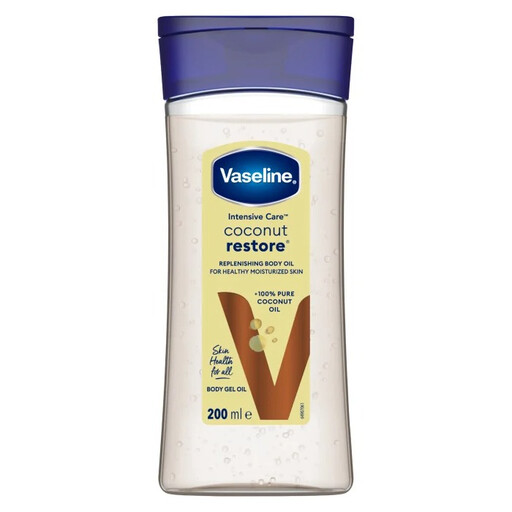
Why it suits this profile: The 200 ml bottle is practical for daily use on the body and dry areas.
The product description mentions a lightweight oil-gel texture that absorbs quickly. This makes its function clearer than a glow claim alone.
200 ml; contains coconut oil and vitamin E according to the product information; designed for use after showering or bathing.
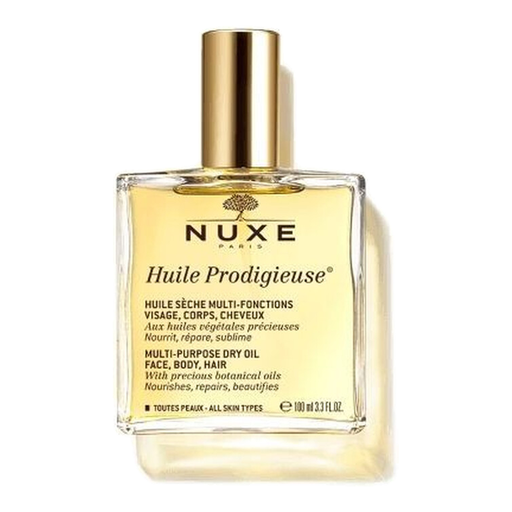
Why it suits this profile: This multi-purpose dry oil is designed for the face, body and hair, making it a good fit for a comprehensive skincare routine.
The different areas of use are clearly stated. This tells you exactly what you are buying the oil for, rather than relying solely on its luxurious appearance.
100 ml; spray bottle; seven plant oils according to the product information; suitable for the face, body and hair.
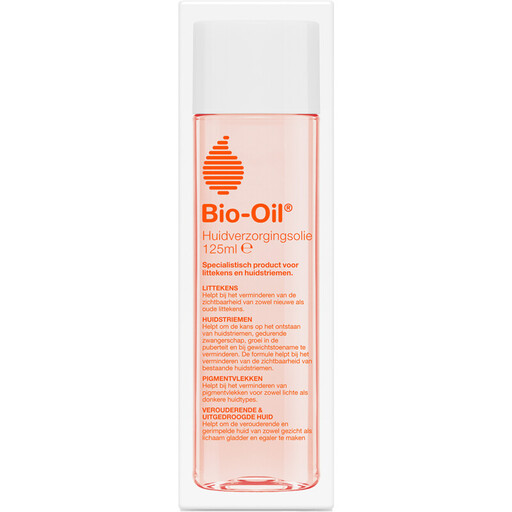
Why it suits this profile: If you are specifically looking for an oil for scars, stretch marks, pigmentation or dry, mature skin, this formula has a clearly defined area of use.
The product description explicitly states that individual results vary. Use it as a nourishing skincare oil, not as a guaranteed treatment.
125 ml; contains PurCellin Oil according to the product information; designed for dry and mature skin and use on scars, stretch marks and pigmentation.
We have put together a complete, up-to-date list of products that fully meet these strict selection criteria and the applicable European safety regulations.
A pregnancy oil requires extra attention to its ingredients and directions for use. A brand claim that a product is suitable during pregnancy is not personal medical advice. If you have any concerns, allergies or sensitive skin, discuss the ingredients with a midwife, doctor or pharmacist.
It depends on your preferences and skin type. Body oil mainly helps the skin retain moisture and often leaves it feeling smooth and supple. Body lotion generally contains more water and may feel lighter. Oil can feel pleasant after showering if you have dry skin; if you dislike a greasy feeling, lotion may be a better choice.
Check the expiry date and the period after opening, usually shown by an opened-jar symbol. Store the oil somewhere cool and dry, away from direct sunlight. A change in scent, colour or texture may be a reason to stop using the product.
Only if this is stated on the product packaging. Nuxe, for example, describes its oil as suitable for the face, body and hair. A standard body oil is not automatically suitable for the face. Test a new product on a small area of skin first and avoid the eyes.
