
Vandaag of morgen in huis

Kwaliteit gegarandeerd

Welkomstaanbiedingen ontgrendelen: GRATIS bezorging | Tot 80% korting | Gratis 30 dagen JoyPlus-proefperiode
Download de app
A good body lotion is part of a simple daily routine, but choosing the right one is less straightforward than it may seem. A lightweight lotion can feel pleasant while still providing too little comfort for dry skin. A rich formula, on the other hand, may remain tacky on clothing for some time. And a product designed for babies or sensitive skin is not automatically suitable for everyone.
As a Joybuy Product Recommendation Officer, I filter product information according to verifiable criteria. This makes it easier to determine whether a particular body milk, hydrating body lotion or nourishing body lotion suits your needs.
Brands sometimes claim 24, 48 or 72 hours of hydration. According to NIVEA’s own research, its Caring Body Milk has been clinically assessed to provide hydration for up to 72 hours. This is brand information, not a guarantee that every user will have the same experience. Showering, shaving, the season and the skin’s level of dryness all affect how long a lotion continues to feel comfortable.
So do not focus solely on the duration claim. Also consider:
Always check the ingredients list. A lotion may be described as mild or suitable for sensitive skin while still containing fragrance or fragrance allergens. These may include limonene, linalool, geraniol or citronellol.
If you are looking for a fragrance-free body lotion, it is better to look specifically for “fragrance-free” or “no fragrance” on the packaging. The product description for MUJI Sensitive Skin Body Lotion states, among other things, that it contains no fragrance, colourants, mineral oil, parabens or alcohol. According to the product information, it has also undergone allergy testing; however, an allergic reaction remains individually possible.
A fast-absorbing body lotion is convenient after showering or before leaving for work. However, a very lightweight formula may be less suitable for rough knees, elbows or tight-feeling skin. Look for the right balance between ease of use and nourishing ingredients. A rich body milk may provide greater comfort, but it can sometimes require a longer wait before getting dressed.
Start by choosing according to your skin type:
A face and body lotion can be convenient when travelling, but check that both uses are explicitly stated on the packaging. A body lotion is not automatically suitable for the face.
Body lotion is generally thinner than body milk or body cream. Body milk often contains a richer nourishing base and is well suited to dry skin. Look for terms such as:
The NIVEA product description mentions a lightweight, non-greasy formula that absorbs quickly. The product information for Clarins Body-Smoothing Moisture Milk likewise refers to rapid absorption and states that it contains 400 ml.
Fragrance is a personal preference, not a measure of quality. For daily use on sensitive skin, a fragrance-free formula may be the more logical choice. If you use body care as a relaxing ritual, you may prefer a fragranced version.
Also compare the volume. A 400 or 500 ml bottle is practical for daily use by one or more members of a household. A 100 to 200 ml package is easier to take with you, but may work out more expensive per millilitre.
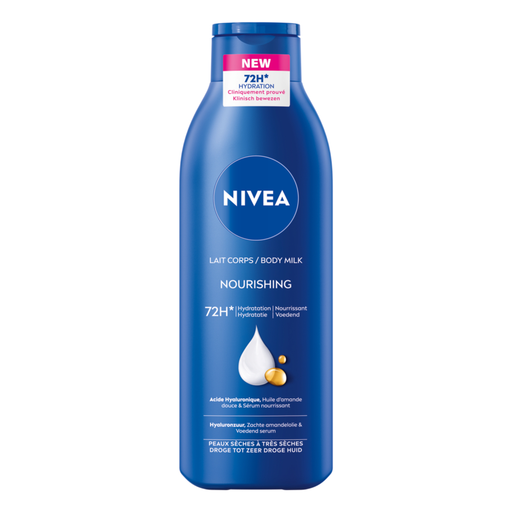
Why it is a good fit: A practical choice for anyone trying a body milk for dry to very dry skin for the first time and looking for a lightweight texture.
The product information clearly states the skin category, texture and ingredients. However, check the current packaging yourself for fragrance allergens.
250 ml, with glycerin, sodium hyaluronate and almond oil; described by NIVEA as lightweight and fast-absorbing.

Why it is a good fit: For users looking for a larger bottle, a milky texture and a fragranced body-care routine.
The product page states that it contains 400 ml and is intended for dry to normal skin. If you want to avoid fragrance, another formula would be a better choice.
According to the product description, the lotion provides up to 48 hours of hydration and absorbs quickly.
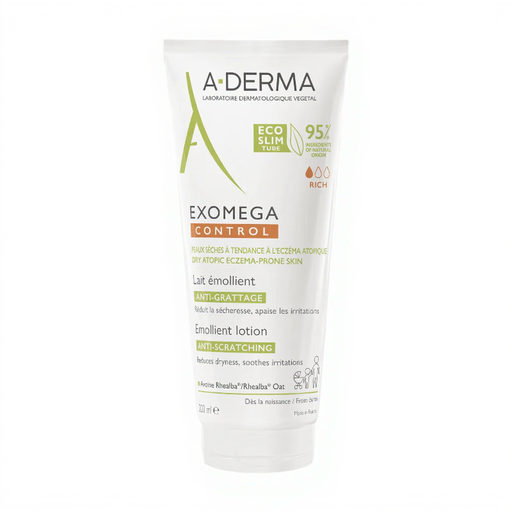
Why it is a good fit: According to A-DERMA, this fragrance-free lotion is intended for dry, atopically sensitive skin and can be used from birth on the face and body.
The product information explicitly states that it is fragrance-free, along with the suitable age and areas of application. For a baby or persistent skin complaints, always check the label and seek professional advice if necessary.
A fluid, non-greasy texture; according to the brand, fragrance-free and dermatologically and paediatrically tested.
Browse a current selection of products and compare volume, texture, skin type and ingredients before placing your order.
Apply lotion to clean skin, preferably after showering. Pat the skin dry, but do not always wait until it is completely dry: slightly damp skin can feel comfortable when applying lotion. Apply extra product to the shins, knees, elbows and heels.
When trying a new body lotion for sensitive skin, it is advisable to test a small amount on a limited area of skin. Discontinue use if redness, itching or swelling occurs, and follow the safety information on the packaging. Keep the bottle tightly closed, out of direct sunlight and stored according to the manufacturer’s instructions.
For normal skin, daily use after showering is a practical routine. Dry skin may require another application, for example on rough areas or after frequent washing. The right frequency depends on your skin and the instructions on the label.
Check the expiry date and the open-jar symbol, such as 12M. The exact information can be found on the packaging. A change in scent, colour or texture may be a reason to stop using the product.
Sometimes, but baby body lotion is formulated for a different intended use. Check the ingredients and fragrances. For sensitive adult skin, a fragrance-free lotion with a clearly defined area of application may be the more suitable choice.
