
Vandaag of morgen in huis

Kwaliteit gegarandeerd

Welkomstaanbiedingen ontgrendelen: GRATIS bezorging | Tot 80% korting | Gratis 30 dagen JoyPlus-proefperiode
Download de app
Buying a game or toy seems simple until the parcel arrives. That is when you may discover that the game is not suitable for the number of players, the instructions are not in Dutch, or small parts are unsuitable for young children. With board games and toys, three pitfalls are particularly common:
Ignoring the recommended age
A game for children aged 8 and over may be too complicated for a younger child. With construction sets and magnetic toys, small parts can also pose a risk to children under 3.
Overlooking the playing time and group size
A 90-minute strategy game will not always work during a short family evening. Conversely, a two-player game can be disappointing if you are looking for something for a larger family.
Confusing marketing claims with verifiable information
Words such as “educational”, “strategic” or “for the whole family” mean little without specific details. So check the number of players, recommended age, box contents, playing time and language of the rules.
Always start with the manufacturer’s recommended age. This does not guarantee that every child can play the game independently straight away, but it does provide a practical lower age limit. Also look out for warnings about small parts, particularly with construction sets for children, blind-box figures and games containing counters or tiles.
A CE marking indicates that the manufacturer declares the product complies with relevant European requirements. It is not a quality ranking and does not automatically mean that a product will last a long time. Also check that the warnings, manufacturer details and instructions are clearly provided.
Extra care is needed with magnetic toys. Swallowed magnets can be dangerous. So check that magnets are securely enclosed and stop using the toy if a part comes loose. Young children should ideally be supervised by an adult.
Think about how the product will actually be used before buying:
Also pay attention to the difference between a base product and an expansion. According to the product description, the Monopoly Buy Everything expansion only works with the classic Monopoly game, which is sold separately.
Check how many parts are included and whether assembly is required. Rummikub, for example, contains 106 tiles, four racks and the game rules. The Clementoni set consists of 16 shapes, coloured cards and an instruction manual. With LEGO sets for adults, the number of bricks is a more useful indication of the build time than the size of the box alone.
The language of the game rules is also relevant. Rummikub has Dutch rules and Dutch-language gameplay. Ticket to Ride Legacy: Legends of the West is an English edition with English instructions. This may be a drawback for some families.
For toys that are used frequently, storage and cleaning are practical considerations. It is best to keep card and board games dry in their original box. Plastic parts can generally be wiped with a dry or slightly damp cloth, unless the product information states otherwise.

Why it suits this profile: A straightforward set for one child aged 2 to 5, with a playing time of around 15 minutes and no batteries required.
The age range, playing time and contents are clearly specified. This helps you avoid buying a game that is too complicated for a young child.
16 cardboard shapes, Dutch-language game information, with no assembly or batteries required.
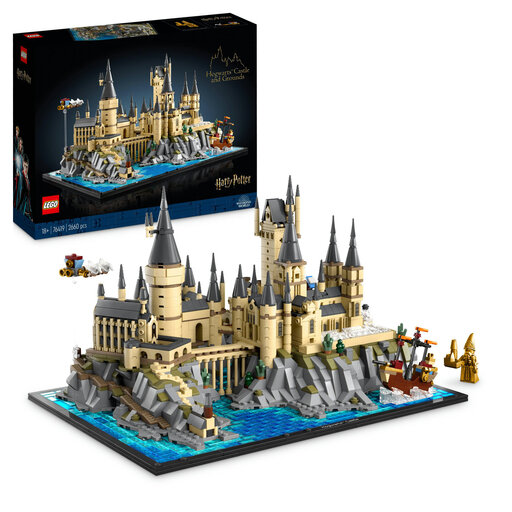
Why it suits this profile: Suitable for adults and fans looking for a substantial building project that can later be displayed as a model.
The number of parts and the finished dimensions are known in advance. This allows you to plan the required building space and storage options.
2,660 pieces, a model measuring 35 × 25 × 21 cm, and no batteries required.
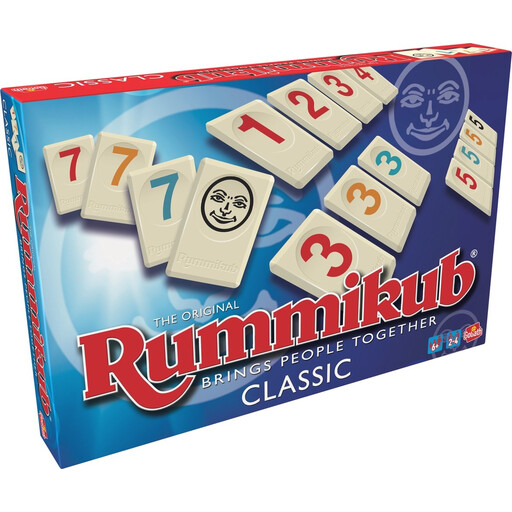
Why it suits this profile: For households that regularly play with two to four people and want a game with longer rounds.
The product information states the number of players, playing time, age range and Dutch-language rules. You therefore know in advance whether it suits your regular game night.
106 plastic tiles, four racks, 2–4 players and a stated playing time of around 60 minutes.
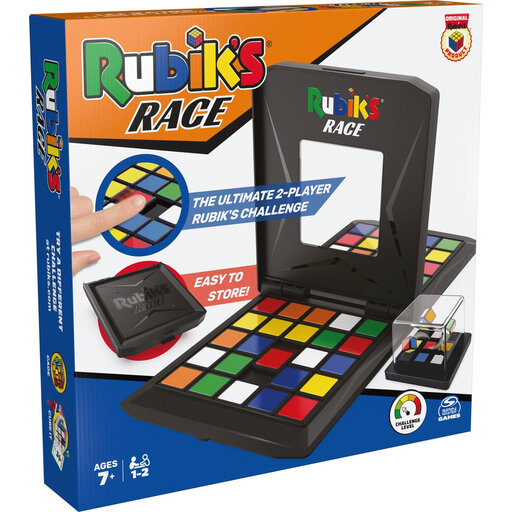
Why it suits this profile: A compact choice for two players who would rather enjoy a duel lasting around 25 minutes than a long family gaming session.
The number of players is fixed at two and the playing time is clearly stated. This helps you avoid buying the wrong game for a large family.
Two players, approximately 25 minutes of playing time, no batteries and a CE marking according to the product information.
We have compiled a complete, up-to-date list of products that fully meet these strict selection criteria and the applicable European safety regulations.
Start by looking at the recommended age and playing time. For children aged 2 to 5, a simple matching or shape game may be suitable, such as the Clementoni set. For children aged 7 or 8 and over, Rummikub, Cluedo or a themed Monopoly game may be possible options. Always check the warning about small parts and provide supervision where necessary.
Lifespan mainly depends on the materials, use and storage. Plastic tiles and counters are generally easy to clean, while cardboard cards and game boards can be sensitive to moisture. Store all parts together and keep them dry in the original packaging. With construction sets, sorting the pieces helps reduce missing parts and damage.
Not automatically. “Educational” often describes the theme or the way a product is presented. Check which activities the child carries out, such as recognising shapes, counting, planning or building spatially. According to Clementoni’s product description, the Shapes & Colours set focuses on shapes and colours; this is more specific than a general learning claim.
Match the gift to the child’s age, interests and play environment. For a child who enjoys building, construction sets for children are a logical choice. LEGO sets for adults or teenagers may suit a Harry Potter or Nintendo fan, but check whether the recipient will enjoy the building project and the number of parts. For a family, games for the whole family are more practical when the number of players and playing time suit the occasions when they are likely to be played.
