
Vandaag of morgen in huis

Kwaliteit gegarandeerd

Welkomstaanbiedingen ontgrendelen: GRATIS bezorging | Tot 80% korting | Gratis 30 dagen JoyPlus-proefperiode
Download de app
A new board game may seem easy to choose at first glance. Yet many people buy a game that then sits unused in the cupboard. The problem is often not the theme, but an incorrect assessment of the age range, playing time or group size.
So watch out for these three common pitfalls:
With the right selection, family games, group games and strategy board games can be matched more easily to the people who will actually be playing them.
First, check how many people you usually play with. For a family, board games for the whole family with 2 to 4 players are often practical. For a group of friends, party games or card games with a wider player range are more suitable.
Also consider the difference between:
A game that officially supports 2 to 10 players offers more flexibility than one that can only be played with 2 to 4 participants. Do check whether the playing experience remains the same with the maximum number of players.
The age recommendation is not merely optional marketing copy. Look at the recommended minimum age and how the game is played. Children from around 6 years old can often follow simple rules, but a game involving lots of reading, planning or arithmetic may still be too difficult.
For younger children, children’s games with short rules are generally more suitable. For families who speak Dutch, the language of the cards and instructions is also important. Rummikub, 5 Alive and Uno Quatro are listed as Dutch-language games in the product information.
Pay attention to the safety warnings. Many board games contain small counters, tiles or parts. Products carrying a choking hazard warning are not suitable for children below the stated age. With younger children, provide supervision in accordance with the product information.
A game lasting 10 to 30 minutes is suitable for a short play session or a journey. For a full games night, games lasting 60 minutes or longer may be appropriate, but check that all players have enough time.
Also consider:
For electronic or app-based games, you should also check whether a smartphone, internet connection or account is required. Hitster, for example, works with an app, QR codes and Spotify.
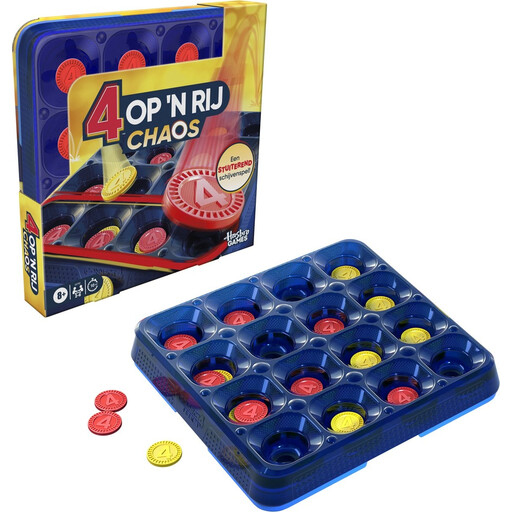
Why it suits this profile: The rules are quick to explain and the game is suitable for 2 to 10 players. The stated playing time is approximately 10 minutes.
The player range and playing time are clearly stated. The frame also doubles as storage for the discs.
2–10 players, approximately 10 minutes of playing time, no batteries and no assembly required.
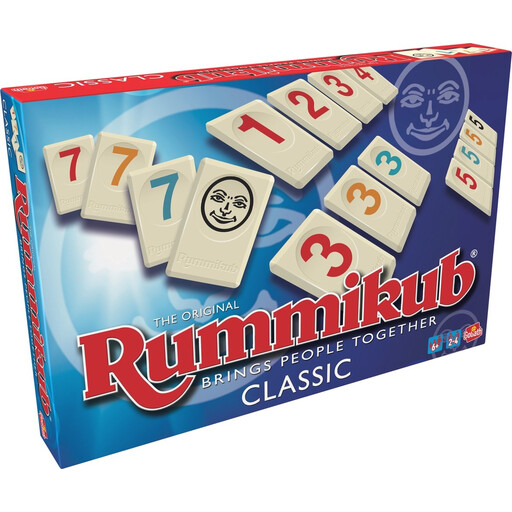
Why it suits this profile: This set contains 106 tiles and 4 racks for 2 to 4 players. The Dutch-language edition is suitable for families looking for a reliable game for regular use.
The number of components, player range, age recommendation and playing time of approximately 60 minutes are specified.
106 plastic tiles, 4 racks, 2–4 players and no batteries required.
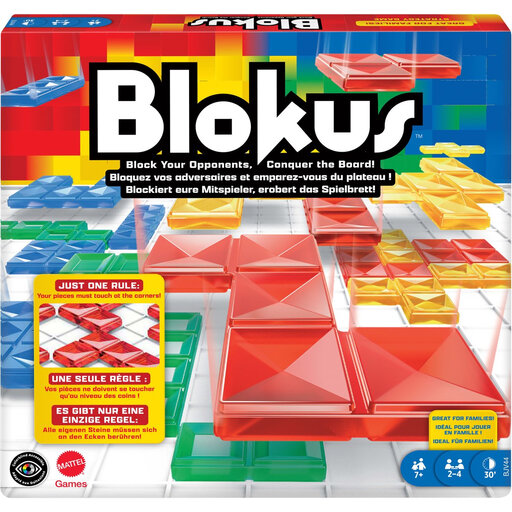
Why it suits this profile: Players place coloured pieces according to a fixed corner-to-corner rule. This makes it suitable for anyone who wants to play repeatedly with simple basic rules and tactical choices.
The playing time is limited to approximately 30 minutes and the rules are easy to follow, so the game does not drag on unnecessarily.
2–4 players, approximately 30 minutes, 21 pieces per player and no batteries required.
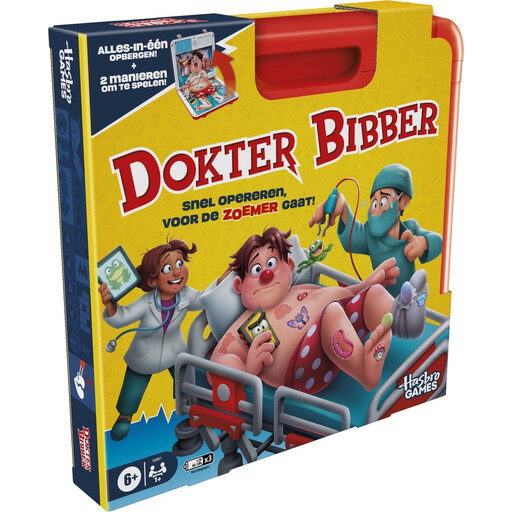
Why it suits this profile: The game is suitable from the age of 6 and offers both a classic game mode and an emergency mode. The stated playing time is approximately 20 minutes.
The two game modes make the intended use clear. Bear in mind that 3 AA batteries are required and are not included.
From 6 years, approximately 20 minutes, portable storage case, plus sound and light effects according to the product description.
We have put together a complete, up-to-date list of products that fully meet these strict selection criteria and the applicable European safety regulations.
Look at the minimum age, number of players and playing time. For a family with children from around 6 years old, Operation may be suitable thanks to its short playing time. For children from 7 years old, Rummikub and Blokus are options with simple basic rules and more tactical choices. Always check the current age recommendation on the product page.
That depends on the size and how the components are stored. Compact card games, small travel games and games with integrated storage boxes are practical for the car or holiday. Also check the weight and the risk of loose cards or counters being lost.
Their lifespan depends mainly on the materials, storage and how they are used. Keep cards and cardboard components dry, make sure all small pieces remain together and follow the manufacturer’s care instructions. For games that use batteries, it is sensible to remove them if you are not going to use the game for an extended period. This helps prevent leakage in the battery compartment.
