
You film the whole board and moving hands
You want to show the playing area, cards and actions at the same time. Pay particular attention to how evenly the light reaches the corners, and to shadows cast by hands on the board.


If you usually film the whole board from a fixed position, an adjustable, diffused panel is a sensible place to start. If you have limited space to set up, a compact light may be a better fit, as long as a test recording shows that the whole board is well lit. A COB light with a light modifier gives you more control over the light, but needs space for the light, stand and modifier. Check your own footage for reflections, colour accuracy and any flicker.
You want to show the playing area, cards and actions at the same time. Pay particular attention to how evenly the light reaches the corners, and to shadows cast by hands on the board.
If colour accuracy matters for your portfolio, don’t rely on the stated colour specifications alone. Set the white balance and review a test recording using the light and materials you’ll actually be working with.
If you share your work table, you’ll need a light and stand that are easy to move and store. Also check that the light can be placed outside the playing area, away from moving hands.
A diffused panel can be practical for filming the board from a fixed position. A compact light needs less room to set up, while a COB light requires space for a stand and modifier.
A good fit if: you usually film the whole board from a fixed position and have room for a stable stand.
Keep in mind: the panel and stand take up space, and diffusion won’t automatically prevent reflections on glossy cards.
A good fit if: you want to clear away your filming setup quickly or take the light with you.
Keep in mind: a small light won’t necessarily illuminate a whole board. Check the mounting options too, and whether you’ll need extra fill light.
A good fit if: you have a permanent, stable space and want to direct or diffuse the light with a suitable modifier.
Keep in mind: you’ll need space for the light, stand and modifier. Check whether those parts are included in the version you’re choosing.
| What to consider | What to check before buying | Who is this important for? |
|---|---|---|
| Keeping the whole board clear to see | Film cards in the corners and moving hands. Check whether the light can be adjusted and whether a diffuser and stand are included with that version. | I want the corners and actions on the board to remain visible. Around 33% of consumers prioritise keeping the whole board clear to see. |
| Showing the colours of your work | Compare the white light adjustment options, set the white balance and film a test using your own materials. | I want viewers to be able to judge the colours of my materials and illustrations accurately. Around 27% of consumers prioritise material colour above all else. |
| Space around the table | Check where a stand could go, which mounting option is suitable and how evenly the light reaches the corners of the table. | I need to clear the table after filming and want to position the light outside the playing area. Around 20% of consumers prioritise limited setup and storage space. |
| Power during recording | Check which adapter, battery or charger comes with the exact version, and which settings the stated run time applies to. | I want to film several videos without running into power problems part-way through. For around 20% of consumers, power or recording time is the top priority. |
A CRI rating is a stated specification. Your camera also records the light you use and the white balance setting.
Set the white balance to suit the light you’re using, then make a test recording with your own materials, especially if you’re mixing different light sources.
A small size makes it easier to store, but it doesn’t tell you whether the corners of the board and moving hands will both be clearly visible.
Check the mounting options and film the whole board before using the mini light as your main light.
NEEWER offers the NL660, according to the manufacturer, in versions with or without a stand; the NP-F batteries mentioned are not included. A Bowens mount doesn’t necessarily mean a modifier is supplied.
Read the contents list for the exact version on offer and check that the stand, modifier and power supply are compatible.
Ulanzi distinguishes between the VL49 with fixed white light and the VL49 RGB. The product name and stated colour temperature can vary by version.
Compare the full model name and specifications for the exact version before making your choice.
The NL660 is a panel worth comparing for a fixed setup, with adjustable colour temperature and versions available with or without a stand.
The P260C Pro is an adjustable, diffused panel for a fixed or portable setup.
The COB 60x S is a COB light worth comparing if you have room for a modifier and a stable stand.
The VL49 RGB is a compact, rechargeable option for a filming setup you want to pack away quickly.
This selection includes compact video lights and COB lights for portable or fixed filming setups. Choose based on the space available, mounting options and power supply, then test the light distribution on your own board. CE marking is required by the NVWA for electrical video lights placed on the market in the Netherlands; check this for the specific product.
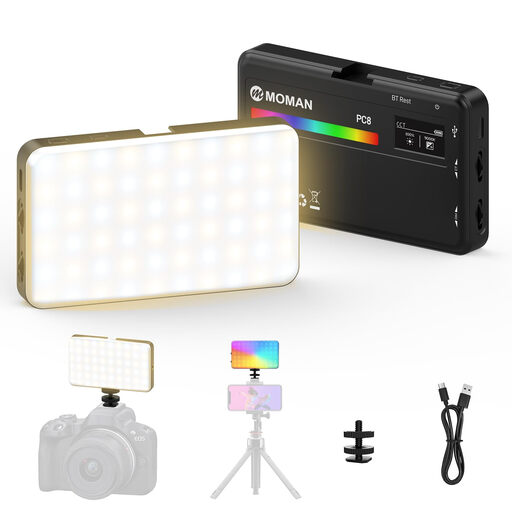 No image available
This portable RGB light may suit a filming setup you want to move around; test whether the light reaches your whole board.
The product description lists RGB light and adjustable brightness.
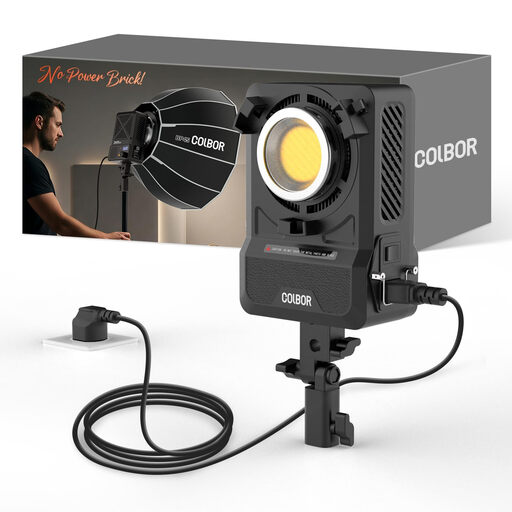 No image available
This COB light may suit a fixed setup where you want to shape the light with a suitable modifier; check the space and components you’ll need.
The product name lists a built-in power adapter, Bowens mount and adjustable colour temperature of 2700–7000 K.
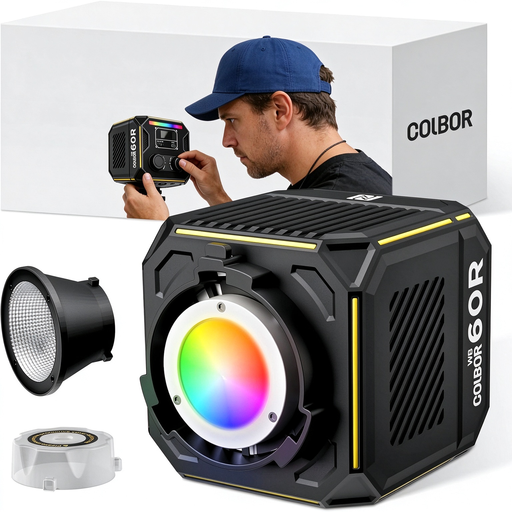 No image available
The portable version may suit you if you want to use the light in different filming locations; check how the power supply will work for your recording session.
The product name lists a built-in 59 Wh battery, bi-colour light from 2700–6500 K and a full-colour mode.
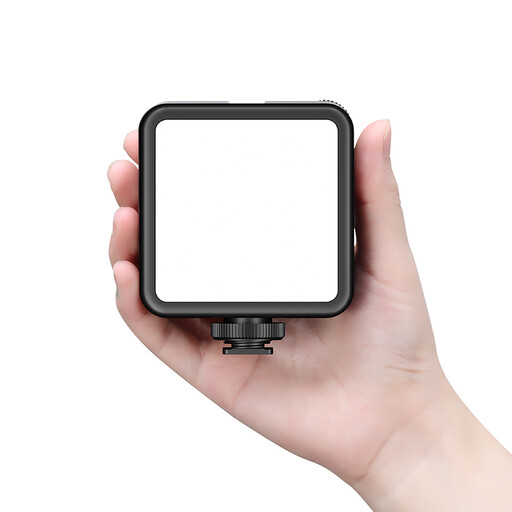 No image available
This rechargeable light may suit a portable filming setup; check that the mounting options and light distribution work for the whole board.
The product description lists 81 LEDs, USB-C charging and a cold shoe mount.
 No image available
The compact size and magnet may suit a filming setup you want to pack away quickly; check whether the light is bright enough to illuminate the board from your filming distance.
The product name lists a 2000 mAh battery, dimmable light and a range of 2500–9500 K. Check the specifications for the exact version; use a standard 5 V adapter for charging, not a higher-voltage charger.
It depends on the size of the board, the distance and the positioning. Record a test with hands over the centre and check all the corners; a softer fill light on the other side can reduce shadows.
Set the white balance to suit the light you’re using and compare a recording of your own materials. Canon Europe notes that some LED light sources can cause banding, so test with the camera settings you plan to use for the full recording too.
For the exact version, check whether a stand, clamp, diffuser, modifier, adapter or required battery is included. NEEWER offers NL660 versions with and without a stand and does not list the optional NP-F batteries as included.
According to the NVWA, CE marking is required for electrical products placed on the market in the Netherlands. Check the marking and product information for the specific device.
When you buy from a business at a distance, you usually have a 14-day cooling-off period, according to the Dutch government. You’re also entitled to a product that meets the terms of the agreement; the Netherlands has no general fixed statutory guarantee period. Any manufacturer’s warranty is in addition to this.
According to the Dutch government, you can return an old electrical appliance when buying a similar new one, or take it to a municipal collection point, among other options. The take-back scheme also applies to online purchases.