
Vandaag of morgen in huis

Kwaliteit gegarandeerd

Welkomstaanbiedingen ontgrendelen: GRATIS bezorging | Tot 80% korting | Gratis 30 dagen JoyPlus-proefperiode
Download de app
A wireless speaker for the garden calls for something different from a soundbar for your TV. Yet these products are often marketed in much the same way: with big power figures, terms such as “cinema sound” and a long list of features. That can make it hard to compare them. The key question isn’t which device has the most features, but which model suits your space, how you’ll use it and the connections you need.
A high wattage can indicate a powerful system, but it won’t tell you how clear voices sound, how wide the soundstage is or how the device performs at higher volumes. Check the number of channels, the type of drivers, whether it has a subwoofer and its frequency response too.
For portable models, it’s also important to distinguish between peak power and RMS power. RMS usually gives you a more useful idea of continuous output. So don’t compare 500 watts of peak power directly with 30 watts RMS as though they were the same measurement.
A waterproof Bluetooth speaker isn’t automatically suitable for prolonged use underwater. Check the IP rating:
Make sure the port covers are firmly closed. Don’t charge a speaker when its connections are wet. The protection rating also doesn’t apply to damaged casings or covers that haven’t been closed properly.
A surround sound soundbar or Dolby Atmos soundbar can create a more immersive sound, but the result depends on placement, the room and the source. A system with separate rear speakers needs more space and cable management than a compact 2.0 soundbar. Check whether your TV supports HDMI ARC or eARC, and whether your streaming service actually offers a suitable audio format.
For a soundbar with subwoofer, HDMI ARC or eARC is usually convenient, as you can often control the volume with your TV remote. Optical audio is a useful alternative, but it doesn’t always support the same formats as eARC. For a computer, USB, 3.5mm AUX and Bluetooth may be useful.
When it comes to Bluetooth, check the version, but don’t expect a higher number alone to make a huge difference. Compatibility with your phone, tablet, TV or laptop, along with the supported codecs, matters too.
A speaker with long battery life is handy for a day outdoors, but the quoted play time often depends on volume, lighting and what you’re listening to. For example, the Tronsmart Bang 2 is listed as offering up to 26 hours without lighting at 50% volume, while play time may be shorter with the lights on. Always check the conditions under which the manufacturer measured battery life.
Also consider the weight, handle, shoulder strap and whether you can charge your phone. A heavier party speaker may deliver more volume, but it’s less convenient to carry around every day.
Before you buy, measure the space beneath or in front of your TV. A soundbar shouldn’t block the TV’s infrared sensor. A separate subwoofer needs room to spread low frequencies around the room effectively. Don’t place rear speakers directly behind a cabinet or anywhere cables could become a trip hazard.
For a desk, compact gaming speakers are often more practical than a TV soundbar. Check whether the speakers are USB-powered and whether they have a headphone socket or AUX input.
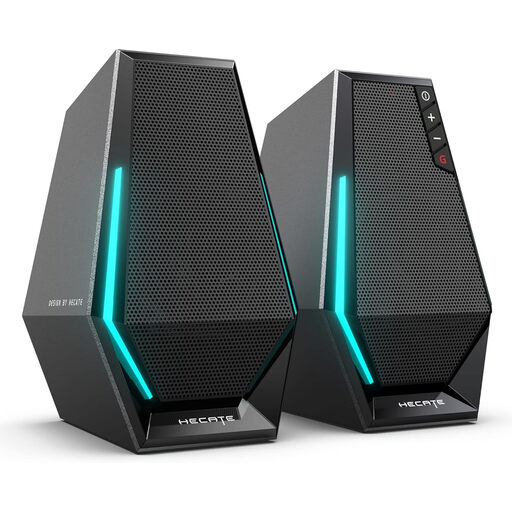
Why it suits this profile: This compact 2.0 system is designed for a desk, laptop or gaming PC. Bluetooth 5.3, USB and 3.5mm AUX give you several connection options.
The specifications list 10 watts of peak power and two full-range drivers. That makes it clear this is a desktop speaker set, not a large party speaker.
USB power, three inputs and five RGB lighting modes, according to the product information.
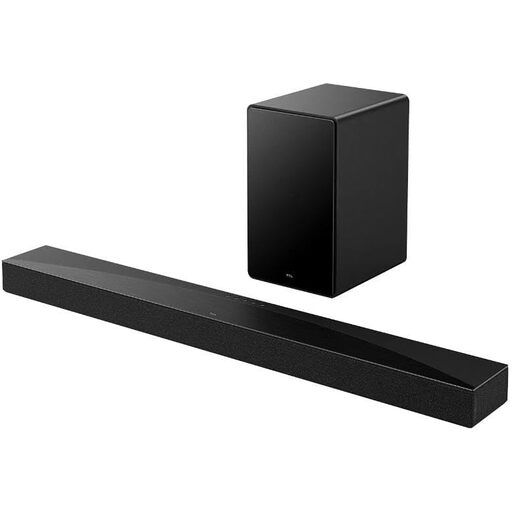
Why it suits this profile: A good choice for film fans looking for a more complete home cinema system, with a separate subwoofer and support for spatial audio.
The system is listed with 5.1 channels, a wireless subwoofer, HDMI eARC and an optical connection. You can check the connections you need against your TV in advance.
580 watts RMS according to the product specifications, Dolby Atmos and DTS:X support, and the option to mount it on the wall.
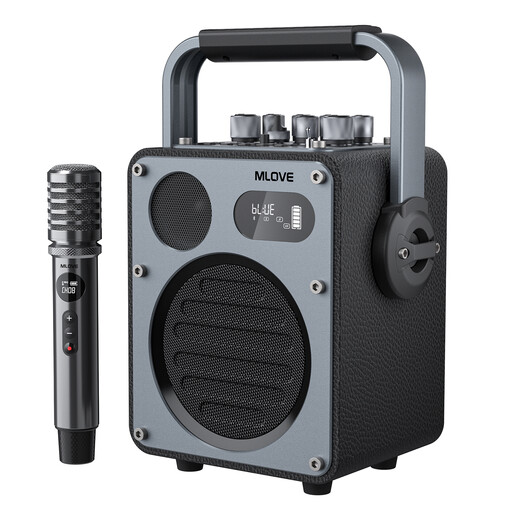
Why it suits this profile: Designed for karaoke, performances, livestreams and playing instruments. The included wireless microphone means you can start singing straight away.
As well as Bluetooth 5.4, the model supports a microphone, AUX, USB and instruments. That means you’re less reliant on a single wireless connection.
Up to 12 hours of play time in karaoke mode at medium volume, according to the product information, plus EQ modes and USB-C.
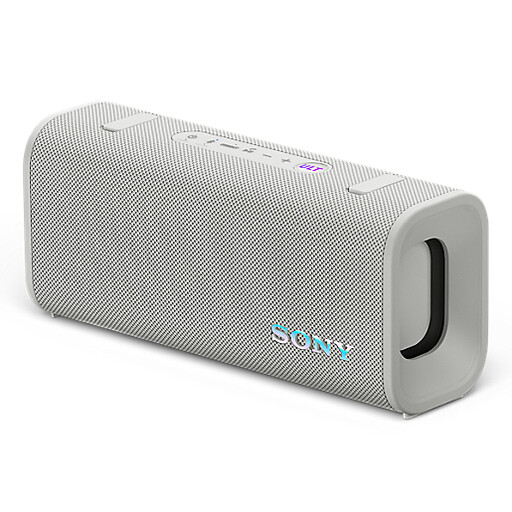
Why it suits this profile: For anyone who wants to take a portable Bluetooth speaker to the park, campsite or patio without having to recharge it after just a few hours.
The stated IP67 rating and battery life are listed alongside a weight of around 1.2 kg. This lets you assess protection, portability and play time together.
Up to 24 hours of battery life according to the product information, USB-C, 3.5mm audio and a carrying strap.
We’ve put together a complete, up-to-date list of products that meet these strict selection criteria and the applicable European safety regulations.
A Bluetooth speaker is ideal for listening on the go, playing music in different rooms and enjoying outdoor activities. A soundbar is designed for use with a TV and usually offers a better connection for TV audio, films and games. If you need both, it may be better to choose two separate devices rather than one that tries to do everything.
If both devices support it, HDMI ARC or eARC is usually the best option. Connect the cable to the HDMI port marked ARC/eARC, select the correct audio output in the TV menu and enable HDMI-CEC if needed. Optical audio also works with many TVs, but may offer less support for advanced audio formats.
Its lifespan depends on battery use, charging habits, moisture, heat and physical wear. Keep your speaker dry, avoid prolonged exposure to heat, and charge it with a suitable cable and adapter. An IP rating doesn’t protect against every kind of wear and tear. The battery is also a consumable component, so actual play time may decrease over time.
