
Vandaag of morgen in huis

Kwaliteit gegarandeerd

Welkomstaanbiedingen ontgrendelen: GRATIS bezorging | Tot 80% korting | Gratis 30 dagen JoyPlus-proefperiode
Download de app
A Bluetooth speaker or pair of headphones may seem straightforward to choose. Yet many buyers fall for the same marketing tricks: a high wattage rating without a clear measurement method, long battery life that only applies at low volume, or “spatial sound” without checking connections and positioning. A few technical checks can help you avoid a purchase that disappoints after a few months.
Higher wattage can indicate greater maximum power, but it says little about clarity, distortion or bass performance. You should therefore also check the number of channels, driver size and frequency response. For an outdoor Bluetooth speaker, the casing and water resistance are important too.
Advertised playback times often apply under specific conditions. According to Tronsmart product information, the Bang 2 can play for up to 26 hours at 50% volume with the lighting switched off. With the LED lighting switched on, up to 7 hours is stated. So if you are looking for a portable party speaker for a long afternoon, it is worth checking the conditions behind the figure.
Not every TV supports the same HDMI features, and not every console works with every gaming headset. Before buying, check whether you need HDMI ARC or eARC, optical audio, USB, AUX or a 3.5mm connection. A wireless soundbar may also require extra power sockets and space for a subwoofer or rear speakers.
A Bluetooth 5.3 speaker offers a modern wireless connection, but the final experience also depends on the source device and audio codec used. Bluetooth is usually practical for playing music from a smartphone. For gaming or films, a wired connection or HDMI eARC may be preferable for better synchronisation and access to additional features.
For headphones, look for multipoint if you regularly switch between a laptop and phone. The JBL Tune 730BT lists Bluetooth 6.0 and connection to two devices. According to the product information, this model also offers up to 76 hours of playback, with a fast-charge feature that can provide up to 5 hours of playback from 5 minutes of charging.
Headphones with ANC use active noise cancellation to reduce surrounding sounds. The result varies depending on the situation and fit. Low, constant sounds such as train or aircraft noise are generally a different use case from voices in an office. Think of ANC as a feature that creates a more peaceful listening experience, not as a guarantee that all noise will disappear.
Over-ear headphones fully surround the ear. This can be comfortable during long listening sessions, but check the dimensions, weight and pressure from the headband. For use on the go, foldability and battery life are more important than extra lighting or a large number of EQ modes.
A 2.0 soundbar has a different configuration from a 5.1 or 7.1 system. Dolby Atmos can support a more immersive effect, but the playback depends on the source, room and positioning. According to the ULTIMEA Poseidon D80 Boom product information, this system has 7.1 channels, a wireless subwoofer, HDMI eARC and Dolby Atmos support.
A more compact soundbar for TV may be more practical in a flat. According to its product specifications, the TCL S45H has a 2.0 configuration, Bluetooth 5.2, HDMI eARC, an optical input and a stated RMS power output of 25 watts. This makes the connections and size more manageable, but the sound profile differs from a system with separate rear speakers.
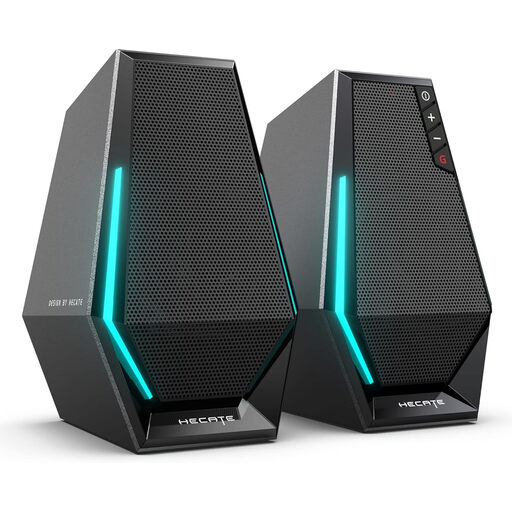
Why it suits this profile: These computer speakers are designed for users who want to play music, films and games from a desk without installing a large system.
The product specifications list two 2.5-inch drivers, 10 watts of peak power and three inputs: Bluetooth 5.3, USB and 3.5mm AUX. This makes it clear how to connect the system.
USB power for plug-and-play use, Bluetooth 5.3 and five adjustable RGB lighting effects. The game, music and film modes can be selected using the controls.

Why it suits this profile: A suitable choice for anyone looking for wireless headphones for commuting, music and calls across multiple devices.
The stated battery life is accompanied by separate details about charging time and the fast-charge function. This makes it easier to compare the claim with your own usage.
40mm drivers, a foldable over-ear design, multipoint and, according to the product information, up to 76 hours of music playback.
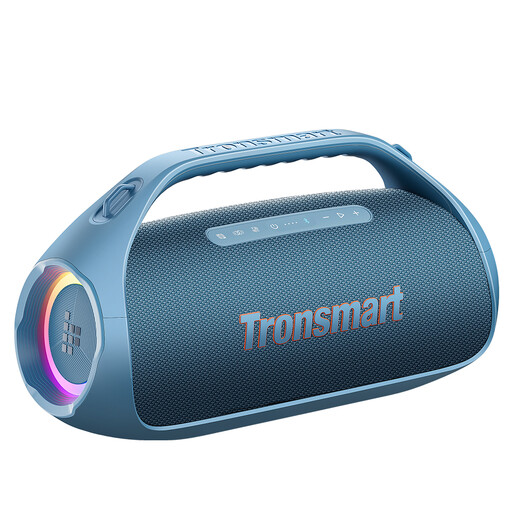
Why it suits this profile: This speaker is designed for users who want to take their music into the garden, to a picnic or to a party, and who value range and battery life.
The IPX6 rating is clearly specified. This does not mean that the speaker can be submerged; keep the limits of the IP rating in mind.
Bluetooth 5.3, a handle, detachable carrying strap, USB-C and the option to pair two speakers for True Wireless Stereo.
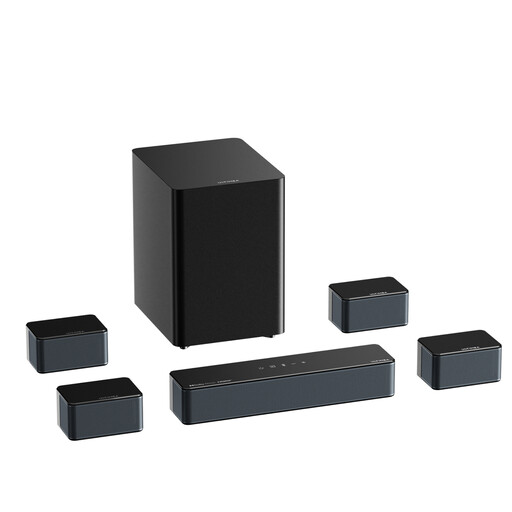
Why it suits this profile: Suitable for anyone who wants to enjoy films, series and games from their TV with a more comprehensive system than a standalone wireless soundbar.
The connections are clearly specified: HDMI eARC, HDMI in, optical, AUX and USB. However, check that your TV and source devices support the desired configuration.
According to the product information: 7.1 channels, a wireless 6.5-inch subwoofer, Bluetooth 5.3 and Dolby Atmos support.
We have put together a complete, up-to-date list of products that fully meet these strict selection criteria and the applicable European safety regulations.
Most modern smartphones support Bluetooth audio, but features such as multipoint, codecs and quick pairing can vary between devices. Also check whether the speaker requires a separate app for EQ settings or firmware updates.
Its lifespan depends on battery capacity, charging habits and wear to the ear cushions or hinges. A model with replaceable parts may be more practical in the long term. Keep your headphones dry, charge them with a suitable cable and avoid leaving the battery completely flat for long periods.
Not automatically. Check that the TV and source can pass Dolby Atmos through HDMI eARC, HDMI ARC or another supported connection. Without a suitable source, the soundbar can still play audio, but the spatial effect may be different.
