
Vandaag of morgen in huis

Kwaliteit gegarandeerd

Welkomstaanbiedingen ontgrendelen: GRATIS bezorging | Tot 80% korting | Gratis 30 dagen JoyPlus-proefperiode
Download de app
Choosing a Bluetooth speaker may seem simple: set your budget, check the power output and pick a colour. In practice, the main differences are in the connections, water protection, battery life and the type of sound you need. A compact speaker for a bike bag needs different features from a system for films, gaming or a TV.
As a Joybuy Product Recommendation Officer, I filter the most important product specifications and highlight common buying pitfalls. This helps you compare a portable Bluetooth speaker, wireless speaker, outdoor speaker or Bluetooth soundbar based on practical features rather than marketing terms alone.
A higher wattage does not automatically mean that a speaker sounds better. The stated power may refer to peak power or total power, while RMS power says more about the continuous output level. The size of the drivers, the enclosure and the positioning also affect your listening experience.
A speaker with powerful bass can be appealing for parties, but excessive low-end sound can make voices and details less clear. Check whether the manufacturer specifies the type of power rating, and also look at the frequency response.
IP ratings consist of two numbers. The first indicates protection against dust and the second indicates protection against water. IP67, for example, means complete protection against dust and protection against temporary immersion under specified conditions. IPX6 indicates water protection but says nothing about dust.
Also pay attention to the usage guidance. Salt water, prolonged immersion, high pressure and damaged seals can affect the protection. A waterproof Bluetooth speaker is therefore not automatically suitable for leaving in a swimming pool for an extended period.
The stated play time is usually a guideline. Volume, RGB lighting, the Bluetooth connection and audio content can all reduce battery life. The Tronsmart Bang 2, for example, is stated to offer up to 26 hours of play time with the LED lighting switched off and the volume at 50%, while the stated usage time is lower when the lighting is on.
When choosing a portable Bluetooth speaker, therefore, look at the charging time, the charging port and the conditions under which the battery life was measured.
Bluetooth 5.3, 5.4 or 6.0 mainly indicates the connection technology being used. Compatibility with your phone, tablet, laptop or TV remains more important than the version number alone. For films and games, stability and latency are relevant. For a desk speaker, a USB or 3.5mm connection may also be more practical.
Also check whether the speaker supports multiple devices at the same time, whether two units can be paired or whether an app is available for equaliser settings.
A Bluetooth speaker works well for streaming music wirelessly, but a TV soundbar is often connected via HDMI ARC/eARC, an optical cable or AUX. HDMI ARC can allow you to control the volume using the TV remote, depending on device compatibility.
For computers, USB, 3.5mm AUX and Bluetooth are useful options. Gaming speakers with RGB lighting are particularly appealing if you want to match the look of your desk, but check in advance whether the speaker uses USB only for power or also for audio.
A single full-range driver is compact and easy to carry. A system with separate woofers, tweeters or a subwoofer can distribute low and high frequencies differently. With a surround sound speaker, the number of channels, the positioning of the rear speakers and the available space are important.
Also consider the dimensions. A large outdoor speaker may deliver more volume, but is less convenient on a bike. A Bluetooth soundbar is suitable for a TV stand, while a compact RGB speaker makes more sense next to a monitor.
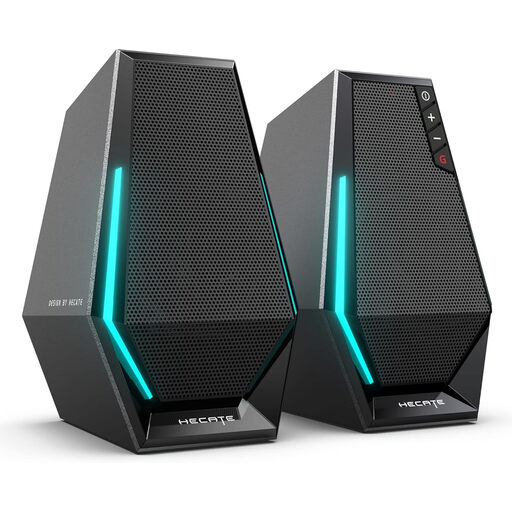
Why it suits this profile: These computer speakers are designed for a desk and offer Bluetooth 5.3, USB and 3.5mm AUX. This means you can use them with a computer, laptop or mobile device.
The product information states both 10 watts of peak power and two 2.5-inch drivers. This means you can assess the model based on more than just a wattage claim.
USB power, three input options and five RGB lighting modes. You can switch between the Game, Music and Movie modes using the controls.
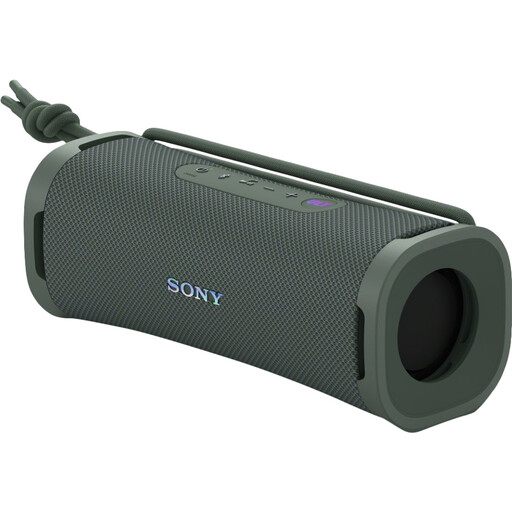
Why it suits this profile: This model combines a portable design with 30 watts RMS, Bluetooth 5.3, IP67 and a stated battery life of up to 12 hours.
Alongside the sound claims, the product provides specific details about RMS power, IP rating, weight and dimensions. The ULT button is designed to adjust the bass response.
IP67, 650 grams, USB-C and pairing with a second speaker via TWS. The speaker supports AAC and SBC.
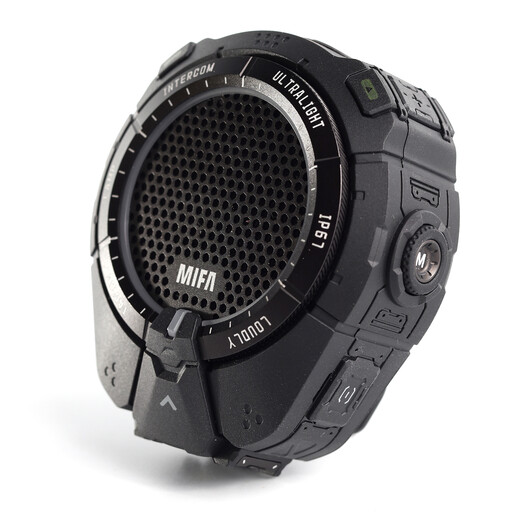
Why it suits this profile: Weighing approximately 85 grams and combining IP67 protection with a built-in intercom function, it is well suited to walking, cycling, camping and group activities.
The protection is specified as IP67 and the battery life as up to 10 hours. This makes the relevant limits clearer than a general term such as “rugged”.
Bluetooth 5.3, an 80-lumen lamp, magnetic clip and intercom for up to six people according to the product description.
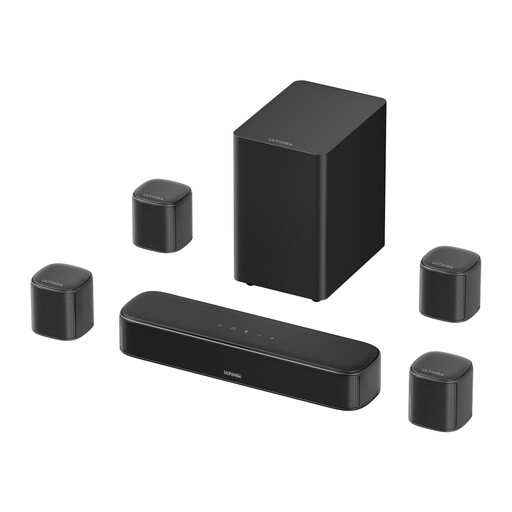
Why it suits this profile: This surround system is designed for a permanent TV setup with a soundbar, subwoofer and four surround speakers.
The setup specifies 7.1 channels, 350 watts of peak power, HDMI ARC, optical and AUX. This shows you in advance how much space and which connections are required.
App control, a 10-band equaliser, Bluetooth 6.0 and a 5.25-inch subwoofer. According to the product information, the rear speakers can be connected wirelessly.
We have put together a complete, up-to-date list of products that fully meet these strict selection criteria and the applicable European safety regulations.
You can if your TV supports Bluetooth audio. However, check whether there is any noticeable delay between the picture and sound. For a permanent TV setup, HDMI ARC/eARC or an optical connection is often more practical. A Bluetooth soundbar with multiple connections offers greater flexibility.
This depends on the volume, lighting, codec, temperature and type of audio content. Always compare the stated play time with the charging time, and check whether the manufacturer specifies that the measurement was taken at 50% volume with the lighting switched off.
IP67 is suitable for situations where dust and temporary contact with water may occur. Check the manual for guidance on immersion, salt water and charging in a damp environment. Only charge a speaker once the connections are dry and clean.
