
Vandaag of morgen in huis

Kwaliteit gegarandeerd

Welkomstaanbiedingen ontgrendelen: GRATIS bezorging | Tot 80% korting | Gratis 30 dagen JoyPlus-proefperiode
Download de app
A Bluetooth speaker may seem simple at first glance: connect, play and you’re done. Yet many people buy a model that isn’t well suited to their situation. A small speaker may sound too quiet outdoors, a party speaker can prove too heavy for everyday use, and a soundbar won’t automatically work with every television.
So don’t just focus on wattage, the Bluetooth version or eye-catching lighting. Pay particular attention to the combination of usage, connections, protection and battery life.
Higher wattage does not automatically mean better or fuller sound. It mainly indicates the available power. The size of the enclosure, the number of drivers and their positioning also affect your listening experience.
For a bedroom or desk, you usually don’t need a large party speaker. For a garden party, on the other hand, a compact model may not deliver enough volume or bass. As well as checking the power output, look at the dimensions, speaker configuration and whether stereo pairing is supported.
A waterproof Bluetooth speaker is not protected against water in every situation. With IP67, the first digit, 6, means that the product is completely dust-tight. The second digit, 7, refers to temporary immersion under the manufacturer’s specified conditions, often up to 1 metre deep and for a maximum of 30 minutes in fresh water.
This makes such a speaker suitable for rain or an accident by the swimming pool, but not automatically for salt water, chlorinated water or a high-pressure jet. Always follow the brand’s safety instructions.
Battery life of “up to” a certain number of hours depends on the volume, lighting, Bluetooth connection and the content being played. With a party speaker featuring RGB lighting, for example, playback time may be considerably shorter than at moderate volume with the lights switched off.
Also check the charging connection, charging time and battery indicator. For everyday use on the go, a speaker with long battery life is more practical than a model that only promises many hours on paper.
Bluetooth 5.3 or 5.4 can provide a modern, stable connection, but the overall experience also depends on your phone, laptop or tablet. Check whether the speaker supports devices running iOS, Android, Windows or other systems.
A wireless speaker with additional connections offers greater flexibility. Options include:
A USB connection can be useful on a desk. The Edifier G1500, for example, works via Bluetooth 5.3, USB and 3.5mm AUX. This makes it suitable as PC speakers and as a wireless speaker for a phone.
A portable Bluetooth speaker should suit the way you carry it. A model weighing a few hundred grams is suitable for a bag or cycle ride. Larger models often offer more volume, but are less practical to take with you every day.
When choosing an outdoor speaker, look for a handle, carrying strap, sturdy enclosure and protection against dust. For indoor use, controls, appearance and positioning on a shelf or desk are often more important.
For television use, a standard Bluetooth speaker is not always the most convenient solution. A soundbar for TV often offers HDMI ARC or eARC, optical audio and a remote control. Check which ports your television has.
Dolby Atmos can support immersive sound, but the result depends on the source, the room, positioning and the speaker configuration. A soundbar with separate surround speakers and a subwoofer generally creates a different listening experience from a compact 2.0 model. Treat claims about a “cinema experience” as a product promise from the brand, rather than a guaranteed result in every living room.
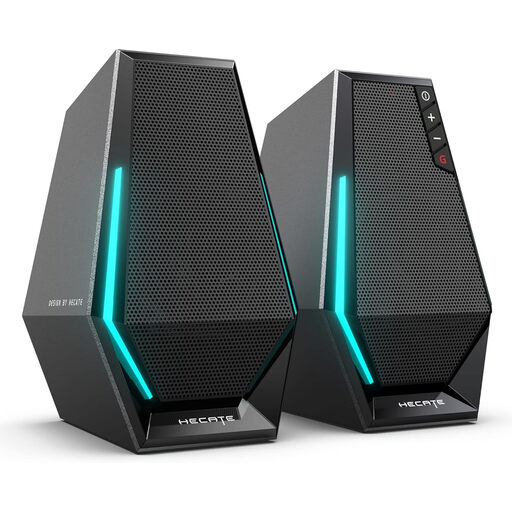
Why it suits this profile: This desktop model combines Bluetooth with USB and AUX. It is therefore suitable for a computer, laptop or phone without the need to buy a large audio system straight away.
The three connection options reduce reliance on Bluetooth alone. The product description also lists three modes: Game, Music and Movie.
Two 2.5-inch drivers, 10 watts peak power, USB power and adjustable RGB lighting.

Why it suits this profile: A compact choice for anyone looking for a lightweight model with clear specifications for use at home, on the go or outdoors.
The IP67 rating provides a clearly defined level of protection. The stated battery life is up to 16 hours; volume and usage conditions may affect this.
Bluetooth 5.3, 274 grams, USB-C, IP67 and support for pairing with a second speaker.
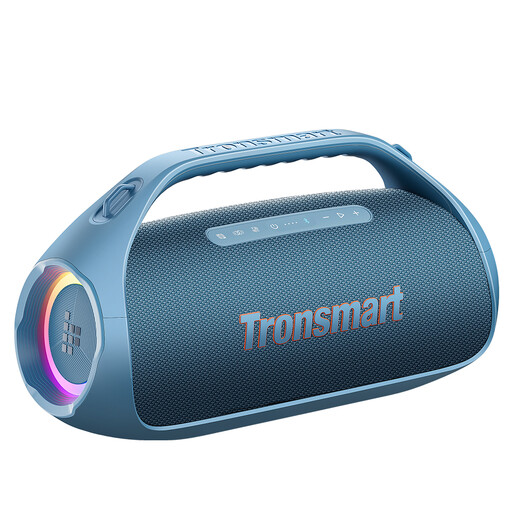
Why it suits this profile: This party speaker is designed for larger gatherings, garden parties and situations where portability and volume are equally important.
The IPX6 rating clearly indicates the level of protection, but it is not the same as full immersion protection. According to the product information, the stated 26-hour battery life applies under specific conditions.
90 watts output power, Bluetooth 5.3, handle, carrying strap, TWS and a stated 18,000 mAh battery.
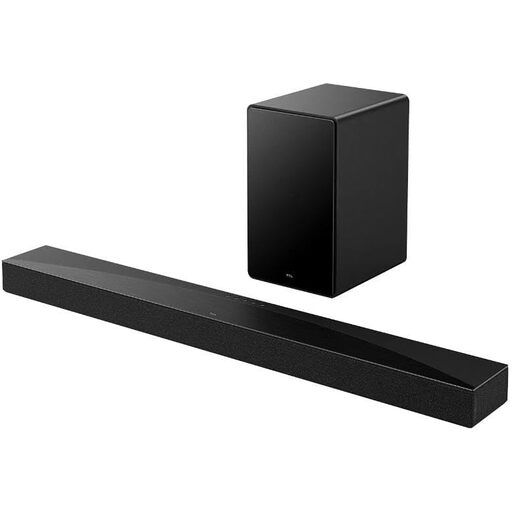
Why it suits this profile: For films, series and gaming, this system offers multiple connections and a wireless subwoofer, without the need for separate PC speakers.
The HDMI eARC, optical and USB connections make compatibility easy to check. Dolby Atmos and DTS:X are the listed audio formats; the immersive effect varies depending on the room and source.
5.1-channel configuration, 580 watts RMS according to the product information, Bluetooth 5.3 and a wireless subwoofer.
We’ve put together a complete, up-to-date list of products that fully meet these strict selection criteria and the applicable European safety regulations.
Switch on the speaker and activate pairing mode. Then open the Bluetooth settings on your phone and select the speaker’s name. Some models support Fast Pair on Android devices. Remove an old connection if the speaker does not appear.
Its lifespan depends on battery use, charging habits, moisture, drops and heat. Use the supplied or suitable USB-C charger, avoid leaving a portable speaker discharged for long periods and follow the manufacturer’s instructions. An IP rating also does not protect against every type of liquid or damage.
A compact speaker uses relatively little power while charging. Consumption increases at higher volumes, with powerful lighting and in larger models. A soundbar with a subwoofer generally uses more power than a small Bluetooth speaker. Check the product specifications if energy consumption is an important purchasing criterion for you.
