
Vandaag of morgen in huis

Kwaliteit gegarandeerd

Welkomstaanbiedingen ontgrendelen: GRATIS bezorging | Tot 80% korting | Gratis 30 dagen JoyPlus-proefperiode
Download de app
A Bluetooth speaker may seem simple to choose: select a size, check the price and connect it to your smartphone. In practice, models vary considerably in volume, battery life, water resistance and connection options. A compact speaker for the kitchen needs different features from a Bluetooth speaker for parties or a wireless outdoor speaker.
Pay particular attention to three common pitfalls:
Below, I explain which specifications make a practical difference and which models suit different uses.
A Bluetooth speaker with long battery life is useful for a day at the beach, camping or a garden party. However, check the conditions under which the manufacturer states the playback time. Volume, bass level, active lighting and the type of music all affect power consumption.
A stated playback time of, for example, 20 or 26 hours is therefore not a fixed usage time. At higher volumes or with LED lighting switched on, the battery may run down considerably faster. Also look at:
For everyday use at home, a shorter playback time is often sufficient. For outdoor activities, having more capacity to spare is more practical.
A waterproof Bluetooth speaker usually has an IP rating. The first digits indicate protection against solid particles, such as dust. The second digits refer to water protection.
Do not automatically use an IP67 speaker in the sea, a swimming pool or under a pressure washer. According to Sony’s safety information, the SRS-XB100, for example, should be protected from salt water, chlorinated water and conditions outside the specified limits. After using the speaker outdoors, also check that the connection covers are properly closed.
The wattage, often expressed as RMS, gives an indication of the electrical output power. It does not tell you everything about clarity, bass response or maximum sound pressure. A larger enclosure can accommodate larger drivers and passive radiators, but it also makes the speaker less convenient to carry.
So think about how you will use it first:
Also check whether a model spreads sound all around, such as with 360° sound, or is mainly front-facing. Placing a speaker against a wall can make the sound seem different from using it in an open garden.
A Bluetooth 5.3 speaker or Bluetooth 5.4 speaker can offer a stable connection and low energy consumption, depending on the smartphone and software used. However, the version is no guarantee of better sound. Above all, check that the speaker works with your device and whether it supports simultaneous connections to two devices.
With stereo pairing, also known as TWS, you connect two compatible speakers as the left and right channels. This can be useful for a wider soundstage, but both speakers generally need to be the same or compatible models.
A Bluetooth speaker with lighting is well suited to parties, but LED effects often reduce playback time. A built-in microphone is useful for hands-free calls, while an AUX connection can be handy for older devices or situations with less reliable wireless connections.
For gaming or a desktop setup, USB, AUX and a mains power connection may be more important than water resistance. A portable speaker is not automatically the right choice for a computer desk.
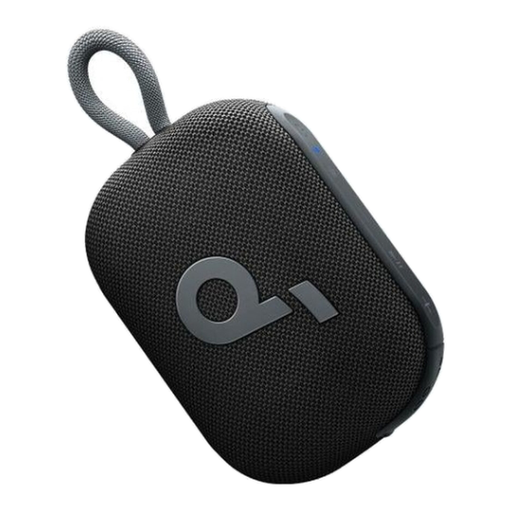
Why it suits this profile: According to the product information, this compact model weighs approximately 264 grams and has an integrated carry loop. That makes it suitable for everyday use, walking and short trips.
The specifications state up to 20 hours of playback and IP67 protection. Before use, however, check the charge level and covers; the stated playback time depends on the conditions of use.
5W output power, IP67 rating, floating design according to the product description and TWS pairing for two speakers.

Why it suits this profile: A lightweight Sony speaker for users who value a well-known product range, portability and a clear set of core specifications.
The product information specifically states 16 hours of battery life, Bluetooth 5.3 and IP67. This makes comparisons easier than relying solely on general terms such as “powerful”.
274 grams, USB-C connection, microphone for hands-free calls and support for pairing with a second speaker according to the product specifications.
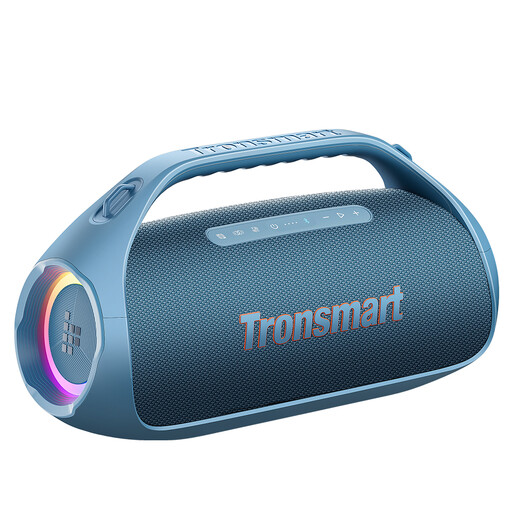
Why it suits this profile: This large model is designed for users who prioritise high volume, long playback time and features for an outdoor party.
The product information separately states up to 26 hours without LED lighting and up to 7 hours with lighting at 50% volume. This makes the difference between the scenarios clear.
According to the product specifications: 90W output power, Bluetooth 5.3, IPX6 protection, LED lighting, app control and TWS pairing.
We have put together a complete, up-to-date list of products that fully meet these strict selection criteria and the applicable European safety regulations.
First, charge the speaker and switch it on. Activate Bluetooth on your smartphone, tablet or laptop, then select the speaker’s name from the list of available devices. If the device has been paired before, the connection is often established automatically. If this does not work, remove the old pairing and start the pairing process again.
This depends on the volume, type of music, lighting and the age of the battery. A stated playback time is a guide figure under certain conditions. For regular outdoor use, it is sensible to choose a model with more capacity than you need as a minimum.
A portable speaker uses relatively little power while playing music, but consumption increases at high volumes and with active LED lighting. A USB-C charger makes charging easy. Do not leave the speaker switched on unnecessarily, and do not store a lithium-ion battery completely discharged for long periods.
