
Vandaag of morgen in huis

Kwaliteit gegarandeerd

Welkomstaanbiedingen ontgrendelen: GRATIS bezorging | Tot 80% korting | Gratis 30 dagen JoyPlus-proefperiode
Download de app
A Bluetooth speaker might seem simple to choose: pick a model, compare the power output and place your order. In practice, wireless speakers vary considerably in size, connections, battery life and water resistance. A model that works well in the living room won’t necessarily be suitable as an outdoor or portable speaker.
So, before you buy, look out for these common pitfalls:
Don’t look only at the number of watts. Check the type of drivers, the number of speakers and the frequency response too. A compact speaker with a single driver is suitable for background music and smaller rooms. For a living room, party or larger garden, a model with multiple drivers and higher RMS power may deliver more volume.
A Bluetooth speaker with 360° sound spreads audio around the speaker’s casing. That’s useful when people are sitting around a table. For a fixed listening position, stereo drivers can give you a clearer left-to-right soundstage. A stereo pairing speaker lets you connect two compatible models wirelessly as a stereo pair.
Also, be aware of the difference between RMS power and peak power. RMS is generally more useful for comparisons, while peak power indicates a temporary maximum.
The IP code consists of two digits. The first indicates protection against solid particles such as dust. The second relates to water.
So, a waterproof speaker isn’t automatically suitable for prolonged use in a swimming pool, in salt water or while charging in wet conditions. Check the instructions and close any protective covers securely before using the speaker outdoors.
A battery-powered speaker is handy for picnics, travel and use in the garden. Compare the stated play time at a similar volume. LED lighting, extra bass, phone calls and high volume can all increase power consumption.
Bluetooth 5.3 or 5.4 can provide a modern connection, but compatibility with your phone or tablet is still important. For home use, Wi-Fi, AirPlay 2, Spotify Connect or multi-room features can add flexibility. If you want to connect a speaker to a TV, look for AUX, USB or HDMI. In that case, a soundbar is often a more suitable choice than a portable speaker.

Why it suits this profile: This portable speaker is a straightforward option for anyone looking for a model to use at home, on the go or for a little time outdoors. The product description lists 30 W, 360° sound and app control.
The specifications list both the power output and the IPX7 rating. Stated play time is split into up to 12 hours without the LED and up to 7 hours with it switched on.
Bluetooth 5.3, USB-C, True Wireless Stereo Pairing and a range of up to 18 metres in an open space, according to the product specifications.
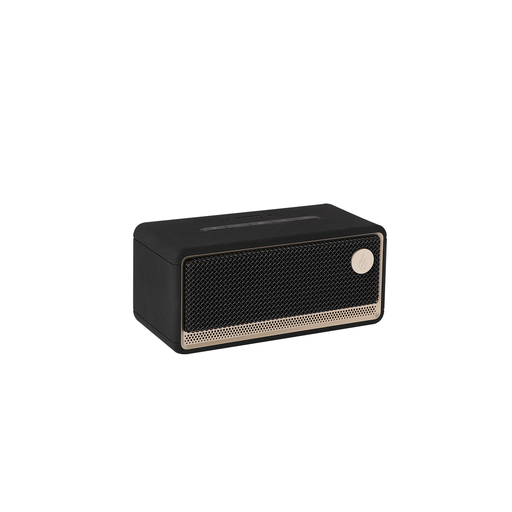
Why it suits this profile: This model is designed for home use, music streaming and multi-room listening. Its casing and range of connections make it better suited to a permanent spot than to being carried around every day.
As well as Bluetooth, this model also offers Wi-Fi, USB and AUX, according to the product information. That means it’s less reliant on a single wireless connection.
60 W RMS according to the product information, Bluetooth 5.3, AirPlay 2, LDAC, multi-room functionality and stated battery life of up to 12 hours.

Why it suits this profile: This portable speaker is designed for use at home, at parties and outdoors. Its IP66 rating, stereo pairing and 34 W RMS make it a good fit for anyone looking for flexibility.
The product information specifies dust and water protection separately. This makes the rating clearer than a general claim such as ‘for every adventure’.
Bluetooth 5.4, up to 9 hours of play time, IP66 and support for two Bluetooth devices connected at the same time.
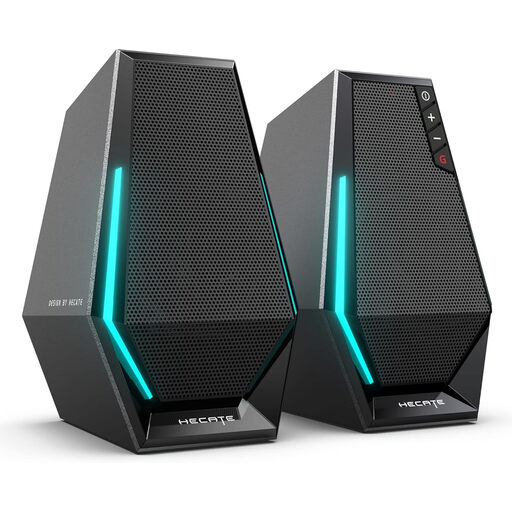
Why it suits this profile: These are gaming speakers for your desk, not for taking on the go. USB power, AUX and Bluetooth let you connect them to a computer or mobile device.
It’s clearly described as a computer speaker. That helps you avoid buying a compact desktop set when what you really need is an outdoor speaker.
Two 2.5-inch full-range drivers, 10 W peak power, Bluetooth 5.3, USB and AUX, according to the product description.
We’ve put together a complete, up-to-date list of products that meet these strict selection criteria and comply with current European safety regulations.
It depends on the connections available. Bluetooth will only work if your TV supports Bluetooth audio. For a stable wired connection, AUX, optical or HDMI ARC are often more suitable. For films and TV programmes, a soundbar with a subwoofer and surround speakers can deliver a more immersive sound.
Its lifespan depends on the battery, how often it’s charged, heat, moisture and physical wear and tear. Use the supplied or recommended charging accessories, let a wet speaker dry before using it and don’t store it fully discharged for long periods. Check whether the manufacturer offers a replacement battery too; many compact models have a built-in battery.
LED lighting increases power consumption, particularly at high brightness and volume. So, compare the stated battery life with the lights switched on and off. For example, the product information for the Tronsmart T7 states up to 12 hours without the LED and up to 7 hours with it switched on. This difference shows why the conditions you use it in matter.
