
Vandaag of morgen in huis

Kwaliteit gegarandeerd

Welkomstaanbiedingen ontgrendelen: GRATIS bezorging | Tot 80% korting | Gratis 30 dagen JoyPlus-proefperiode
Download de app
Choosing a Bluetooth speaker might seem simple: connect your phone, press play and you’re ready to go. In practice, wireless speakers vary considerably in size, connections, battery life and water resistance. A model that works well in your living room won’t necessarily be right as an outdoor Bluetooth speaker or a portable speaker for work.
So don’t focus only on claims such as “powerful sound” or “extra bass”. Check the specifications you can verify, and think about where you’ll use the speaker. That way, you can avoid paying for features you don’t need or buying a model that doesn’t meet your needs.
A higher wattage doesn’t automatically mean a speaker will sound better in every room. The result also depends on the enclosure, the number of drivers, the speaker’s placement and how it has been tuned. For a small portable Bluetooth speaker, a compact design is often more important than a high peak power rating.
Check whether the product specifications distinguish between RMS power and peak power. RMS gives you a more useful indication of continuous output power. Also check the number of speaker channels: 1.0 is mono, while 2.0 indicates stereo playback.
A waterproof speaker usually has an IP rating. The first digit indicates protection against dust, while the second indicates protection against water. An IP67 speaker is dust-tight and, according to its rating, can be temporarily submerged under specific conditions. This doesn’t mean it can be used for long periods in pool water or seawater, or under a strong jet of water, without risk.
Also check that the port covers are properly closed. Only charge a wet speaker once it’s completely dry. IP66 or IP67 is useful for a speaker on the patio, when camping or at a picnic, but always follow the manufacturer’s instructions.
A speaker’s stated play time usually depends on the volume, audio source, lighting and other features in use. So a speaker with a long battery life may need recharging sooner if you play it at high volume. As well as the number of hours, check:
Six to twelve hours may be enough for a short bike ride. For a garden party or a working day without access to a power socket, a higher capacity is more convenient.
A portable Bluetooth speaker should be light enough to carry around. According to its product specifications, the Sony SRS-XB100 weighs 274 grams, has Bluetooth 5.3, an adjustable carrying strap and a battery life of up to 16 hours. Its IP67 rating offers protection against dust and temporary immersion under the stated product conditions.
A larger model may deliver more volume and bass, but it also takes up more space. The Sony ULT FIELD 5, for example, weighs 3.3 kilograms and has a stated battery life of up to 25 hours. It’s better suited to a garden, living room or party than to everyday transport in a small bag.
A standard wireless speaker can play TV audio, but a TV soundbar is often a more straightforward choice. Look for HDMI ARC or eARC, an optical input and compatibility with your TV remote. A soundbar with a subwoofer can bring out the bass more, while a 2.0 model takes up less space in the room.
Virtual or spatial effects depend on the room, speaker placement and source material. So think of terms such as surround sound speaker and Dolby Atmos as system features, rather than a guarantee of the same cinema experience in every living room.
Gaming speakers often have several connections, such as USB, 3.5mm AUX and Bluetooth. USB can be convenient for a computer, while AUX is useful if you want to minimise audio and video delay. Check whether the speaker draws power from USB or needs a separate adapter.
A two-speaker set generally delivers a different stereo experience from a compact mono speaker. RGB lighting is mainly a design choice and doesn’t indicate sound quality.
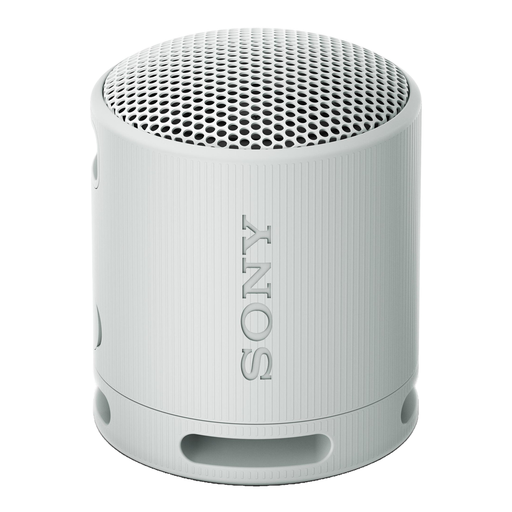
Why it suits this profile: This compact model is suitable for everyday use, travelling and short trips outdoors. The carrying strap and weight of 274 grams make it easy to take with you.
The product specifications give you clear figures: Bluetooth 5.3, 16 hours of battery life and IP67. So you don’t have to rely on general marketing claims alone.
274 grams, USB-C, IP67, up to 16 hours of battery life and the option to pair it with another speaker.
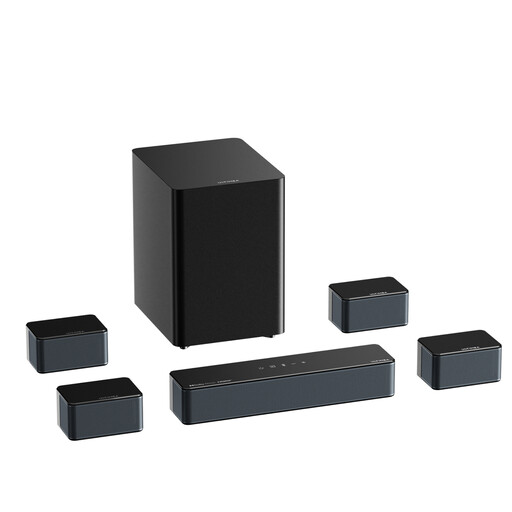
Why it suits this profile: This system is designed for people who want to combine TV, films and games with multiple speakers. It does need more space and setup than a single portable speaker.
The connections are clearly specified: HDMI eARC, HDMI IN, optical, AUX and USB. This lets you check in advance whether the system is compatible with your TV and games console.
7.1 channels, a wireless subwoofer, Bluetooth 5.3 and Dolby Atmos, according to the product specifications.
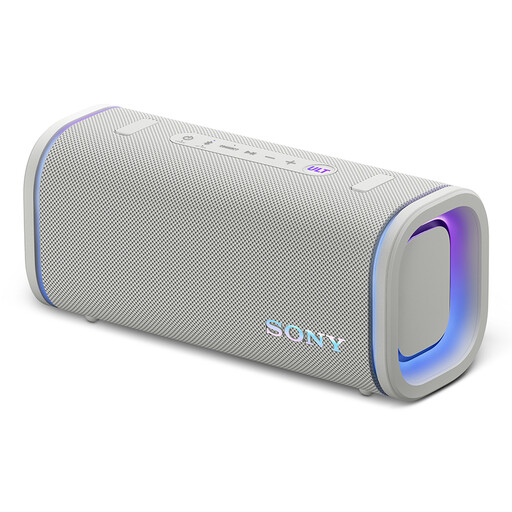
Why it suits this profile: Its larger enclosure, IP67 rating and battery life of up to 25 hours make it a good fit for garden parties, extended outdoor use and anyone looking for extra volume.
You know the size and weight in advance: 3.3 kilograms and around 32 centimetres wide. So you can work out whether it’ll be practical to transport and store.
Up to 25 hours of battery life, IP67, USB-C, a 3.5mm audio input and the option to pair it with other Sony speakers.
We’ve put together a complete, up-to-date list of products that meet these strict selection criteria and current European safety regulations.
Turn on the speaker and activate pairing mode. Then open the Bluetooth settings on your smartphone and select the speaker’s name. Some models, such as the Sony SRS-XB100, support Fast Pair on compatible Android devices. If you have trouble connecting, check that the speaker isn’t already connected to another device.
Its lifespan depends on the battery, how often you charge it, how it’s stored and whether it’s exposed to moisture or knocks. A battery loses capacity over time. Use the supplied or recommended charging cable, avoid extreme heat and keep the waterproof covers clean. An IP rating doesn’t protect against every type of damage.
A portable speaker mainly uses power when it’s charging. Power consumption usually increases at higher volumes, with lighting switched on and when using extra features such as speaker pairing. A model with a built-in battery doesn’t need to stay plugged into a power socket. For a mains-powered soundbar or speaker set, it’s a good idea to switch it off when you’re not using it.
