
Vandaag of morgen in huis

Kwaliteit gegarandeerd

Welkomstaanbiedingen ontgrendelen: GRATIS bezorging | Tot 80% korting | Gratis 30 dagen JoyPlus-proefperiode
Download de app
A Bluetooth speaker may seem simple to choose: connect your phone, press play and you’re ready to go. In practice, wireless speakers vary considerably in volume, battery life, connections and protection against rain. A model that works well in the living room may not deliver enough volume on a patio. Conversely, a large party speaker can often be impractical for everyday use.
If you’re looking for the “best Bluetooth speaker”, it’s therefore worth defining how you plan to use it first. Then focus on verifiable specifications rather than terms such as “powerful bass” or “360° sound”.
Higher wattage may indicate more power, but it doesn’t tell you everything about clarity, distortion or bass reproduction. So also check the type of drivers, the number of channels and the dimensions. A compact portable speaker with lower power may be perfectly adequate for a bedroom, while you’ll need more headroom outdoors.
Also pay attention to the difference between RMS power and peak power. RMS gives a more useful indication of continuous output power. Manufacturers sometimes mainly quote a high peak power figure, making models difficult to compare.
A waterproof Bluetooth speaker isn’t automatically suitable for submersion. With a rating such as IP67, the first digit indicates protection against dust and the second against water. IPX6 does provide protection against powerful water jets, but says nothing about dust resistance.
Also check the instructions for use. Salt water, chlorine, prolonged submersion and an uncovered charging port can affect the speaker’s lifespan. A protection rating isn’t a licence to leave the speaker in poor conditions for extended periods.
“Up to 15 hours” or “up to 26 hours” usually applies under specific conditions, such as a lower volume and the lighting switched off. A party speaker with LED effects may have a noticeably shorter play time. So check the conditions attached to the quoted figure and find out how long charging takes.
Bluetooth 5.3 or 5.4 can provide a modern, stable connection, but compatibility also depends on your phone, tablet or laptop. For everyday use, features such as simultaneous connection to two devices, multipoint or stereo pairing may be more important than the version number alone.
A USB-C port is convenient for charging. Some models also support USB playback, AUX or Wi-Fi. A stereo speaker with Bluetooth may consist of two separate speakers that create a wider stereo image together. Do check whether both units need to be the same model.
For a balcony, bike ride or picnic, a lightweight model with a handle or carry loop is practical. For a garden party, power, battery capacity and charging options are more important. Look out for:
For an outdoor Bluetooth speaker, a clearly stated IP rating is advisable as a minimum. IP54 offers protection against limited dust and splashing water. IP66 is dust-tight and protected against powerful water jets. IP67 adds protection against temporary immersion under the manufacturer’s specified conditions.
The rating says nothing about drops, sound quality or battery life. A robust casing and a covered connection remain important.
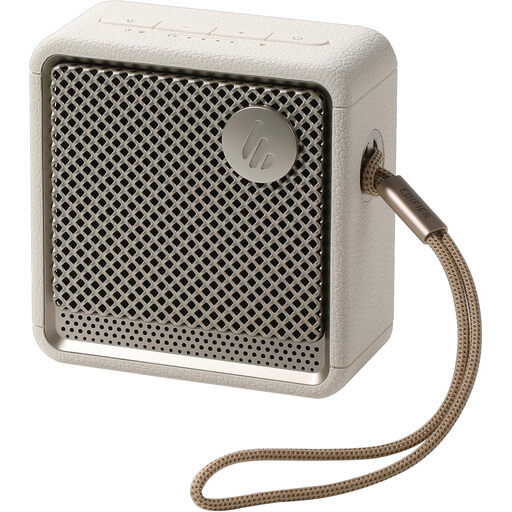
Why it suits this profile: A compact choice for home, travel or a small outdoor gathering. The controls are simple, and the speaker supports pairing with two devices.
The IP67 rating is clearly stated. The quoted battery life is up to 15 hours; bear in mind that volume and lighting affect this.
6 W RMS, Bluetooth 5.4, stereo pairing, USB-C and a compact casing with ambient lighting.
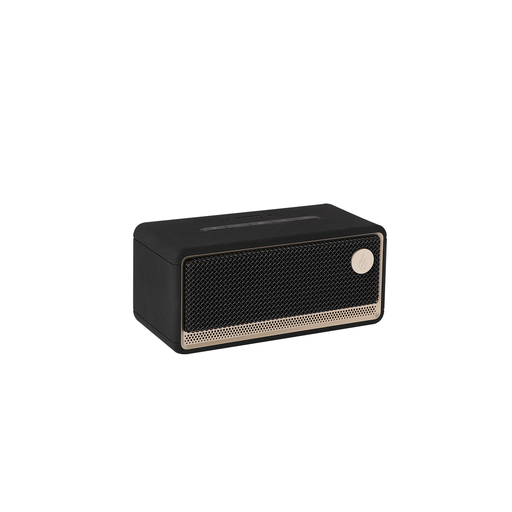
Why it suits this profile: Suitable for music lovers who want to combine multiple connection options and a broader soundstage at home with wireless use.
Alongside Bluetooth 5.3, it offers Wi-Fi, USB and AUX. This makes you less dependent on a single connection type.
60 W total RMS power, support for LDAC and AirPlay 2, multi-room functionality and up to 12 hours of battery life.
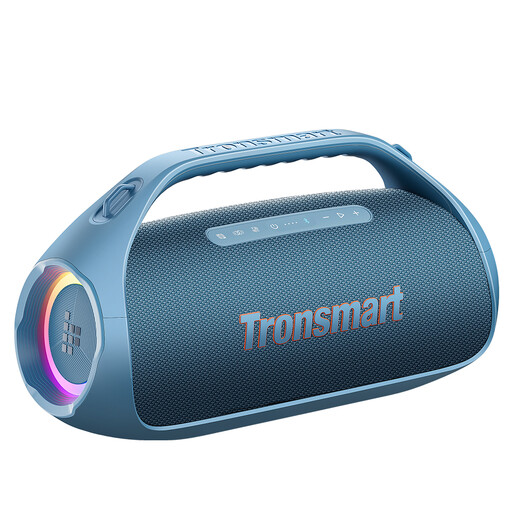
Why it suits this profile: A party speaker for garden parties and groups who value volume, portability and long battery life.
The product information lists IPX6 and distinguishes between play time with and without LED lighting. This helps set more realistic expectations.
90 W output power, up to 26 hours under certain settings, handle, carry strap and support for True Wireless Stereo.
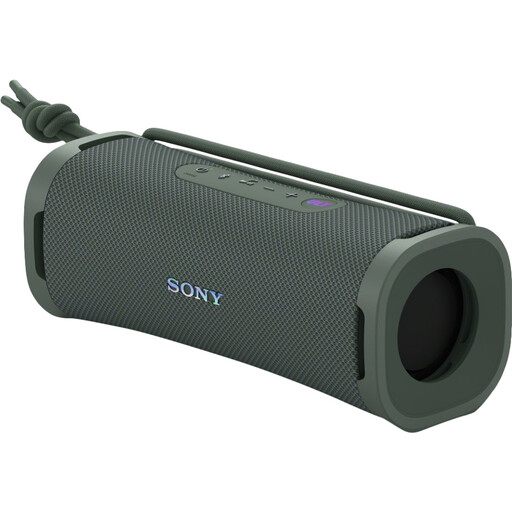
Why it suits this profile: Its compact shape and 650-gram weight make it suitable for trips, cycling, camping or use on the balcony.
IP67, dust resistance and shock resistance are listed as product specifications. However, use the device within the manufacturer’s specified conditions.
30 W RMS, Bluetooth 5.3, up to 12 hours of battery life and the option to pair a second speaker.
We’ve put together a complete, up-to-date list of products that fully meet these strict selection criteria and the applicable European safety regulations.
Connect the speaker via your device’s Bluetooth menu. Put the speaker into pairing mode and select the correct model name. With a speaker for TV, there may be a delay between the picture and sound. A soundbar with Bluetooth is often more practical for television, particularly if it also has HDMI ARC or eARC.
For films and gaming, a soundbar with Bluetooth, an HDMI connection and possibly a subwoofer are sensible alternatives. Bluetooth is then mainly useful for playing music from a phone; a wired TV connection can improve synchronisation.
Its lifespan depends on battery use, moisture, heat and charging habits. A built-in lithium-ion battery gradually loses capacity over time. Store the speaker in a dry place, avoid prolonged exposure to heat and use a suitable USB-C charger. Also check whether firmware updates and spare parts are available.
Power consumption is generally limited during use, but a large model at high volume with the lighting on uses more energy. Costs mainly depend on charging power, usage time and how often you recharge it. A Bluetooth speaker with long battery life isn’t necessarily more energy-efficient: its battery capacity may simply be larger.
Only if the manufacturer supports stereo pairing, TWS or a similar feature. Both speakers often need to be the same model. Check the product information to see whether pairing is carried out using buttons or an app, and whether both devices support the same Bluetooth function.
