
Vandaag of morgen in huis

Kwaliteit gegarandeerd

Welkomstaanbiedingen ontgrendelen: GRATIS bezorging | Tot 80% korting | Gratis 30 dagen JoyPlus-proefperiode
Download de app
A Bluetooth speaker may seem easy to choose: set your budget, pick a colour and check the wattage. In practice, small differences can have a major impact on everyday use. A compact wireless speaker for the kitchen has different requirements from a party speaker for the garden or a soundbar for the TV.
So, focus mainly on the conditions in which you will use the speaker. High power, for example, does not automatically mean better clarity, while long battery life can vary considerably depending on the volume and whether the lighting is switched on.
Manufacturers regularly state peak power, while the continuous power may be lower. Wattage also says little about sound quality, bass reproduction or distortion at high volume. If this information is available, check the RMS power, the number of speaker channels and the type of drivers.
For a desk, gaming speakers with 10 W peak power may be sufficient. For a garden party with several people, a larger model with a bigger woofer and a higher-capacity battery makes more sense.
A waterproof Bluetooth speaker is not automatically suitable for prolonged immersion, seawater or a powerful jet of water. The first digit group in an IP code refers to dust; the second digit relates to water resistance.
According to the product specification, an IP67 rating means complete protection against dust and protection against temporary immersion under certain conditions. Even so, do not use this type of speaker in a swimming pool for extended periods, and avoid salt water and chlorinated water. With an IPX6 rating, the emphasis is on protection against powerful water jets, while dust protection is not specified.
A Bluetooth speaker with long battery life will usually achieve its stated playback time under specific conditions. Volume, bass level, Bluetooth connection and RGB lighting all affect power consumption. The Tronsmart Bang 2, for example, states up to 26 hours with the lighting switched off at 50% volume, but up to 7 hours with the lighting switched on at the same stated volume.
So, do not look only at the highest number of hours. Also check the charging port, charging time and whether the speaker can charge a smartphone while in use.
Bluetooth 5.3 provides a modern connection and is used in models such as the Sony SRS-XB100, Edifier G1500 and Tronsmart Bang 2. However, the version alone does not determine the overall sound quality. Also check the supported codecs, such as AAC and SBC, and the range stated in the product information.
Extra connections are useful for a permanent setup. A 3.5mm AUX input works with older devices, while USB may be suitable for a computer or certain playback sources. If you are looking for a speaker for your television, pay particular attention to HDMI ARC or eARC, optical connectivity and support for the sound formats you require.
A portable Bluetooth speaker should be practical to carry. According to the product specification, the Sony SRS-XB100 weighs 274 grams and has an adjustable carrying strap. This makes it suitable for a rucksack, bicycle pannier or picnic, without needing a large bag.
Larger models often deliver more powerful bass, but they also take up more space. A party speaker weighing several kilos is less convenient for travelling, while a small speaker may sound less spacious in a large living room. Measure the available space beforehand and check that the buttons and connections will remain accessible.
For outdoor use, battery capacity and protection against dust and water are important factors to consider. Also pay attention to the charging standard. USB-C is now commonplace, making it easier to use one suitable cable for several devices.
An IP rating does not protect against drops, heat or incorrect charging. Use the supplied or a suitable certified charger, and do not expose a speaker with a lithium-ion battery to fire or extreme temperatures.
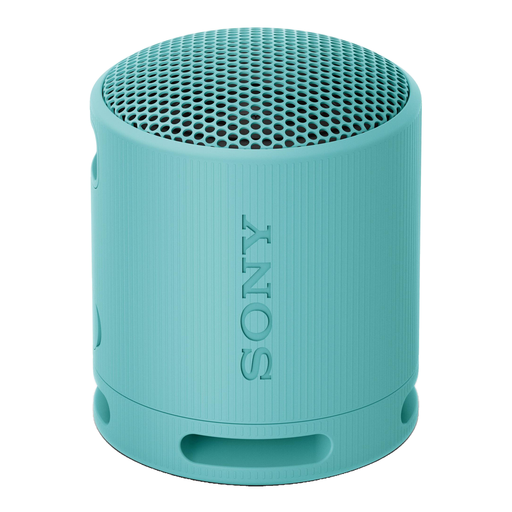
Why it suits this profile: This compact model is designed for everyday use, travel and short trips. The product specification states 274 grams, Bluetooth 5.3 and up to 16 hours of battery life.
The IP67 rating and USB-C connection are clearly stated. However, bear in mind the limits of water protection.
Stated 16-hour battery life, 274 grams, carrying strap, microphone and the option to pair two speakers.

Why it suits this profile: Ideal if you are looking for a portable speaker with more connection and pairing options. The product specification lists 34 W RMS, Bluetooth 5.4 and simultaneous connection to two Bluetooth devices.
The stated RMS specification provides more context than peak power alone. IP66 clearly indicates the level of protection, but it is not a reason to submerge the speaker.
34 W RMS, stereo pairing, Bluetooth 5.4, IP66 and up to 9 hours of stated playback time.
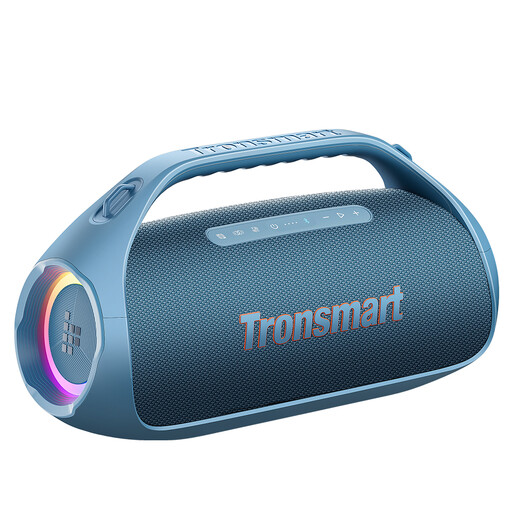
Why it suits this profile: This larger model is designed for parties, gardens and other outdoor locations where portability and volume need to go hand in hand.
The manufacturer states the playback time separately for use with and without lighting. This makes it clearer how RGB lighting can affect battery life.
Stated 90 W output power, IPX6, Bluetooth 5.3, TWS pairing and USB-C charging function.
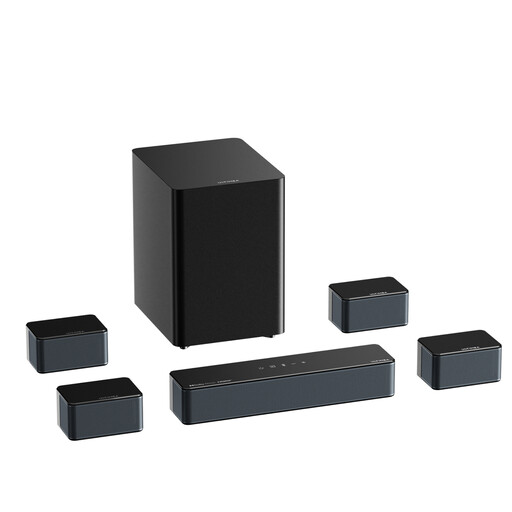
Why it suits this profile: A soundbar for the TV, films and games is better suited to a fixed living-room setup than a small portable speaker.
The connections are clearly specified: HDMI eARC, HDMI IN, optical, AUX and USB. Check beforehand which ports your TV and games console use.
7.1 channels, wireless 6.5-inch subwoofer, Bluetooth 5.3 and stated peak power of 500 W.
We have put together a complete, up-to-date list of products that fully meet these strict selection criteria and the applicable European safety regulations.
Switch on Bluetooth on your smartphone, turn on the speaker and activate pairing mode. Select the speaker’s name from the Bluetooth list. On some Android devices, models such as the Sony SRS-XB100 support fast pairing. If the connection does not work, remove an old pairing and try again.
It varies depending on the model and how you use it. Compact models often state around 9 to 16 hours, while larger speakers may offer a longer stated playback time. Volume, bass, phone calls and lighting reduce battery life. Treat the manufacturer’s figure as a guideline rather than a fixed guarantee for every listening situation.
Yes, but check the connections and latency first. Bluetooth may be sufficient for basic TV audio. For films and gaming, a soundbar with HDMI ARC or eARC may be more practical, as this connection works better with modern televisions and remote controls. Also check whether the TV supports Bluetooth audio and whether the speaker is designed for low latency.
