
Vandaag of morgen in huis

Kwaliteit gegarandeerd

Welkomstaanbiedingen ontgrendelen: GRATIS bezorging | Tot 80% korting | Gratis 30 dagen JoyPlus-proefperiode
Download de app
A Bluetooth speaker may seem easy to choose: connect your phone, press play and you’re ready to go. In practice, models vary considerably in volume, battery life, water resistance and control options. For example, an affordable wireless speaker may sound perfectly good in a bedroom but fall short at a garden party. Conversely, you may sometimes pay for features you hardly ever use.
So watch out for these common pitfalls:
RMS power gives a more useful indication of continuous output than an isolated peak-power figure. When comparing models, compare products within the same category. A compact speaker with 6W RMS is suitable for personal use or a small room, while a model with 34W RMS may offer more headroom for a living room or gathering.
The internal design also matters. The Edifier ES60, for example, lists 34W RMS, two 22 mm tweeters, a mid-low driver and a passive bass radiator. The Edifier ES20 uses a 43 mm full-range driver and two passive bass radiators. These details tell you something about the technical design, but they do not guarantee that every listener will experience the sound in the same way.
If you want a wider stereo image, check whether the Bluetooth speaker supports stereo pairing. With compatible models, you can connect two identical speakers. Bear in mind that two paired speakers take up more space and will generally use more battery power together.
The IP code consists of two digits:
According to the product specification, a model with IP66 is dust-tight and protected against powerful water jets. This makes it suitable for rain, splashes and use on a dusty campsite, but it is not the same as being suitable for immersion.
According to the classification, an IP67 speaker is dust-tight and designed to withstand temporary immersion under the specified test conditions. Always check that the covers are properly closed before using the speaker outdoors. Water resistance also does not automatically protect against drops, sand entering the ports or salt water.
Compare battery life based on how you intend to use the speaker. The Edifier ES20 lists up to 15 hours of playback, the ES60 up to 9 hours and the Logitech Ultimate Ears MINIROLL up to 12 hours. “Up to” means that actual battery life may vary depending on factors including volume and additional features.
Bluetooth 5.4 is a current connection standard featured on several models in this selection, including the Edifier ES20 and ES60. Also check whether multipoint or simultaneous connection to two devices is supported. This is useful when several members of the household want to play music without having to pair again each time.
A wireless speaker with an app may offer additional settings, such as equaliser profiles, lighting or firmware management. If you only use the basic controls, physical buttons may be all you need. RGB lighting is primarily an atmosphere-enhancing feature: useful for a party, but not a deciding factor for sound reproduction.
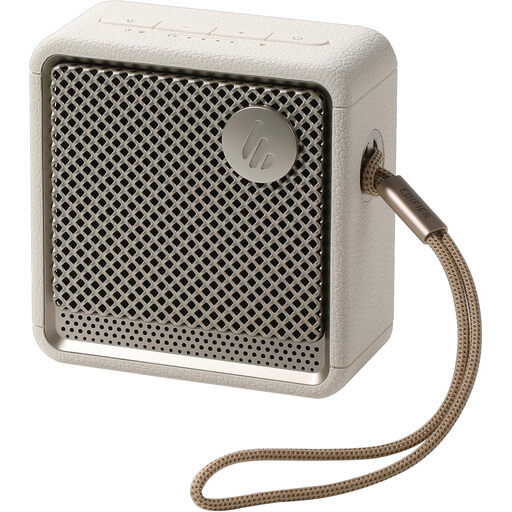
Why it suits this profile: This compact model is designed for everyday use at home, on the go or during a walk. The product specification lists Bluetooth 5.4, up to 15 hours of battery life and control via the EDIFIER ConneX app.
The IP67 rating is more specific than a general claim such as “for outdoor use”. However, make sure the ports remain closed and use the speaker in accordance with the instructions.
Up to 15 hours of battery life, Bluetooth 5.4, stereo pairing, RGB ambient lighting and an app.
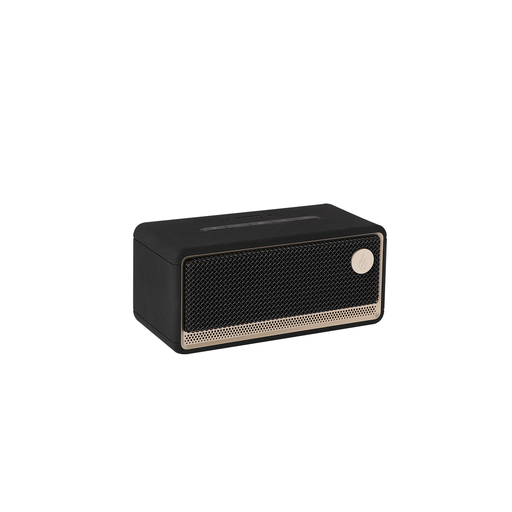
Why it suits this profile: This model is ideal for users who want to combine a permanent home speaker with wireless flexibility. The product information lists 60W RMS, Wi-Fi, Bluetooth 5.3, AirPlay 2 and multi-room functionality.
The connection options are clearly listed, so you are not limited to Bluetooth alone. Battery life is stated as up to 12 hours; for extended use, mains power is also relevant.
60W RMS, Wi-Fi and Bluetooth 5.3, multi-room via AirPlay 2, USB and AUX connections, and app control.

Why it suits this profile: The combination of 34W RMS, IP66 protection and stereo pairing is well suited to use in the garden, at a campsite or during a gathering.
The specifications distinguish between protection against dust and water jets. This makes it clear that IP66 is not intended as a promise of underwater use.
34W RMS, Bluetooth 5.4, connection to two devices, up to 9 hours of playback, USB-C and the EDIFIER ConneX app.
We have compiled a complete, up-to-date list of products that fully meet these strict selection criteria and the applicable European safety regulations.
Switch on the speaker and activate pairing mode. Then open the Bluetooth settings on your phone and select the speaker’s name. If you have a model with an app, install the official application first if you want to use the additional settings. If you experience problems, check that the speaker is not already connected to another device.
This varies by model and usage. Manufacturers usually state a maximum playback time, such as up to 9, 12 or 15 hours. Higher volume, RGB lighting and phone calls can reduce battery life. For a day outdoors, a Bluetooth speaker with long battery life is practical, but consider taking a power bank on longer trips.
That depends on the IP rating. IP66 provides protection against dust and powerful water jets; IP67 adds protection against temporary immersion under specified test conditions. Neither rating means that you should leave a speaker unattended in salt water, mud or prolonged rain. Close the covers carefully and follow the manufacturer’s safety instructions.
