
Vandaag of morgen in huis

Kwaliteit gegarandeerd

Welkomstaanbiedingen ontgrendelen: GRATIS bezorging | Tot 80% korting | Gratis 30 dagen JoyPlus-proefperiode
Download de app
A Bluetooth speaker seems simple: connect it to your phone and play music. Yet many people end up with the wrong speaker because the specifications sound better than they perform in practice. A high wattage claim, for example, doesn’t tell you everything about sound quality. And a waterproof casing doesn’t mean you can leave any speaker in a swimming pool for hours.
This buying guide will help you choose a Bluetooth speaker for home, on the go, on holiday, during exercise or for a party. We focus on verifiable specifications, practical use and the limitations of marketing claims.
Manufacturers usually state battery life under specific conditions. A Bluetooth speaker advertised as playing for 20 or 25 hours may not last as long at high volume, with heavy bass or LED lighting switched on. Check whether battery life depends on volume, lighting or the type of audio.
An IP67 speaker is fully dustproof and, according to its rating, suitable for temporary immersion in fresh water under the specified conditions. That makes it an interesting choice as an outdoor Bluetooth speaker, but it doesn’t automatically protect it against salt water, chlorine, high-pressure jets or a poorly sealed port.
A model with IPX7 offers protection against water, but the rating says nothing about dust resistance. So check the full IP rating carefully and make sure the covers for USB ports are properly closed.
More watts don’t automatically mean a more enjoyable or clearer sound. Also look at the number of drivers, the casing, passive radiators, mono or stereo playback, and any equaliser features. A compact speaker can sound clear for personal use, while a larger Bluetooth party speaker offers more volume and bass headroom.
A Bluetooth speaker with long battery life is useful for everyday listening. Look out for:
A portable Bluetooth speaker weighing around 250 to 700 grams is easy to carry. Larger models often offer more volume, but are less suitable for cycling, walking or travelling on public transport.
A clear IP rating is important for the beach, pool or camping. In practice, IP67 means complete dust protection and protection against temporary immersion, in line with the rating. Be sure to use the speaker according to the instructions. Don’t leave it in water for long periods, and only charge it once it’s dry.
An IP rating doesn’t assess sound quality. It only tells you about protection against certain external factors.
Bluetooth 5.3 or 5.4 can provide a modern wireless connection, but compatibility also depends on your smartphone, tablet or laptop. Also consider whether you need:
A speaker with lots of features isn’t always more practical. Choose features that suit the way you’ll use it, so you don’t pay for options you’ll rarely use.
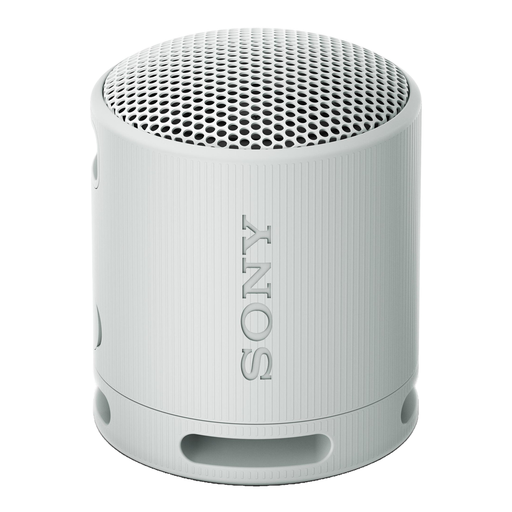
Why it suits this profile: This compact speaker weighs 274 grams and has a carrying strap. That makes it a good choice for everyday use, a walk or listening to music in a small room.
The product information states a battery life of up to 16 hours and an IP67 rating. Bear in mind that volume and conditions can affect actual battery life.
Bluetooth 5.3, USB-C, stated battery life of 16 hours, 274 grams, and IP67 dust and water protection.
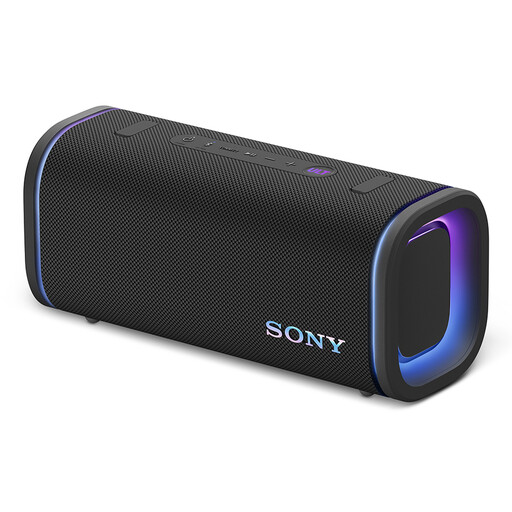
Why it suits this profile: This larger model is designed for people who want more volume, bass settings and features than a compact speaker can offer, both at home and outdoors.
There’s more to consider than wattage: this model features ULT sound modes, a 10-band equaliser and 2.0-channel playback. Sony states a maximum battery life of 25 hours, though use may reduce this.
27 W RMS, IP67, USB-C, 3.3 kg, phone charging and support for multiple connected speakers.
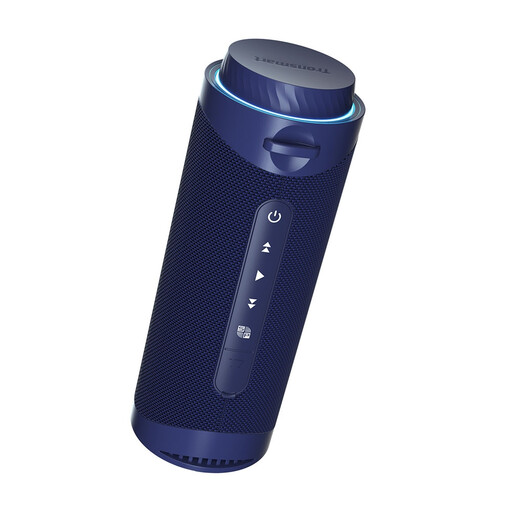
Why it suits this profile: The combination of 30 W, lighting effects, TWS pairing and IPX7 makes it a good fit for parties, outdoor use and group listening sessions.
The stated playback time is clearly differentiated: up to 12 hours without lighting effects and up to 4 hours with the lights on. This helps avoid unrealistic expectations for an evening party.
30 W output, Bluetooth 5.3, IPX7, LED lighting, microphone and pairing for two speakers.
We’ve put together a complete, up-to-date list of products that meet these strict selection criteria and current European safety regulations.
Switch on the speaker and enable Bluetooth on your smartphone. Select the speaker’s name from the list of available devices. The first time you connect, you may need to press and hold the pairing button for longer. If you have problems, check that the speaker isn’t already connected to another device.
Battery life varies by model and how you use it. Volume, bass, LED lighting and phone calls all affect power consumption. The built-in battery’s lifespan also gradually decreases with charging cycles. Don’t store the speaker completely flat for long periods, and keep it away from heat.
First check the exact IP rating and the instructions. IP67 or IPX7 is designed for specific conditions and doesn’t automatically mean the speaker is suitable for prolonged use in pool water, salt water or under powerful water jets. Close the port covers securely, and only charge the speaker when it’s completely dry.
