
Vandaag of morgen in huis

Kwaliteit gegarandeerd

Welkomstaanbiedingen ontgrendelen: GRATIS bezorging | Tot 80% korting | Gratis 30 dagen JoyPlus-proefperiode
Download de app
A Bluetooth speaker might seem simple to choose: connect your smartphone, press play and you're done. Yet many purchases turn out to be disappointing. A model that looks like a speaker with powerful bass on paper may not deliver enough volume in a large garden. A wireless speaker might be described as water-resistant, but the protection may only cover splashes. And a long battery life often only applies at moderate volume without lighting.
This buying guide helps you compare the key features of a portable Bluetooth speaker. That way, you can make a more informed choice for home, travel, camping, the beach or a party.
A higher RMS wattage tells you something about the stated output power, but it doesn't solely determine how full or pleasant a speaker sounds. The casing, drivers, passive radiators and tuning also play a part. A compact portable speaker with low power might be suitable for a bedroom, but less appropriate for a garden party.
So, alongside power, look at:
Water resistance is usually indicated by an IP rating. The first digits relate to dust and solid particles; the second digit to water. An IP67 speaker, for example, is fully dust-tight according to the stated rating and suitable for temporary submersion under the specified conditions. That doesn't automatically mean long-term use in salt water, a swimming pool or heavy driving rain is risk-free.
Always check:
"Up to 15 hours" or "up to 26 hours" is an upper limit from the product information. Actual playtime can be lower due to volume, bass, Bluetooth connection and lighting. With the Tronsmart Bang 2, for example, up to 26 hours is quoted with LED lighting off and at 50% volume; with lighting on, the stated time can be significantly lower.
A speaker with long battery life is therefore particularly useful when the test conditions match your usage. For a full day outdoors, the ability to charge via USB-C or a power bank is also relevant.
Bluetooth 5.3 or 5.4 can support a stable connection and efficient energy use, but the final experience also depends on your smartphone, tablet or laptop. Check whether the speaker supports multipoint if two people want to connect at the same time. That avoids having to re-pair when switching music sources.
For a stereo pairing speaker, it's also important that two identical models can be paired with each other. A single speaker and a second unit from a different series won't always form a stereo pair.
Don't just compare the number of hours, but also:
For occasional use at home, eight to twelve hours may be sufficient. For camping or an outdoor speaker without access to a plug socket, a larger battery is more practical.
For the beach, camping and cycling, dust resistance and a sturdy casing are more important than decorative features. A model with IP66 is protected against dust and powerful water jets according to the rating, while IP67 also covers temporary submersion. Use this information as a selection criterion, not as a guarantee that every type of exposure is safe.
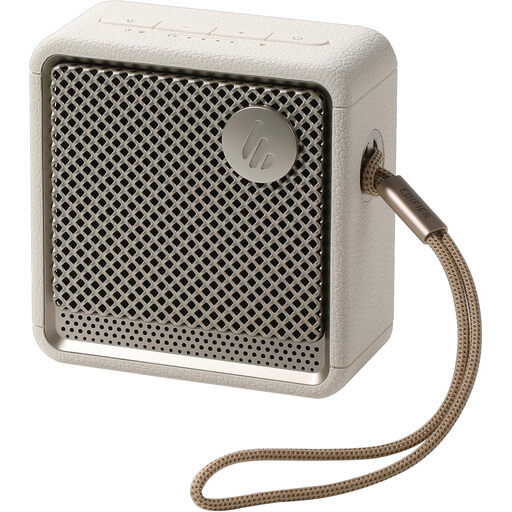
Why this fits the profile: This compact model is suitable for daily use at home, on your bike or during a walk. The button controls and ConneX app keep the setup straightforward.
The stated IP67 rating makes the level of protection more concrete than just the term waterproof. Battery life is stated as up to 15 hours; bear in mind volume and lighting.
Bluetooth 5.4, stereo pairing, IP67, a stated battery life of up to 15 hours and a built-in microphone.
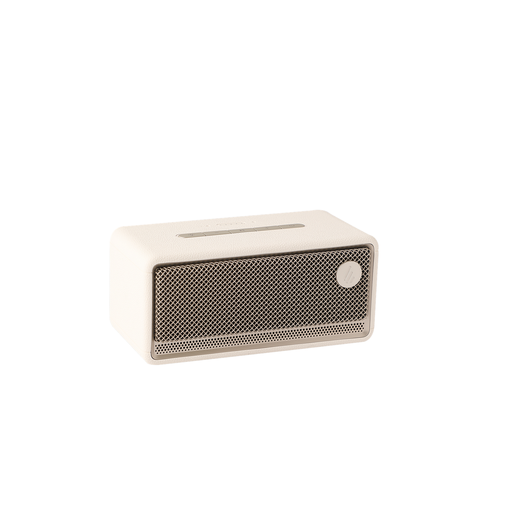
Why this fits the profile: This model suits users looking for a fixed speaker for the living room, office or multi-room audio, and who want to use network features alongside Bluetooth.
The product information lists multiple inputs and connections, so you're not solely reliant on Bluetooth. The stated 12-hour battery life is relevant for occasional moving around, but the model is less focused on rugged outdoor use.
60W RMS according to the product information, Bluetooth 5.3, wifi, USB, AUX, AirPlay 2 and support for multi-room groups.
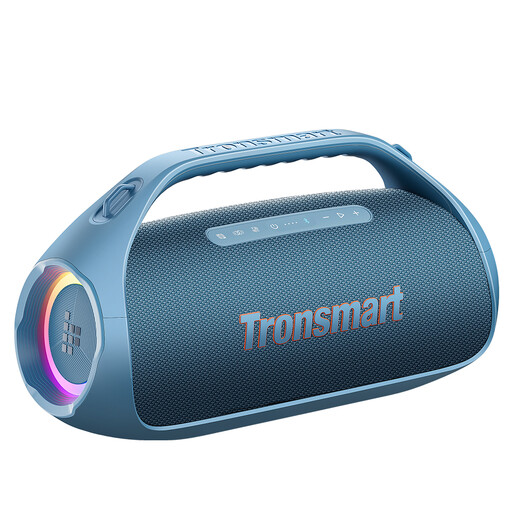
Why this fits the profile: The handle, detachable carry strap and stated power make this model aimed at parties, garden gatherings and larger outdoor spaces.
The product information mentions IPX6, 90W and specific battery conditions. This allows you to compare volume, protection and playtime more effectively than with general marketing terms.
Bluetooth 5.3, up to 26 hours under the stated conditions, IPX6, USB-C and pairing two speakers for True Wireless Stereo.
We've put together a full, up-to-date list of products that fully meet these strict selection criteria and comply with current European safety regulations.
Turn on the speaker and activate pairing mode. Then open the Bluetooth settings on your phone and select the speaker's name. With a previously paired model, this often happens automatically. If it doesn't work, remove the old connection and try again.
This varies by model and usage. Manufacturers usually state a maximum playtime at a certain volume and sometimes without lighting. In practice, higher volumes, bass and RGB lighting consume more energy. So check the full battery conditions in the product information.
During playback, a portable speaker mainly uses its built-in battery. Power consumption occurs when charging and depends on the battery capacity and charger. A USB-C connection allows charging with many common adapters and power banks, as long as the charging requirements match.
