
Vandaag of morgen in huis

Kwaliteit gegarandeerd

Welkomstaanbiedingen ontgrendelen: GRATIS bezorging | Tot 80% korting | Gratis 30 dagen JoyPlus-proefperiode
Download de app
A Bluetooth speaker seems simple enough: pair it with your smartphone and play music. But there are clear differences in size, battery life, sound quality and water resistance. If you focus only on wattage or eye-catching design, you could end up with a wireless speaker that isn’t right for the way you plan to use it.
Common pitfalls include:
For your commute or an afternoon in the park, a compact speaker with 8 to 12 hours of playback may be enough. For holidays, long bike rides or a garden party, a Bluetooth speaker with long battery life is more practical.
Check the conditions behind the quoted playback time. Manufacturers often give a maximum figure based on a particular volume level and with extra features switched off. For example, the Tronsmart T7 is listed as lasting up to 12 hours without lighting and around 4 hours with the lights on. That difference matters if you use the LED feature often.
A USB-C connection makes charging easier, as you can often use the same cable as you do for a phone or tablet. Some larger models can also charge a smartphone. Just check whether a charging adapter is included.
For an outdoor Bluetooth speaker, the IP rating is a useful thing to check:
Don’t use a speaker while charging if the port is wet. After using a water-resistant device at the seaside or by a swimming pool, don’t simply rinse it off without following the care instructions. Salt and chlorine can damage materials.
A compact speaker weighing around 250 to 700 grams is easy to carry in a bag. A larger portable speaker will generally deliver more volume and stronger bass, but it takes up more space.
Also check:
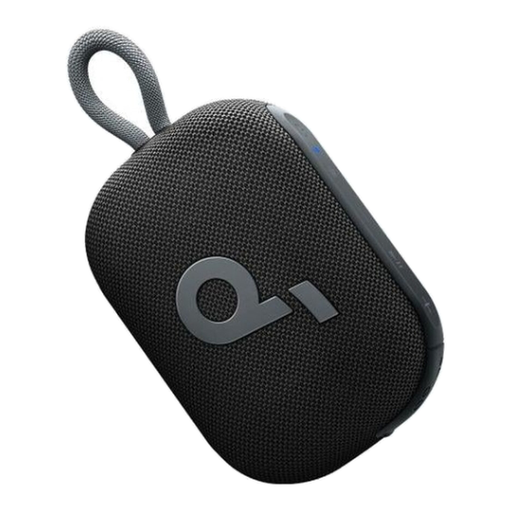
Why it suits this profile: This lightweight portable speaker is designed for everyday use, walks and short trips. Its quoted battery life is up to 20 hours.
The product information gives both the battery life and the conditions for use. The IP67 rating makes the level of protection clearer than simply calling it waterproof.
263.65 grams, up to 20 hours according to the product description, IP67 and support for TWS pairing.
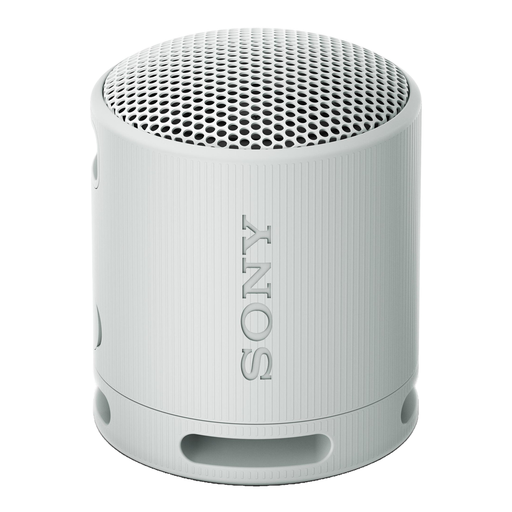
Why it suits this profile: The Sony SRS-XB100 is a good choice if you’re looking for a small speaker with a carry strap, hands-free calling and a clearly stated protection rating.
Rather than focusing on power alone, Sony lists a Sound Diffusion Processor, AAC and SBC support, and IP67. According to Sony’s product information, the maximum battery life is 16 hours.
274 grams, Bluetooth 5.3, USB-C, a microphone and an IP67 rating.
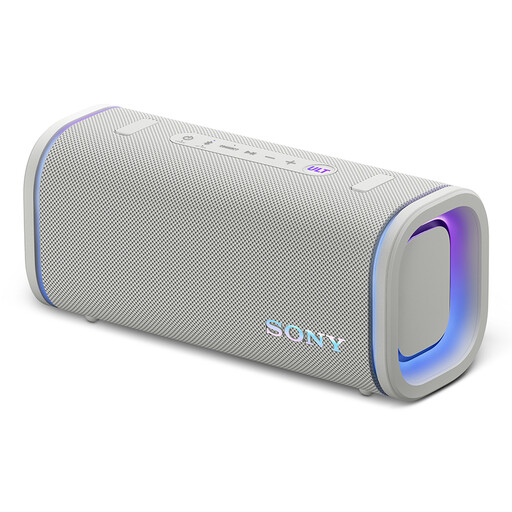
Why it suits this profile: This larger model is designed for home, the garden and gatherings where you want more volume and longer battery life.
The product details list a 25-hour battery life, as well as a weight of 3.3 kg. This makes the trade-off between playback time, volume and portability clear.
27 W RMS, two speaker channels, IP67, a 3.5mm audio input, lighting and pairing with multiple Sony speakers according to the product description.
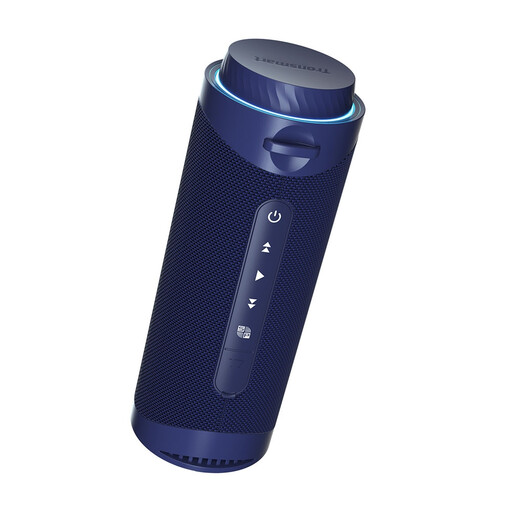
Why it suits this profile: The T7 combines 30 W output power with LED lighting, TWS pairing and a design made for outdoor use.
The product information distinguishes between playback time with and without the lights on. It also lists IPX7, Bluetooth 5.3 and a charging time of around 3 hours.
30 W, microSD support, built-in microphone, LED lighting and stereo pairing with a second speaker.
We’ve put together a complete, up-to-date list of products that meet these strict selection criteria and current European safety regulations.
Turn on the speaker and activate pairing mode. Then open the Bluetooth settings on your smartphone, tablet or laptop and select the speaker’s name. You may be asked to confirm the connection or enter a PIN the first time you connect. Keep the devices close together while pairing.
Playback time on a single charge varies widely, usually from a few hours to around 25 hours according to the product details for the models mentioned. Overall lifespan depends on charging habits, heat, moisture, knocks and the quality of the built-in battery. Store the speaker somewhere dry and avoid leaving it in high temperatures for long periods.
A compact portable speaker uses relatively little electricity while playing music. The cost mainly depends on how often you charge it and your electricity tariff. LED lighting, higher volume and larger batteries can increase consumption per use. USB-C charging makes it easy to top up the speaker using an existing adapter or power bank.
